
The Frustration of a Failing AC During Peak Summer Heat
Your air conditioner is turning on and off in rapid succession, but the house still feels warm, sticky, and uncomfortable—a situation that immediately calls for reliable home maintenance tips and troubleshooting. You hear the compressor roar to life outside, expecting a steady stream of cold air to finally cool down the living room, only for the system to shut down completely just three minutes later. This rapid on-and-off behavior is known as short-cycling, and it is one of the most common—and most frustrating—cooling failures a homeowner can face.
For a homeowner in Hagerstown MD facing peak July heat, our team at Comfort Central Inc. knows that a short-cycling air conditioner is more than just a nuisance. It is an active threat to your indoor comfort and a massive drain on your monthly utility budget. The immediate decision point you face is determining whether this erratic behavior is caused by a simple, easily correctable airflow restriction or a fundamental mechanical flaw that requires professional intervention. Applying objective home maintenance tips and troubleshooting steps early on can save you from unnecessary diagnostic fees and prevent catastrophic compressor failure.
To restore your home's comfort, you need a clear path forward. Whether the solution involves replacing a severely clogged filter or scheduling comprehensive air conditioning services, understanding the root cause of the cycle failure is the first step toward a permanent fix.
The Toll of Rapid Cycling on Your System
Every time your air conditioner starts up, it draws a massive surge of electricity to get the heavy compressor motor spinning. This startup phase is the most stressful and energy-intensive part of the entire cooling cycle. When a system runs for 15 to 20 minutes, that initial electrical and mechanical stress is balanced out by a long, highly efficient run time. When the system shuts down after only a few minutes, it never reaches peak efficiency. Repeating this violent startup sequence dozens of times an hour inevitably leads to overheated motors, blown capacitors, and skyrocketing energy bills.
Understanding Short-Cycling: The Core Cooling Problem
To effectively apply home maintenance tips and troubleshooting methods, you first need to understand what short-cycling actually is mechanically. An air conditioning cycle is designed to accomplish two distinct tasks: lowering the sensible heat (the actual temperature reading on your thermostat) and removing latent heat (the invisible moisture and humidity trapped in the indoor air). Both of these processes require time.
When a system short-cycles, the compressor shuts down prematurely before completing a full cooling and dehumidification phase. The mechanical reality: The evaporator coil inside your home needs several minutes of continuous operation just to get cold enough to start condensing water vapor out of the air. If the system turns off too soon, the temperature might drop a degree or two, but the heavy humidity remains entirely untouched.
Consider the thermal mass of your home: just as a brief blast of cold air fails to thoroughly cool the home's walls and furniture during a July heatwave, it also fails to dehumidify the space, leaving the house feeling sticky, damp, and hot. The equipment is working frantically, but the actual indoor environment remains entirely uncomfortable.
This persistent failure to complete a cycle puts immense wear and tear on the system's most expensive components. Recently, one of our loyal Comfort Central Inc. customers of over 10 years required a completely new HVAC system installed because historical short-cycling had permanently damaged their compressor beyond repair. Our team provided excellent service, expertise, and professionalism during the installation, but the situation underscored how dangerous ignored short-cycling can be. If the system cannot be salvaged through basic repairs, exploring proper AC installation and replacement becomes the only viable option to restore reliable cooling.
Identifying Simple Airflow Restrictions at Home
Before assuming your compressor is doomed or that your system is improperly sized, there are several safe, home-level checks you can perform. When we respond to emergency cooling calls in Hagerstown MD, a pattern we see often is that the most common benign cause of short-cycling is a severe restriction in airflow. When the system cannot pull enough warm air across the indoor coil, or cannot exhaust enough hot air from the outdoor unit, internal safety switches will forcefully shut the system down to prevent overheating or freezing.
Follow this definitive go/no-go checklist for home maintenance tips and troubleshooting before paying for a diagnostic visit:
- Inspect the indoor air filter: Turn your thermostat to the "off" position. Remove the air filter and hold it up to a light source. If you cannot see light shining through the pleats, the filter is choked with dust and debris. A severely clogged filter suffocates the blower motor, causing the indoor evaporator coil to drop below freezing. Once ice forms, the system shuts down to protect itself. Replace the filter immediately.
- Verify supply and return vents: Walk through every room in your Hagerstown MD home and check the metal grilles on the floor, walls, or ceiling. Ensure that all supply vents are fully open. More importantly, ensure that large furniture, heavy rugs, or thick curtains are not blocking the large return air grilles. Closing too many vents increases static pressure inside the ductwork, which triggers the blower's safety limits and causes short-cycling.
- Clear the outdoor condenser unit: Walk outside and inspect the large metal cabinet sitting on your property. This unit needs to exhaust the heat it pulled from your house. If the metal fins are blanketed in cottonwood, grass clippings, or thick dust, or if overgrown shrubs are crowding the unit, the compressor will overheat and shut down on a high-pressure limit. Gently clear away any debris and trim back vegetation to allow at least two feet of clear breathing room on all sides.
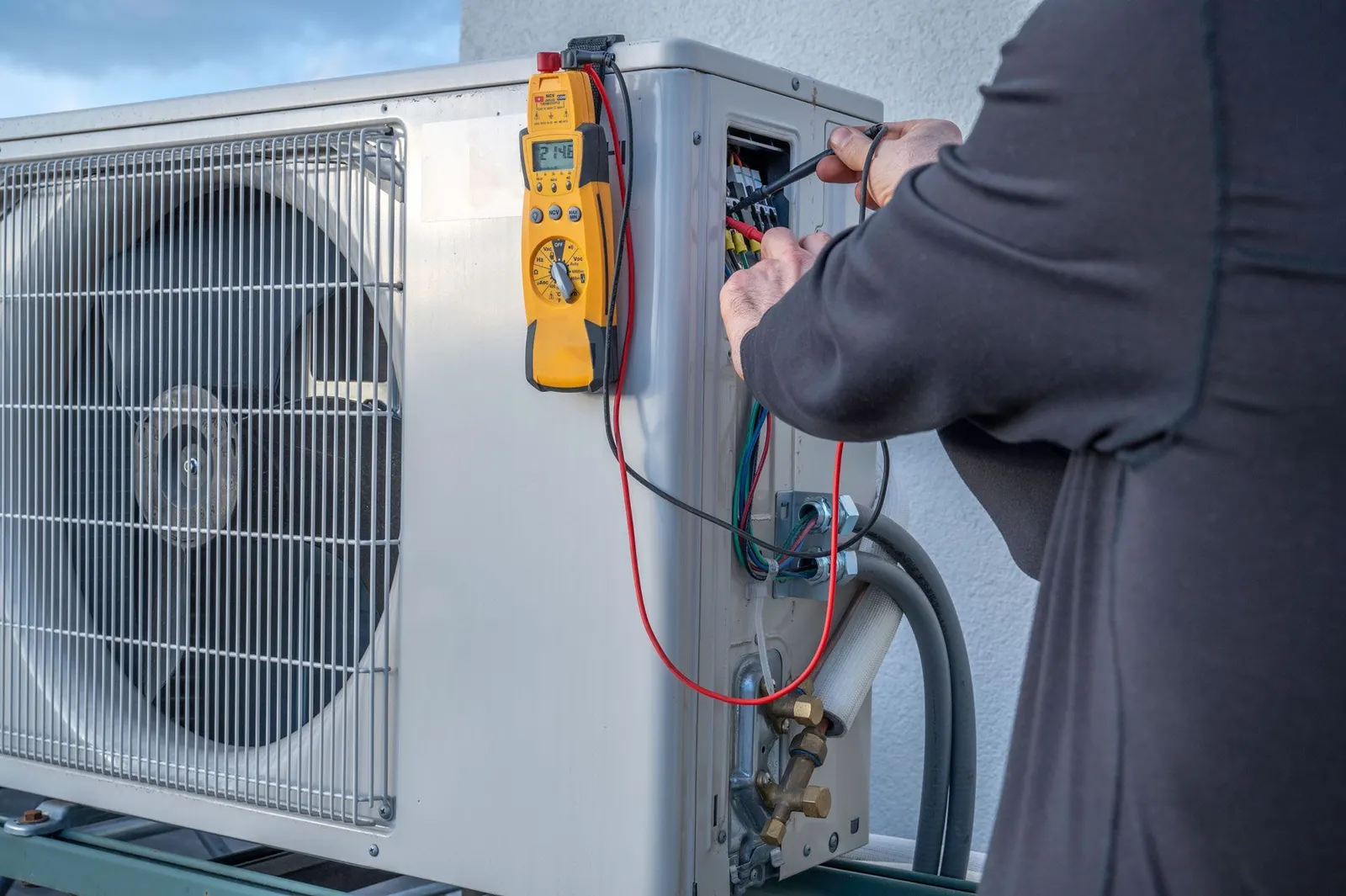
The boundary line: If you have replaced the filter, opened all the vents, and cleared the outdoor unit, but the rapid on-and-off behavior continues, your troubleshooting ends here. The issue is now mechanical or mathematical, and continuing to run the system will cause further damage. At this point, scheduling routine AC maintenance or a professional diagnostic is the required next step.

The Hidden Culprit: Improper Sizing and Humidity Control
If your airflow is perfectly clear but the system still short-cycles chronically, our technicians typically see that the problem traces back to the day the equipment was installed. There is a pervasive and damaging misconception in the HVAC industry that "bigger is better" when it comes to cooling equipment. In reality, an oversized air conditioner is one of the leading causes of short-cycling, poor indoor air quality, and premature mechanical failure.
Hagerstown's mid-Atlantic summer climate requires systems calibrated specifically for high-humidity moisture removal. An oversized unit will fail at this critical task during peak July heat. Because the compressor is far too large for the square footage of the home, it blasts the rooms with massive volumes of freezing air. The thermostat registers the sudden temperature drop and shuts the system off in under ten minutes.
Because the unit did not run long enough to extract the latent heat (humidity) from the air, the resulting indoor environment is cold but extremely clammy. Your skin feels sticky, the floors might feel slick, and you may even notice musty odors developing in the ductwork. You end up constantly lowering the thermostat to 68 degrees just to feel comfortable, forcing the oversized unit to short-cycle even more frequently.
Comparing AC Sizing Impacts
| System Sizing | Typical Run Time | Humidity Control | System Lifespan |
|---|---|---|---|
| Oversized Unit | 5–8 minutes (Short-cycling) | Poor (Leaves air clammy and damp) | Significantly reduced due to startup stress |
| Properly Sized Unit | 15–20+ minutes | Excellent (Extracts latent moisture effectively) | Maximized (Runs steady and efficient) |
Chronic short-cycling that cannot be fixed by a filter change often means the system was fundamentally mis-sized from the start. Correcting this requires more than a simple part swap; it requires professional AC repair diagnostics to evaluate the ductwork, the blower speed, and the overall load capacity of the home.
Why HVAC Manual J Calculations Are Essential for Replacement
If diagnostics reveal that your current air conditioner is hopelessly oversized and failing, the next step is replacement. However, to ensure you do not end up with the exact same short-cycling problem, the new system must be sized using objective, mathematical standards rather than guesswork or "rules of thumb."
The national standard for residential HVAC load calculations is ACCA Manual J. This rigorous mathematical formula does not just look at the square footage of your Hagerstown MD home. A proper Manual J calculation considers a multitude of specific variables:
- Insulation quality: The R-value of your attic, walls, and crawlspace.
- Window efficiency: The U-factor, solar heat gain coefficient, and directional orientation (north-facing vs. west-facing) of every window in the house.
- Local climate data: Historical temperature and humidity trends specific to the mid-Atlantic region.
- Occupancy and heat-generating appliances: How many people live in the home and what major appliances add internal heat to the space.
Once the exact heating and cooling load is calculated, a secondary standard called Manual D ensures that the ductwork is properly sized to handle the required airflow. Without these calculations, you are simply guessing.
During a recent summer heatwave, our team helped a homeowner who needed a proper AC installation after their incorrectly sized unit failed. By relying on strict load calculations rather than estimates, we provided a proposal and completed the full installation within a week, utilizing our professional and respectful staff. This highlights Comfort Central Inc.'s family-valued, honest approach: ensuring homeowners get the right-sized system based on objective math (Manual J/D) without unnecessary upsells or oversized equipment that will just short-cycle again.
Adapting to Unique Home Cooling Needs
Sometimes, short-cycling and uneven cooling are not strictly the fault of the central AC unit's size, but rather the architecture of the home itself. Homes with large additions, converted garages, or older architecture often struggle with uneven cooling because the original ductwork was never designed to push air into those new spaces.
When a homeowner notices that the master bedroom is freezing while the new sunroom addition is sweltering, the instinct is often to install a massive, oversized central unit to force cold air everywhere. As established, forcing a massive central unit to overcompensate for poor ductwork leads directly to system stress and short-cycling. The central unit satisfies the thermostat in the main hallway in five minutes and shuts down, leaving the distant rooms completely unconditioned.
A professional assessment looks at the whole home as an interconnected system. If traditional ductwork limits proper airflow or sizing, specialized solutions exist for spaces that lack proper ventilation. Ductless mini-split systems, for example, can provide targeted cooling to specific zones without forcing the main central unit to overwork itself. Exploring the options for adding AC to a house without vents can resolve hot spots while allowing the main central system to run the long, efficient cycles it was designed for.
Frequently Asked Questions About AC Troubleshooting and Sizing
Why does my AC turn off after 5 minutes?
It is likely short-cycling due to a clogged filter, restricted airflow, or an oversized unit. When the system cannot breathe properly, internal safety switches force it to shut down to prevent the compressor from overheating or the indoor coil from freezing. If the airflow is clear, the unit may simply be too large for your home's square footage, satisfying the thermostat too quickly.
What is an HVAC Manual J calculation?
It is the industry-standard mathematical formula used to determine the exact heating and cooling load of a home. Instead of guessing based on square footage, a Manual J calculation evaluates insulation levels, window orientation, and local climate data to dictate the precise size of the equipment needed. This objective math prevents the installation of oversized units that cause short-cycling.
Can I fix a short-cycling AC myself?
You can check and replace dirty filters or open blocked vents, but internal mechanical or sizing issues require a licensed professional. If your home maintenance tips and troubleshooting reveal that the filter is clean and the outdoor unit is clear of debris, the short-cycling is likely caused by a failing compressor, low refrigerant, or a fundamental sizing error that you cannot safely repair yourself.
How do I know if my AC is oversized?
Signs include frequent short-cycling, high indoor humidity levels (clammy air), and uneven temperatures throughout the house. An oversized unit blasts the space with cold air, dropping the temperature rapidly but failing to run long enough to pull moisture out of the air. If you constantly feel cold but sticky in your Hagerstown MD home, oversizing is a highly probable culprit.
What happens if an AC unit is too big for the house?
It will cool the space too quickly, failing to run long enough to extract moisture, leading to poor indoor air quality and premature compressor failure. The constant starting and stopping draws excessive electricity, driving up your utility bills while simultaneously wearing out the system's most expensive electrical components.
How does mid-Atlantic humidity affect my AC's cooling cycle?
High humidity requires the AC to run longer cycles to extract moisture; an improperly sized unit will fail to manage this latent heat load. The evaporator coil needs time to get cold and condense water vapor out of the indoor air. If the system short-cycles, that moisture stays inside, making the home feel significantly hotter than the thermostat indicates.
Making the Right Call for Your Home's Comfort
Dealing with a malfunctioning air conditioner during the peak of summer is incredibly stressful, but applying objective home maintenance tips and troubleshooting can help you regain control of the situation. The short answer is that while simple maintenance like replacing a filthy air filter or clearing away outdoor debris can fix basic airflow issues, chronic short-cycling often points to a fundamental sizing flaw or a failing compressor.
You do not have to live with a cold, clammy house or sky-high utility bills caused by a system that refuses to run a full cycle. There is immense peace of mind that comes from objective diagnostics and proper Manual J load calculations, ensuring your home is cooled efficiently and accurately. If your system continues to start and stop erratically despite your best troubleshooting efforts, our team is always ready to provide a professional evaluation to discuss repair and proper installation options.