
Understanding the Mechanics: How Each System Cools Your Home
The central ac vs ductless mini split comparison comes down to a few key factors: whether your home already has ductwork, how many rooms you need to cool, and how much energy efficiency matters to you. Here’s a quick side-by-side to help you decide at a glance:
| Factor | Central AC | Ductless Mini-Split |
|---|---|---|
| Requires ductwork | Yes | No |
| Best for home size | 2,500+ sq ft | Under 2,000 sq ft (or targeted zones) |
| SEER2 efficiency range | 13–21+ | 18–38+ |
| Zoning capability | Limited (add-on required) | Built-in, room by room |
| Installation disruption | Higher | Minimal (3-inch wall hole) |
| Heating capability | Pairs with furnace | Built-in heat pump |
| Ideal for additions | No | Yes |
| Air filtration | Superior (whole-home) | Basic (per unit) |
If your home already has well-sealed ductwork and you want consistent cooling in every room, central AC is likely your most straightforward and cost-effective path. If your home lacks ductwork, has a room addition, or you want room-by-room temperature control, a ductless mini-split is almost certainly the smarter move.
Choosing the wrong system can mean years of wasted energy bills, uncomfortable rooms, and repair headaches. That’s a real problem for homeowners across Maryland, West Virginia, and Pennsylvania — especially as summers get hotter and energy costs keep climbing. In April 2026, updated SEER2 efficiency standards have also changed what “efficient” actually means, making this decision more important than ever.
The good news? Once you understand how each system works and what your home actually needs, the right choice becomes a lot clearer.
I’m Merle Vaughn, a Master HVAC license holder in Maryland and West Virginia with 20 years of hands-on experience helping homeowners navigate exactly this kind of central ac vs ductless mini split comparison. I’ve installed and serviced both systems across hundreds of homes in the Mid-Atlantic region, and I’ll walk you through everything you need to make a confident, informed decision.
To make an informed central ac vs ductless mini split comparison, we first need to look under the hood. While both systems use the same basic scientific principles to keep you cool, they deliver that comfort in very different ways.
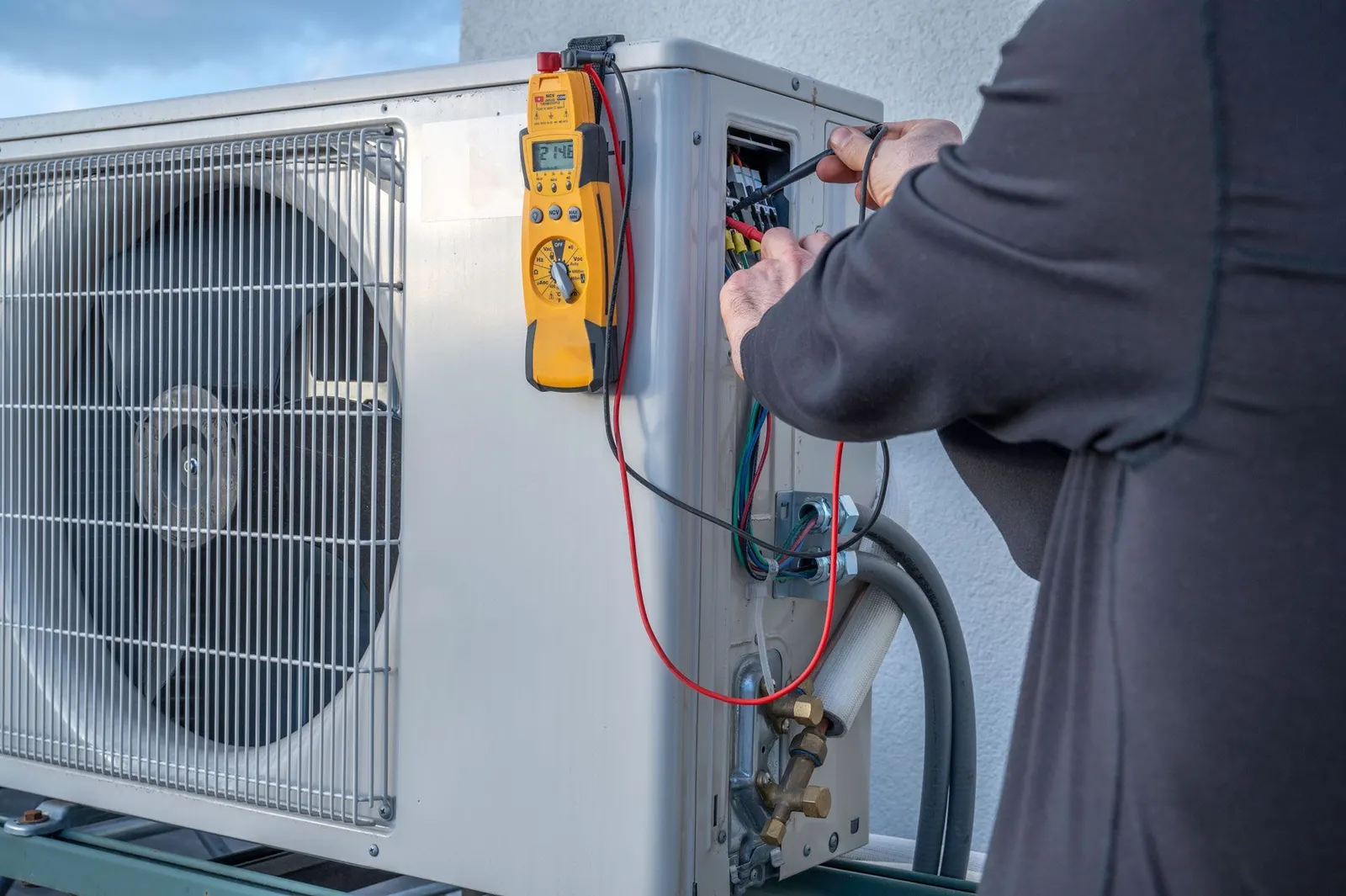
Both systems rely on a “split” design, meaning they have an outdoor unit (the condenser) and an indoor component (the evaporator). They use a chemical refrigerant to absorb heat from inside your home and dump it outside. However, the delivery method is the big differentiator.
How Central AC Works
Central air conditioning is a “forced air” system. It uses a large indoor air handler, usually tucked away in a basement, attic, or closet. This unit pulls air from your home, cools it over an evaporator coil, and then uses a powerful fan to push that chilled air through a network of metal or flexible ducts. Those ducts terminate at vents in every room.
It is a “whole-home” solution. When the thermostat clicks on, the entire house gets cooled at once. If you are interested in seeing how these systems integrate into a full home comfort plan, you can explore our Cooling Services for more details.
How Ductless Mini-Splits Work
As the name suggests, ductless mini-splits skip the ductwork entirely. Instead of one giant air handler, you have several smaller indoor “heads” mounted directly on the walls or ceilings of specific rooms.
These indoor units are connected to the outdoor compressor by a small bundle of cables and refrigerant lines that only require a 3-inch hole in your exterior wall. Each head has its own fan and cooling coil, allowing it to cool the room it’s in independently. This is why mini-splits are the kings of “zoning”—you can have the living room at 68 degrees while the guest room stays at 74.
Central AC vs Ductless Mini Split Comparison: Efficiency and Costs
When we sit down with families in Hagerstown or Martinsburg to discuss a central ac vs ductless mini split comparison, the conversation inevitably turns to the “Big Two”: how much will it cost to install, and how much will it cost to run?
In 2026, efficiency is no longer just a “nice to have”—it’s a financial necessity. With the implementation of SEER2 (Seasonal Energy Efficiency Ratio 2) standards, the industry has moved toward more rigorous testing that reflects real-world conditions.
| Feature | Central AC | Ductless Mini-Split |
|---|---|---|
| Max SEER2 Rating | Up to 26 | Up to 38+ |
| Typical Installation Time | 1–3 days (with existing ducts) | 1 day (per 1-2 zones) |
| Energy Loss | 25–30% through duct leaks | Near 0% |
| Technology | Single, Two-Stage, or Variable | Inverter (Variable Speed) |
If you are looking for a deep dive into what goes into a local setup, check out Everything You Need to Know About AC Installation in Hagerstown.
Energy Efficiency in a Central AC vs Ductless Mini Split Comparison
The biggest “hidden” cost of central air is duct leakage. According to the Department of Energy, the average central AC system loses 25% to 30% of its cooling energy through leaks, poor insulation, or thermal bypass in the ductwork. It’s like buying a gallon of milk but having nearly a third of it leak out of the bag before you get home.
Ductless mini-splits eliminate this waste entirely. Because the air is cooled right there in the room, there are no ducts to leak. Furthermore, mini-splits almost exclusively use “inverter technology.”
Think of a traditional central AC like a light switch—it’s either 100% on or 100% off, which leads to temperature swings and high energy spikes. An inverter-driven mini-split is more like a dimmer switch. It slows down or speeds up to maintain a perfectly steady temperature, using only the exact amount of electricity needed. This allows some mini-splits to achieve SEER2 ratings as high as 38, while even the most premium central units usually top out in the mid-20s.
Upfront Installation: A Central AC vs Ductless Mini Split Comparison
The upfront cost story depends heavily on the “bones” of your house.
- If you have existing ductwork: Replacing an old central AC with a new, high-efficiency model is often the most budget-friendly move.
- If you do NOT have ductwork: This is where the math flips. Installing brand-new ductwork in an existing home is a massive, invasive project. It can involve cutting into walls, losing closet space, and can add up to $18,000 just for the ducts themselves.
For homes in Charles Town or Shepherdstown without ducts, a multi-zone mini-split is often much cheaper and faster to install. You can learn more about the process in our AC Installation: Complete Guide Charles Town, WV.
“I’m looking to upgrade my home’s cooling. Who in Frederick specializes in energy-efficient systems?”
We hear this question often from our neighbors in Frederick, MD. The local climate here—swinging from humid, 95-degree July afternoons to freezing January nights—requires a system that can handle it all without breaking the bank.
Specializing in energy-efficient systems means looking at the home as a whole. In Frederick’s historic districts, for example, a central ac vs ductless mini split comparison usually ends in favor of ductless systems because we can preserve the original plaster walls and crown molding. In the newer developments around Ballenger Creek, a high-efficiency central system often makes more sense.
Whether you choose central or ductless, the key is a “Manual J” load calculation. We don’t just guess the size of the unit based on square footage. We look at your insulation, window types, and home orientation to ensure the system is perfectly sized. For Frederick residents, we’ve put together a local-specific resource: Don’t Sweat It: A Guide to Residential AC Installation in Frederick.
When Central AC Wins for Whole-Home Comfort
Despite the high efficiency of mini-splits, central AC is still the “gold standard” for many Mid-Atlantic families, particularly those with homes over 2,500 square feet.
Central AC is the winner when:
- You already have good ducts: If your ductwork is sized correctly and in good condition, stick with it.
- You want “invisible” comfort: Some homeowners don’t like the look of a unit mounted on the wall. Central AC is hidden behind small, discreet vents.
- Air Quality is a priority: Central systems allow for massive, high-efficiency air filters (like HEPA or MERV 13-16) and whole-home humidifiers or UV lights to be integrated directly into the air handler.
- Uniformity: If you want every square inch of your home to be exactly 72 degrees, central air is designed for that consistent flow.
If you’re in a larger home in Berkeley Springs, for instance, central air provides that seamless, set-it-and-forget-it comfort. See our The Ultimate Guide to AC Installation in Berkeley Springs, WV for more.
Why Ductless Mini-Splits Excel in Additions and Renovations
Mini-splits are the ultimate problem-solvers. We often see homes where the central AC works fine for the main floor, but the upstairs bedroom or the new sunroom is always five degrees too hot.
Mini-splits are the clear choice for:
- Home Additions: Why pay to resize your entire central system and run new ducts for one room? A single-zone mini-split is faster and more efficient.
- Garages and Basements: If you’ve converted a garage into a workshop or finished a basement, a mini-split provides climate control without the risk of pulling car exhaust or basement odors into the rest of the house’s ductwork.
- Historic Homes: In places like Martinsburg, many older homes were built before air conditioning. Mini-splits allow us to bring these homes into 2026 comfort levels without a major renovation.
If you’re dealing with a “problem room” in Martinsburg, our Martinsburg AC Repair Guide for Homeowners covers how we troubleshoot these specific comfort issues.
Maintenance, Noise Levels, and 2026 Efficiency Standards
In any central ac vs ductless mini split comparison, you have to consider what life will be like after the installation.
Noise Levels
If you’re sensitive to noise, mini-splits are the hands-down winner. The indoor units operate at 19 to 26 decibels. To put that in perspective, a whisper is about 30 decibels. You will often forget the unit is even running. Central AC isn’t “loud,” but you will hear the rush of air through the vents and the occasional “thump” when the large blower motor kicks on.
Maintenance Requirements
Maintenance is a bit different for each:
- Mini-Splits: These require more frequent homeowner interaction. You should rinse the reusable filters every 2 to 4 weeks. Because they move air directly in the living space, they can get dusty faster.
- Central AC: You typically replace the large pleated filter every 1 to 3 months. However, you also have to worry about the ductwork. Over time, ducts can accumulate dust or develop leaks that require professional cleaning or sealing.
Regardless of the system, an annual professional tune-up is vital to keep your warranty valid and your efficiency high. For our neighbors in Pennsylvania, we have a guide on Chambersburg AC Maintenance: Don’t Let Your Unit Lose Its Chill! that explains why this yearly checkup is so critical.
Frequently Asked Questions About HVAC Comparisons
Can I use both systems together in one home?
Absolutely! This is what we call a hybrid approach, and it’s becoming very popular in 2026. Many homeowners use a central AC system for the main living areas and kitchen, then install a ductless mini-split in a “hot spot” like an attic bedroom or a home office. This allows you to keep the main thermostat higher during the day while you stay perfectly cool in your office, saving a significant amount on your monthly bill. If your current system is struggling to keep up, check out Professional AC Repair in Chambersburg, PA: A Local’s Guide.
How do these systems handle heating in cold climates?
In the Mid-Atlantic region, we don’t just worry about the heat; we have to think about those Shippensburg winters.
- Central AC is usually paired with a gas furnace or an electric heat strip.
- Mini-Splits are almost always “heat pumps.” This means they can reverse their operation to pull heat from the outside air and move it indoors.
Modern “cold-climate” mini-splits are incredibly impressive, maintaining high heating capacity even when it’s 5°F outside. They are often much more efficient than electric baseboard heat or older oil furnaces. If you’re wondering how to keep your heating system running smoothly, see How to Find the Best AC Repair in Shippensburg, PA Without Losing Your Cool.
What is the typical lifespan and warranty for each?
With proper maintenance, both systems should last between 15 and 20 years. However, mini-splits can sometimes push toward 25 years because they don’t have to work as hard to overcome duct resistance. Most major manufacturers offer 10-year parts warranties, provided the system was installed by a licensed professional and maintained annually. For more on maximizing the life of your unit, read Finding the Best AC Repair in Hagerstown Without Breaking a Sweat.
Conclusion
There is no single “right” answer in the central ac vs ductless mini split comparison. The best system is the one that fits your home’s layout, your family’s comfort preferences, and your long-term energy goals.
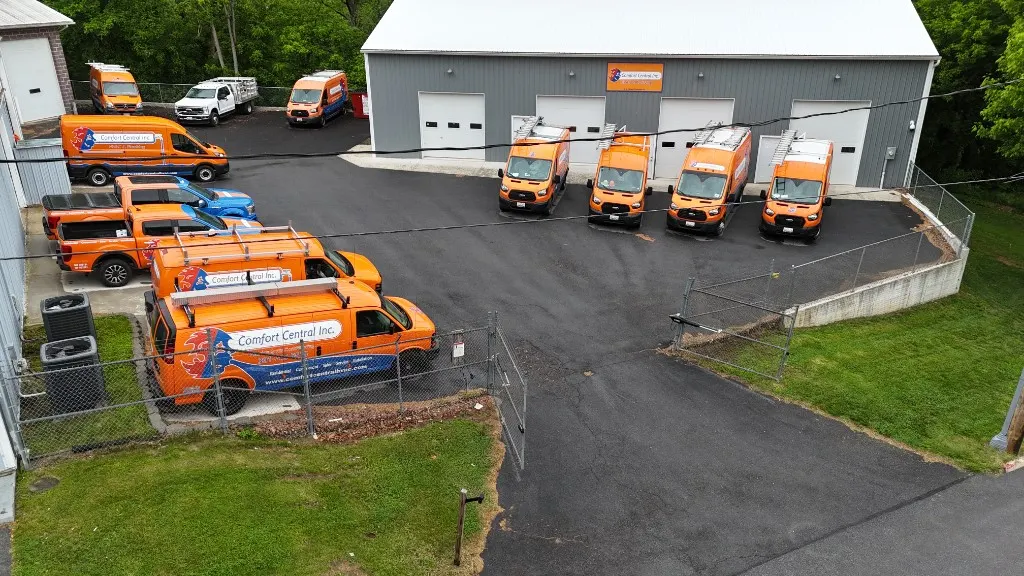
At Comfort Central HVAC & Plumbing, we’ve been family-owned since 2006, and we treat every home like it’s our own. Whether you are in Charles Town, WV, Shippensburg, PA, or right here in Hagerstown, MD, our goal is to provide fair pricing and expert advice that keeps your family comfortable for decades, not just through the next season.
If you’re still on the fence, we’d love to help. We can perform a professional comfort assessment of your home, check the condition of your existing ducts, and provide a clear, no-pressure recommendation.
Ready to find the perfect cooling solution for your home? Explore our Cooling Services or give us a call today to schedule your consultation!