AC struggling in Frederick, MD? Our AC inspection & testing services pinpoint issues, restore comfort, and lower energy bills. Request a free estimate.
AC Inspection & Testing in Frederick, MD
Is your air conditioner struggling to keep up with Frederick's humid climate, leaving hot spots in certain rooms, driving up your energy bills, or producing strange musty odors when it kicks on? These are not just minor annoyances you have to live with; they are clear signals that your cooling system is under severe strain and needs professional attention before a complete breakdown occurs. Comfort Central is ready to step in with thorough AC inspection and testing services to pinpoint the exact issue and restore your home's comfort and efficiency.
Warning Signs Your AC System Needs Professional Testing
Rising Energy Bills
You open your utility statement and see a massive spike in costs, even though your thermostat habits have not changed at all. An inefficient air conditioner consumes significantly more power just to achieve the temperature you requested. This happens because the system is running longer cycles to compensate for an underlying mechanical or airflow issue. Ignoring this ongoing inefficiency costs you money every single month. It also puts heavy, unnecessary wear on your compressor and blower motor. Addressing the root cause early stops the financial bleed and protects your equipment from premature failure.
Uneven Cooling and Hot Spots
Certain rooms in your home feel perfectly comfortable while others remain noticeably warm and stuffy, no matter how low you set the thermostat. You might even find yourself avoiding particular areas of your house during the warmer months. This often points to failing ductwork integrity, restricted airflow, or an aging system struggling to push conditioned air throughout the house. Uneven cooling forces your equipment to run constantly as the thermostat tries to satisfy the temperature in the warmer zones. This constant operation accelerates wear and tear on vital moving parts. Testing helps us determine if the issue is with the equipment's output or the distribution system itself.
Strange Noises from the Unit
You are hearing unusual sounds like grinding, squealing, banging, or hissing coming from your vents or the outdoor cabinet. Air conditioners are designed to run relatively quietly, so any new, loud noise is a major red flag. Mechanical noises frequently signal failing motor bearings, loose fan blades, or active refrigerant leaks. These sounds are early warning alarms for component failure that will eventually lead to a complete system shutdown. Grinding often means metal-on-metal friction that destroys motors, while hissing indicates a pressurized leak. Catching these noises early through professional diagnostics prevents catastrophic damage to the core machinery.
Musty Odors and Poor Air Quality A damp, moldy, or stale smell fills the air immediately after your cooling cycle starts up.
High humidity environments often foster mildew growth inside the dark, damp spaces of your evaporator coil or ductwork. This is a particularly common issue in older homes where ventilation might not be optimal. Breathing in these spores directly impacts your indoor air quality and indicates your system is not managing moisture properly. An inspection allows us to locate the source of the biological growth. We can then recommend the proper cleaning methods to eliminate the odor and protect your respiratory health.
Visible Leaks and Moisture
You spot puddles of water, damp drywall, or excessive condensation pooling around your indoor air handler. This nearly always indicates a clogged condensate drain line that is backing up into your home. In some cases, it can also point to a frozen evaporator coil that is rapidly thawing and overwhelming the drain pan. Undrained moisture quickly leads to structural water damage in your ceilings, walls, or floors. It also triggers safety float switches that will completely lock out your equipment until the water is cleared. Fast intervention is required to protect your property from expensive water mitigation repairs.
What Is Causing Your Cooling System Problems
Clogged Air Filters and Dirty Coils
Over time, your system pulls in massive amounts of dust, pet dander, and airborne particulates that saturate the air filter. Once the filter is full, that debris bypasses it and coats your indoor evaporator coil, acting like an insulating blanket that blocks heat transfer. This restriction chokes the system, causing the internal temperature to drop and the coil to freeze solid. Our inspection process identifies these airflow restrictions immediately. We check the static pressure of the system to determine exactly how hard the blower motor is working to pull air through the filter. The solution involves replacing restrictive filters and determining the level of deep cleaning required to restore proper heat exchange at the coil.
Condensate Drain Line Blockages
Your air conditioner removes gallons of moisture from your indoor air, which collects in a drain pan and flows outside through a narrow PVC pipe. The constant flow of warm, damp water creates the perfect breeding ground for algae, mold, and thick sludge to build up inside that line. Because Frederick experiences significant humidity, local cooling systems produce a massive amount of condensation that constantly tests these drainage lines. We trace the entire drainage system to locate blockages and evaluate the pitch of the pipe. Testing involves flushing the line to ensure water flows freely without backing up into the secondary safety pan. We also check the condition of the drain pan itself for rust or micro-cracks that could leak water into your home.
Low Refrigerant Levels and Hidden Leaks
Refrigerant is the vital chemical compound that absorbs heat from inside your house and releases it outdoors. Because this is a sealed system, low refrigerant levels always indicate a physical leak somewhere in the copper lines, the indoor coil, or the outdoor condenser. Your system does not consume refrigerant like a car consumes gas; it circulates the exact same charge for its entire lifespan unless there is a breach. Testing involves measuring these precise pressure levels and calculating the subcooling and superheat metrics. If the levels are low, we use electronic leak detectors to pinpoint the exact location of the breach. The solution requires repairing the leak, evacuating the system, and recharging it to the manufacturer's exact specifications.
Electrical Component Wear and Tear
Your cooling equipment relies on a complex network of high-voltage electrical components, including capacitors, contactors, and intricate wiring harnesses. Constant cycling under heavy loads causes these parts to degrade, pit, or lose their required electrical capacitance over time. The heavy workload placed on these systems means electrical components are under constant stress and degrade faster than you might expect. We test every electrical connection and component under load to catch failing parts before they leave you stranded. We measure the microfarads of your capacitors to ensure they are delivering the proper jolt of energy to start your motors. We also inspect contactors for burnt or pitted contacts that could cause the system to misfire or weld shut.
Outdoor Unit Debris Accumulation
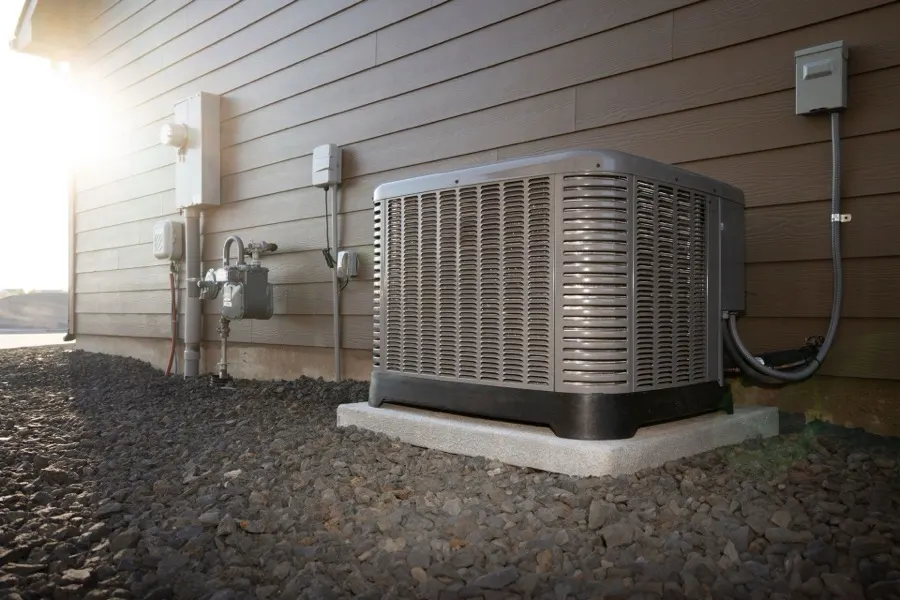
The large cabinet sitting outside your home needs clear, unobstructed airflow to exhaust the heat it pulled from your house. Leaves, grass clippings, dirt, and cottonwood seeds easily get sucked into the delicate aluminum fins of the condenser coil. When this coil is choked with debris, the system cannot release heat, causing the internal pressure and temperature to skyrocket. We inspect the exterior unit to evaluate the condition of the fins and the surrounding clearance. If the coil is impacted, the compressor overheats and internal safety switches trip to prevent catastrophic engine failure. Restoring the system requires a specialized chemical wash to push the debris out of the fins without bending the fragile aluminum.
What to Expect During the Service Visit
When you schedule an AC inspection and testing service for your Frederick property, you receive a comprehensive evaluation from a licensed and insured professional. Comfort Central has been family-owned and operated since 2006, meaning we approach every service call with a commitment to honest diagnostics and transparent communication. We start by listening to the specific symptoms you are experiencing before moving on to a detailed, multi-point technical assessment of your entire system. Our technicians measure the critical vital signs of your equipment, starting with airflow volume, temperature drops across the coils, and exact refrigerant pressures. We open the electrical panels to test the microfarad readings on your capacitors and inspect the contactors for dangerous pitting or burn marks. We also evaluate the condition of your indoor blower motor, checking amp draws to ensure it isn't overworking or nearing failure.
Evaluating Drainage and Distribution
Beyond the mechanical components, we thoroughly inspect your condensate drainage system to ensure moisture is safely routed away from your foundation. We test the safety float switches to confirm they will properly shut down the system if a backup occurs. This is a critical step to protect your home from sudden water damage. We also perform a visual check of your accessible ductwork to look for disconnected joints or crushed sections that might be stealing your conditioned air. Once the testing is complete, we sit down with you to explain our findings in plain English. We provide clear, pressure-free recommendations for any necessary repairs to get your system running reliably again.
Related Services You May Need
Depending on the results of our comprehensive testing, your system might require targeted interventions to get back on track. Routine AC maintenance and tune-up services are often the best next step to clean internal components, lubricate moving parts, and prevent future breakdowns. If our inspection reveals excessive dust buildup or mold within the system, we can also explore dedicated indoor air quality services to purify the air circulating through your living spaces.
Why This Matters and the Cost of Waiting
Postponing a needed diagnostic check when your system is showing signs of distress rarely ends well. What begins as a minor inefficiency, like a slightly low refrigerant charge, forces your compressor to run continuously to meet the thermostat demand. This constant strain dramatically shortens the lifespan of the compressor, which is the most expensive component in your entire system to replace. Ignoring warning signs also exposes your property to significant secondary damage. A partially clogged drain line will eventually overflow completely, sending gallons of water through your ceiling or pooling across your hardwood floors. Addressing these symptoms early through professional testing prevents simple fixes from cascading into major emergencies and premature equipment replacement.
Schedule Your Inspection Today
Do not let lingering cooling issues compromise your comfort or drain your wallet through inflated utility bills. Proactive testing is the smartest way to understand exactly what is happening inside your equipment and make informed decisions about your home. Reach out through our website today to schedule your service with Comfort Central and let our experienced technicians restore your peace of mind.
Contact us today for a free estimate on your {title} needs.