
Navigating Sudden AC Failures: What Every Homeowner Should Know
Your central air conditioning system just shut down on the hottest afternoon of the year, leaving you sweating and searching for common homeowner questions answered before you make a costly mistake. A sudden AC failure during peak heat is incredibly stressful. The house warms up quickly, panic sets in, and the urge to just pay whatever it takes to get the cool air flowing again is strong. However, rushing into a decision can easily lead to unnecessary expenses and buyer's remorse.
Identifying the root cause of a system failure is the critical first step before committing to a costly repair or a brand-new installation. When your cooling equipment suddenly stops working, you face a major decision point: determining if the issue can be resolved with basic, safe troubleshooting or if it requires dispatching a licensed professional to your home.
Understanding the basic thresholds of system diagnostics helps you prioritize your budget and your time. Not every strange noise or warm breeze means your system is dead, and not every quick fix will keep an aging unit alive through the summer. By taking a step back and evaluating the situation objectively, you can figure out exactly what kind of help you need.
The Repair vs. Replace Threshold: Making the Right Financial Call
One of the hardest parts of dealing with a broken air conditioner is figuring out if you should fix the old unit or invest in a new one. The average lifespan of a central air conditioning unit is typically 10 to 15 years, according to the U.S. Department of Energy. If your system is approaching or has passed this age range, the components are naturally experiencing significant wear and tear.
To help make this decision easier, many professionals use a baseline calculation known as the 5,000 rule. You apply this rule by multiplying the estimated cost of a repair by the age of your equipment in years. If the resulting number exceeds 5,000, replacing the unit is generally the smarter financial move. If the number is lower, a repair might still make sense. This calculation offers a neutral, objective baseline for evaluating repair viability without the pressure of a sales pitch.
Beyond the math, you have to look at the system's recent history. Frequent breakdowns, steadily rising energy bills, and systems that rely on outdated, phased-out refrigerants are strong indicators that a full AC installation may be more cost-effective than continuous patching. An objective evaluation ensures you are not pressured into a premature replacement if a simple repair is entirely sufficient for your home.
When Does a Repair Make Sense?
Fixing your current system is usually the right path if the unit still has plenty of life left and the breakdown is an isolated incident. You should strongly consider a repair under the following conditions:
- The system is relatively new: If your air conditioner is less than 10 years old, it likely still has years of efficient operation ahead of it.
- The fix is minor: If the repair involves a basic component like a capacitor or a contactor, and the system has been well-maintained, fixing it is a sound investment.
- Consistent past performance: If your cooling power and energy efficiency have remained consistent and reliable prior to this specific failure, a repair will likely restore that baseline performance.
When is an AC Installation the Better Investment?
Sometimes, sinking more money into an aging machine is just throwing good money after bad. A replacement becomes the logical choice when the system shows signs of irreversible decline. Watch for these indicators:
- Major component failure: When the compressor or the evaporator coil fails on an older unit, the cost to replace those specific parts is often high enough to justify buying a completely new system instead.
- Outdated refrigerants: If your system uses older refrigerants that are no longer manufactured, any leak will be incredibly expensive and difficult to service.
- Noticeable efficiency drops: If your monthly utility costs have spiked significantly despite normal usage, your system is losing its ability to cool efficiently.
| Evaluation Factor | Leans Toward Repair | Leans Toward Replacement |
|---|---|---|
| System Age | Under 10 years old | Over 10 to 15 years old |
| Repair Cost Math | Age x Repair Estimate is under 5,000 | Age x Repair Estimate is over 5,000 |
| Energy Bills | Consistent month over month | Steadily rising despite normal use |
| Breakdown Frequency | First issue in several years | Multiple service calls in one season |

Basic AC Troubleshooting You Can Do Before Calling a Professional
Before you schedule a service call and pay a dispatch fee, there are a few safe, basic checks you can perform yourself. Sometimes, what looks like a total system failure is actually a minor oversight that takes two minutes to fix. Establishing clear go/no-go thresholds for basic troubleshooting versus calling a licensed expert protects your equipment and your wallet.
Walk through this basic checklist to rule out the most common non-mechanical issues:
- Check the thermostat settings: Verify that the thermostat is actually set to "cool" and that the temperature is set at least three degrees below the current room temperature. If the screen is blank, replace the batteries with fresh ones.
- Inspect the air filter: A severely clogged filter restricts airflow entirely. This lack of air causes the evaporator coil to drop in temperature and freeze over in solid ice, which forces the system to shut down. Pull the filter out and hold it up to a light; if you cannot see light through it, replace it immediately.
- Verify the circuit breakers: Check your main electrical panel to ensure the breaker for the HVAC system hasn't tripped. If it is sitting in the middle position, flip it entirely off, then back on. Also, check the outdoor disconnect switch near the compressor unit.
- Check all return vents: Walk through your home and make sure rugs, furniture, or heavy curtains are not blocking the return air grilles. The system needs to pull air in to push cold air out.
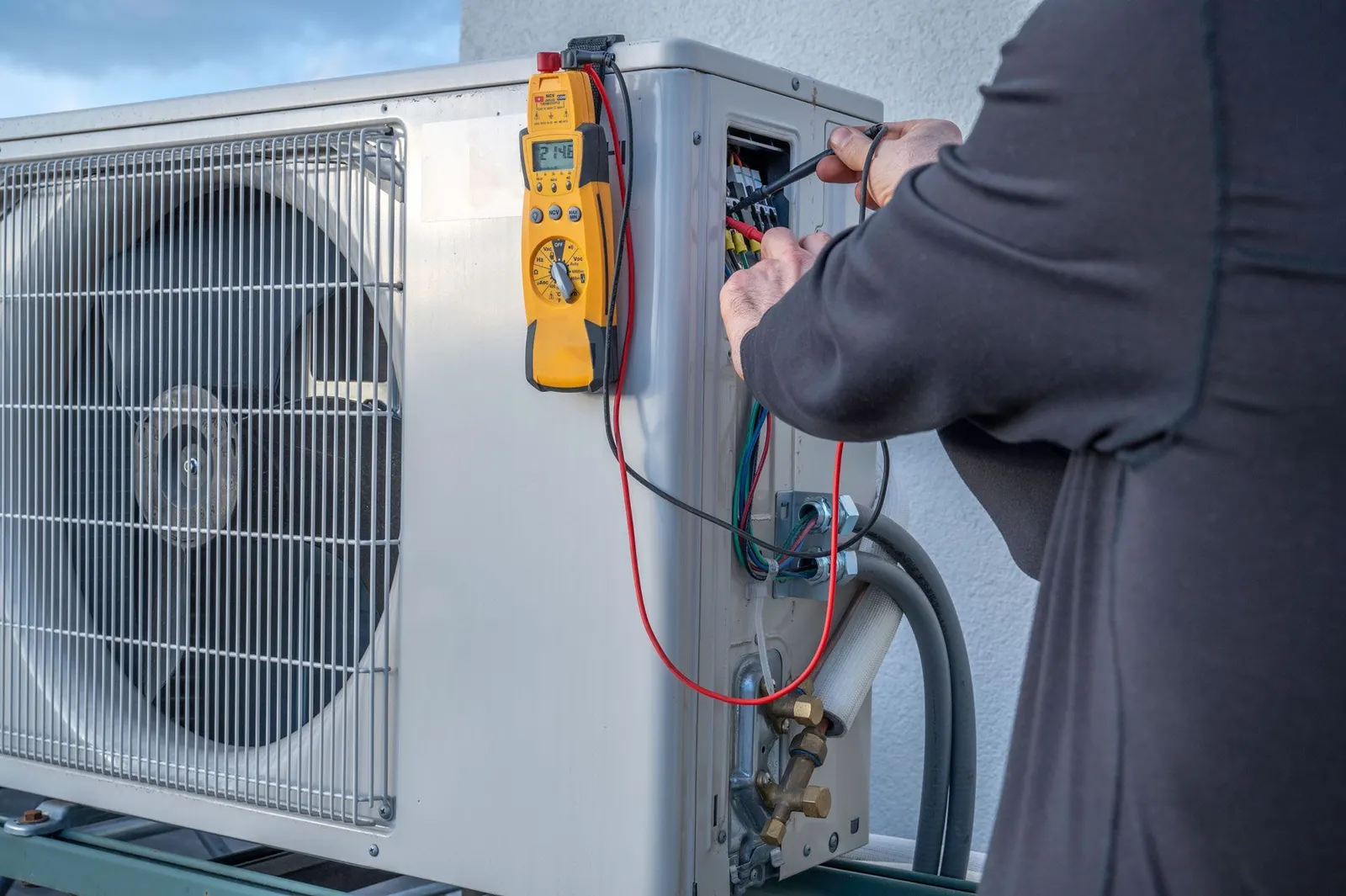
If these basic checks do not resolve the issue, you have reached the threshold of DIY troubleshooting. The problem likely involves complex electrical components, failing motors, or incorrect refrigerant levels. These issues strictly require a licensed professional to diagnose and repair safely. Opening the cabinet or attempting to test high-voltage components yourself is dangerous and can void your manufacturer warranty.
How Summer Heat Fluctuations Affect Your Air Conditioner's Lifespan
Standard lifespan estimates from manufacturers assume moderate, consistent usage in average climates. However, extreme local temperature swings completely change that equation. Discussing how the local area's specific summer climate and heat fluctuations impact your system is vital, because reliable installation and realistic lifespan expectations are critical for your daily home comfort.
When intense summer heat settles over the region, your air conditioner does not get a break. The extreme temperatures force the compressor to work much harder and run in significantly longer cycles just to maintain a basic indoor temperature. This continuous operation accelerates the natural wear and tear on critical moving parts. The internal motors generate more heat, the capacitors endure more electrical stress, and the refrigerant lines are pushed to their maximum operating pressures.
Because of this intense environmental impact, systems subjected to heavy seasonal loads often show signs of fatigue much earlier than the standard 10-to-15-year average. A unit that might last 15 years in a mild, temperate zone might only survive 10 or 11 years when forced to battle brutal, fluctuating summer heat waves year after year. Understanding this climate impact helps homeowners make more realistic decisions about when an aging system is truly no longer viable. If your system is 11 years old and has survived a decade of brutal summers, it has already lived a full, hard-working life.
Why Accurate AC Sizing Matters More Than Rule-of-Thumb Estimates
If you determine that a replacement is necessary, you might assume you can just swap out your old unit for a new one of the exact same size. Replacing an AC unit is not a simple one-to-one swap. A proper Manual J load calculation is absolutely required to determine the exact cooling capacity your specific home needs today.
Reiterating our climate reality: local summer heat fluctuations require precise Manual J load calculations to ensure proper sizing rather than relying on standard rule-of-thumb estimates. Your home's thermal profile may have changed since the last unit was installed. You might have added new windows, upgraded your attic insulation, or even built an addition. All of these factors change how much cooling power is required.
Short-cycling is the direct result of an oversized unit. If the air conditioner is too large for the space, it blasts the house with cold air and shuts off within ten minutes. Because it doesn't run long enough, it fails to remove humidity from the air, leaving your home feeling cold but uncomfortably clammy. On the other hand, an undersized unit will run constantly without ever properly cooling the home, driving up your energy bills and burning out the motor prematurely.
Furthermore, new SEER2 efficiency standards require stricter testing conditions, meaning modern units operate differently than older models. They are designed to move air more efficiently and manage humidity better, provided they are sized correctly. Proper sizing is also crucial when exploring alternative cooling setups for unique home layouts, such as adding AC to a house without vents. No matter what equipment you choose, precise mathematical sizing is the foundation of a successful installation.
Choosing an Honest Advisor for Your AC Diagnostics
Facing an AC failure is stressful, and as a homeowner, you deserve an objective evaluation of your system's health. When a technician arrives at your door, you are relying on their expertise to guide a major financial decision. This is why choosing a trusted partner is so important.
A trustworthy diagnostic process focuses entirely on identifying the root cause of the failure and presenting all viable options, rather than just pushing for a brand-new installation right out of the gate. Our business's trusted reputation in the local area is built on being an honest, family-valued service provider that prioritizes the customer's budget over an immediate sales pitch. We believe in showing you exactly what failed, explaining why it failed, and laying out the realistic paths forward.
Working with a provider who values transparency ensures that any recommendation you receive is in your best interest. Whether that means a minor capacitor replacement to get you through the rest of the summer, or a full system replacement because the compressor has permanently seized, you need to know the facts. An honest advisor will answer your questions patiently, explain the math behind the repair-versus-replace threshold, and give you the breathing room to make the right choice for your household.
Frequently Asked Questions About AC Diagnostics and Installation
How do I know if my AC compressor is bad?
A failing compressor often announces itself with loud, unusual noises and a distinct lack of cooling. You might hear grinding, clanking, or a harsh screeching sound coming from the outside unit when it tries to start. Additionally, if the outdoor unit trips the circuit breaker repeatedly or shakes violently when turning on, the compressor is likely pulling too much electricity and seizing up. Because the compressor is the heart of the system, these symptoms require immediate professional diagnosis.
When is it time to replace my air conditioner?
It is generally time to replace your air conditioner when it is over 10 to 15 years old and requires frequent, expensive repairs. If you find yourself calling for service multiple times a season, or if your energy bills are steadily climbing despite normal usage, the system is failing. Applying the rule of multiplying the system's age by the estimated repair cost can give you a solid mathematical baseline for when replacement is the wiser financial choice.
Why is my AC running but not cooling?
When the system is running but blowing warm or room-temperature air, the most common culprit is a severely restricted air filter or low refrigerant levels. A clogged filter prevents the system from breathing, which stops the cooling process in its tracks. If the filter is clean, you may have a refrigerant leak or a dirty evaporator coil that is preventing the system from absorbing heat out of your home's air.
What should I look for when buying a new AC?
When purchasing a new system, prioritize proper sizing, energy efficiency ratings, and a strong manufacturer warranty. You should insist on a Manual J load calculation to ensure the unit is perfectly sized for your home's specific square footage and insulation levels. Additionally, look at the SEER2 rating to understand the unit's energy efficiency, as a higher rating will lower your monthly utility costs over the lifespan of the equipment.
When should I call a professional for AC issues?
You should call a professional immediately if you hear grinding noises, smell burning odors, or notice that the system is repeatedly tripping your electrical breaker. You should also call an expert if you have already performed basic troubleshooting—like changing the filter and checking the thermostat—and the system still refuses to turn on. Any issue involving internal electrical components or refrigerant lines must be handled by a licensed technician for safety.
How do new SEER2 efficiency standards impact my AC installation?
The new SEER2 standards mandate stricter, more realistic testing conditions for all new air conditioning equipment. This means that modern units are rigorously tested to ensure they perform efficiently under real-world pressures, not just in a perfect laboratory environment. For your installation, this ensures you are getting a highly efficient machine that uses less electricity to cool your home, though it also requires precise sizing and proper ductwork compatibility to achieve those efficiency gains.
Make an Informed Decision About Your Home's Comfort
Having a clear go/no-go threshold empowers you to make confident, financially sound decisions about your HVAC system. When the heat rises and your equipment struggles, knowing exactly when to troubleshoot and when to call in an expert saves you time, money, and unnecessary stress. Getting your common homeowner questions answered honestly is the best way to protect your investment.
Whether you need minor troubleshooting advice to get through a hot afternoon or a comprehensive, transparent evaluation for a new AC installation, expert guidance is available. A direct, well-structured diagnostic approach provides the clarity you need. Reach out to learn more about your cooling options, and get the honest answers you deserve without the pressure of an aggressive sales pitch.