
Addressing the Most Pressing AC Replacement Dilemmas
How do you know when an air conditioning system has truly reached the end of its lifespan, rather than just needing a standard repair? Getting these common homeowner questions answered is the first step toward making a sound investment in your property. When a cooling system begins to fail, the resulting discomfort often leads to rushed decisions. Homeowners frequently face a confusing barrage of technical jargon, conflicting advice, and high-pressure sales tactics. Identifying the root cause of a service failure requires stepping back and evaluating the situation through the lens of objective data rather than urgency.
A typical pattern we see in general FAQ service inquiries involves homeowners struggling to distinguish between minor component failures and systemic breakdowns. This guide is designed to provide a neutral, fact-based breakdown of the AC installation and evaluation process. By relying on established industry metrics—such as proper load calculations, updated efficiency standards, and strict installation protocols—you can evaluate your failing AC system with confidence. The goal is to set clear expectations for what a professional evaluation should look like, ensuring your next steps are dictated by the actual condition of your equipment, not guesswork.
Why Precise AC Sizing is Critical for Humidity Control
One of the most persistent misunderstandings in residential HVAC is the idea that a larger air conditioner will cool a home better. In reality, precise sizing is a strict technical necessity. Professional technicians determine the exact capacity your home requires by performing a Manual J load calculation. This calculation evaluates the square footage, window orientation, insulation quality, ceiling height, and local climate variables to determine the exact amount of heat your home gains during the day. This replaces the outdated "rule-of-thumb" sizing methods that frequently lead to poorly performing systems.
The problem with undersizing:
An undersized air conditioning unit simply lacks the capacity to remove the heat entering your home. As a result, the system runs constantly, struggling to reach the temperature set on the thermostat. This continuous operation leads to astronomical energy bills, premature wear and tear on critical components like the compressor, and a home that never truly feels comfortable during peak afternoon heat.
The cause of humidity issues:
Air conditioners perform two distinct functions: they lower the air temperature (sensible cooling) and they remove moisture from the air (latent cooling). For effective moisture extraction, the warm indoor air must pass over the cold evaporator coil for an extended period. When analyzing general FAQ service inquiries, a frequent complaint is a home that feels "cold and clammy." This is almost always the result of an oversized system.
The solution through proper sizing:
A correctly sized system will run in long, steady cycles. These extended run times allow the evaporator coil to extract maximum moisture from the air, draining it outside and leaving the indoor air crisp and comfortable. Given the local summer heat and high humidity indexes in the region, precise AC sizing is absolutely non-negotiable to maintain ideal indoor air quality and comfort.
The Danger of Oversizing in Humid Climates
- Rapid temperature drops: Oversized systems cool the indoor air far too quickly, satisfying the thermostat before latent heat (humidity) can be removed.
- The "cold and clammy" effect: Because the moisture remains in the air, the indoor environment feels damp and uncomfortable, even at lower temperatures.
- Excessive mechanical wear: The compressor is forced to start and stop frequently (a process known as short-cycling), which drastically reduces the lifespan of the equipment and increases the likelihood of sudden electrical failures.
Objective Criteria for the Repair vs. Replace Decision
When an air conditioner breaks down, deciding whether to invest in a repair or commit to a full replacement is often the most stressful part of the process. Rooted in traditional family values and honest home repairs, we believe in providing straightforward, objective criteria that empower you, clearly cutting through typical upselling jargon. A helpful baseline metric used by professionals is the "5,000 rule." To use this rule, multiply the age of your system in years by the estimated cost of the necessary repair. If the resulting number exceeds 5,000, replacing the unit is generally the more financially sound decision. If it is under 5,000, repairing the unit may still make sense.
Beyond simple math, you must evaluate the nature of the breakdown. Frequent refrigerant leaks indicate a deteriorating evaporator or condenser coil. Because these coils operate under high pressure, patching a leak is often a temporary fix; a new leak will likely form elsewhere on the weakened metal. Similarly, a failed compressor on a system older than ten years is a strong indicator that the equipment has reached the end of its viable service life. You must weigh the cost of ongoing minor repairs against the return on investment (ROI) provided by a new, highly efficient system.
| System Condition | Repair Consideration | Replacement Indicator |
|---|---|---|
| Age of Equipment | Under 10 years old with minor electrical issues. | Over 12-15 years old with major mechanical failure. |
| Repair Frequency | First major breakdown in several years. | Multiple service calls required in a single cooling season. |
| Refrigerant Status | System uses modern, available refrigerant. | System requires phased-out R-22 or R-410A due to a leak. |
| Energy Bills | Costs remain consistent year over year. | Unexplained, steady increases in monthly energy usage. |

Understanding SEER2 and Modern Efficiency Standards
If you are reviewing general FAQ service inquiries regarding new installations, you will inevitably encounter the term SEER2. The Seasonal Energy Efficiency Ratio 2 (SEER2) is the updated standard mandated by the Department of Energy (DOE) for measuring the efficiency of residential cooling systems. It differs from the older SEER rating by utilizing more rigorous testing conditions. SEER2 testing increases the external static pressure requirements to better simulate real-world ductwork conditions, providing a much more accurate reflection of how a system will perform in your home.
The DOE sets minimum efficiency requirements based on regional climates. Modern air conditioners must meet these strict SEER2 baselines to be legally installed. There is a direct correlation between higher SEER2 ratings and lower monthly energy consumption. A system with a high SEER2 rating utilizes advanced technology, such as variable-speed compressors and multi-stage fans, to adjust cooling output precisely to the home's needs, rather than simply blasting on and off at full capacity.
However, it is critical to understand that purchasing a high-efficiency unit does not guarantee low energy bills on its own. Maximum efficiency is only achievable when that premium equipment is paired with properly sealed ductwork and correct installation practices. If an 18-SEER2 air conditioner is connected to leaky, uninsulated ducts in a hot attic, the system will never deliver its rated efficiency. Professional assessment of the entire air distribution system is a mandatory step in the upgrade process.
The Impact of EPA Refrigerant Transitions on New Installations
The HVAC industry is currently undergoing a massive shift in how cooling systems operate, driven by environmental regulations. The Environmental Protection Agency (EPA), under the AIM Act, has mandated a strict phase-down of R-410A refrigerant. For over a decade, R-410A was the industry standard, but it has a high Global Warming Potential (GWP). As the production of R-410A decreases, the cost and availability of this refrigerant will become a significant concern for homeowners relying on older systems.
This phase-down directly impacts the repair versus replace decision. If an older system develops a severe leak, recharging it with R-410A will become increasingly difficult and expensive over the coming years. The industry is transitioning to newer, low-GWP A2L refrigerants, such as R-454B and R-32. These modern refrigerants are more environmentally friendly and often yield better thermodynamic performance.
Why modern refrigerants matter for your investment:
- Long-term viability: Purchasing a system compliant with current A2L refrigerant standards ensures your equipment will be serviceable for its entire 15-year lifespan.
- Repair costs: Avoiding phased-out refrigerants protects you from the artificial price inflation that occurs when a chemical becomes scarce.
- System compatibility: You cannot simply put a new A2L refrigerant into an older R-410A system; the oils, pressures, and components are entirely different.
- Environmental compliance: Upgrading ensures your home aligns with the latest federal regulations regarding greenhouse gas emissions.
What Happens During a Professional AC Installation?
Demystifying the installation process helps alleviate the anxiety associated with major home upgrades. A professional installation is a highly technical procedure that requires specialized tools and strict adherence to safety protocols. When you schedule an AC installation in Hagerstown or the surrounding areas, the process follows a rigorous sequence to ensure the equipment operates exactly as the manufacturer intended.
- Pre-installation preparation: The process begins with the safe recovery of the existing refrigerant from the old unit, strictly following EPA guidelines. The technicians then disconnect the electrical wiring, remove the old condenser and indoor coil, and thoroughly inspect the existing ductwork and plenum for signs of leakage or biological growth.
- Setting the new equipment: The indoor air handler or evaporator coil is carefully positioned and secured to prevent vibration. Outside, the technicians level the condenser pad. A perfectly level outdoor unit is critical to ensure the compressor oil circulates properly and the fan motor does not suffer from uneven bearing wear.
- Connecting the system: The copper refrigerant lines are brazed together. During this high-temperature welding process, nitrogen is flowed through the pipes to prevent oxidation and soot buildup inside the lines. The primary and secondary condensate drain lines are installed, and all high-voltage and low-voltage electrical connections are secured.
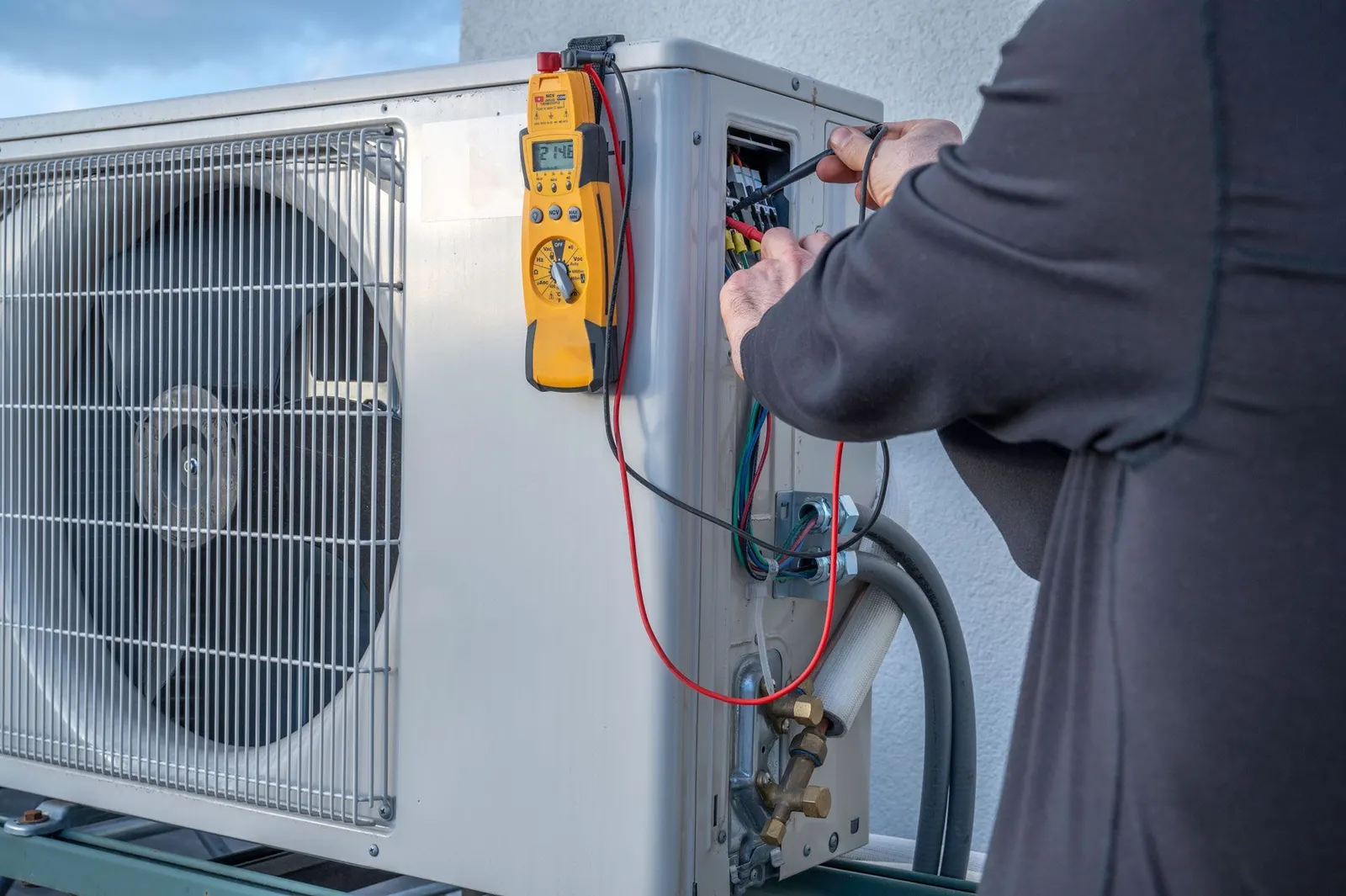
- System commissioning: This is the most critical step. Technicians attach a vacuum pump to the system to boil off any trace moisture and remove non-condensables, pulling the system down below 500 microns. Once the vacuum holds, the new refrigerant is released into the system. Finally, the technicians test the airflow, measure the temperature drop across the coil, and verify the electrical amperage matches the manufacturer's data plate.
Frequently Asked Questions About AC Upgrades and Replacements
To further assist in your research, we have compiled direct answers to the most common homeowner questions answered during our daily service calls. These objective responses are designed to clarify technical requirements and help you plan your next steps.
When should I replace my AC instead of repairing it?
You should replace your AC when it is over 10 to 15 years old, requires frequent service calls, or faces a major compressor failure. Applying the 5,000 rule—multiplying the unit's age by the estimated repair cost—provides a reliable baseline to determine if a replacement offers a better financial return.
How long does a new AC installation take?
A standard residential air conditioning swap typically takes between four to eight hours to complete. However, if the installation requires significant ductwork modifications, electrical upgrades, or accessibility is severely limited, the process can extend into a second day. Proper commissioning should never be rushed.
Why is proper AC sizing critical for humidity control?
Proper sizing is critical because an oversized air conditioner cools the air too rapidly and shuts off before it can extract moisture. This short-cycling leaves the home feeling cold and clammy. A correctly sized unit runs long enough to effectively dehumidify the indoor environment.
What happens during an AC installation?
During installation, technicians safely recover old refrigerant, remove the existing equipment, and set the new indoor and outdoor units. They braze the copper lines while flowing nitrogen, pull a deep vacuum to remove moisture, charge the system, and perform rigorous airflow and temperature tests during commissioning.
Do I need to replace my indoor coil when replacing the outdoor unit?
Yes, replacing the indoor coil is necessary when installing a new outdoor condenser. Modern systems must be properly matched to meet SEER2 efficiency compliance, ensure proper oil return to the compressor, and handle the specific pressures of newer refrigerants without risking premature failure.
What should I ask before buying a new AC?
Before purchasing a new system, ask the technician to provide a Manual J load calculation to verify proper sizing. You should also ask about the system's SEER2 rating, the type of refrigerant it uses, the condition of your existing ductwork, and the specific terms of the manufacturer's warranty.
Taking the Next Step Toward Reliable Home Cooling
Understanding the intricacies of HVAC sizing, SEER2 efficiency standards, and honest repair criteria empowers you to make better investments in your property. When you know how to evaluate the 5,000 rule and recognize the importance of modern refrigerant transitions, you can navigate equipment failures without falling victim to high-pressure sales tactics. Getting these common homeowner questions answered ensures that your decisions are rooted in objective data and professional load calculations rather than guesswork.
If your cooling system is showing signs of failure, struggling to remove humidity, or requiring constant repairs, relying on a factual, thorough evaluation is the best path forward. We encourage you to seek a professional assessment to determine the exact condition of your equipment. Taking proactive steps today ensures your home remains comfortable, efficient, and reliable for years to come.