
Why the Benefits of Regular HVAC Maintenance in Mid-Atlantic Four Season Climates Matter More Than You Think
The benefits of regular hvac maintenance in mid atlantic four season climates go well beyond keeping your home comfortable — they directly protect your wallet, your family’s health, and your equipment investment. Here’s a quick summary of what consistent HVAC care delivers for homeowners in Maryland, West Virginia, and Pennsylvania:
- Lower energy bills – Well-maintained systems use up to 40% less energy than neglected ones
- Fewer emergency repairs – Preventative maintenance reduces the risk of costly breakdowns by up to 95%
- Longer system lifespan – Routine care helps HVAC equipment reach its full 15-25 year potential
- Better indoor air quality – Clean filters and coils reduce allergens, dust, and mold circulation
- Improved safety – Regular inspections catch carbon monoxide risks and electrical hazards early
- Warranty protection – Most manufacturers require documented annual maintenance to keep warranties valid
- Year-round comfort – Proper humidity control and airflow balance eliminate hot and cold spots in every season
The Mid-Atlantic region is uniquely demanding on HVAC systems. From the humid, pollen-heavy summers along the Chesapeake Bay corridor to the sharp freeze-thaw cycles in western Maryland and the Eastern Panhandle of West Virginia, your system faces four very different sets of challenges every single year. Coastal salt air accelerates corrosion on outdoor units. High summer humidity pushes cooling systems to their limits. And the shoulder seasons — those unpredictable stretches of spring and fall — can flip between warm afternoons and cold nights within hours, causing frequent system cycling and added wear.
That kind of climate doesn’t forgive a neglected HVAC system.
I’m Merle Vaughn, a Master HVAC license holder in both Maryland and West Virginia with 20 years of hands-on experience helping homeowners in this exact region understand the benefits of regular hvac maintenance in mid atlantic four season conditions. In this guide, I’ll walk you through everything you need to know to keep your system running safely, efficiently, and reliably — no matter what the Mid-Atlantic weather throws at it.
Maximizing Energy Efficiency and Reducing Utility Bills
One of the most immediate benefits of regular hvac maintenance in mid atlantic four season climates is the impact on your monthly budget. We all know that Maryland and Pennsylvania utility bills can skyrocket when the temperature hits 95°F in July or drops to 15°F in January. However, statistics show that regular maintenance can lead to energy cost savings of up to 40%.
Think of your HVAC system like a marathon runner. If that runner is dehydrated and wearing heavy boots, they’ll burn way more energy to reach the finish line. Similarly, an HVAC system with dirty coils, clogged filters, and unlubricated motors has to work significantly harder to move air. This “extra work” shows up directly on your electric or gas bill.
By ensuring your system is tuned up, you’re looking at a baseline efficiency boost of at least 15%. This involves more than just a quick look-over; it includes precise thermostat calibration and airflow optimization. If your thermostat isn’t reading correctly, it might keep the system running long after the desired temperature is reached. In fact, repairing an improperly working thermostat can lead to energy savings of 40% on its own.
Furthermore, we focus heavily on airflow. Airflow problems can reduce energy efficiency by another 15%. When we optimize the way air moves through your home, your system reaches its set point faster and stays there longer without cycling. To dive deeper into how this prevents major issues, check out the benefits of regular hvac service prevent breakdowns with regular hvac service.
How regular hvac maintenance in mid atlantic four season lowers cooling costs
In the Mid-Atlantic, summer isn’t just hot; it’s a “soup” of humidity. This puts an immense load on your air conditioner’s SEER (Seasonal Energy Efficiency Ratio) rating. While you might have bought a high-efficiency unit, it won’t perform at that rated level if it’s neglected.
We recommend setting your thermostat to 78°F when you’re home and raising it when you’re away. Why? Because each degree you raise the thermostat can save you 6-8% on cooling costs. But that only works if your system is efficient enough to pull the humidity out of the air. A well-maintained AC unit acts as a dehumidifier, making 78°F feel like 72°F.
Another hidden thief of your money is your ductwork. In many homes in Hagerstown or Frederick, leaky ducts can waste 20-30% of your cooling energy. During a maintenance visit, we look for these leaks. Sealing them ensures the cold air you’re paying for actually reaches your living room instead of cooling down your crawlspace or attic.
Improving heating performance for Maryland and Pennsylvania winters
When the wind starts howling across the fields in Chambersburg or Shippensburg, your furnace or heat pump becomes the most important machine in your life. Neglecting winter prep is a gamble. In the Northern United States, the monthly average repair request invoice is 61% higher than off-season invoices during winter months. People get desperate when it’s freezing, and demand drives up the cost of parts and emergency labor.
During a fall tune-up, we focus on:
- Furnace Lubrication: Reducing friction in the blower motor prevents it from drawing excess electricity and prevents premature burnout.
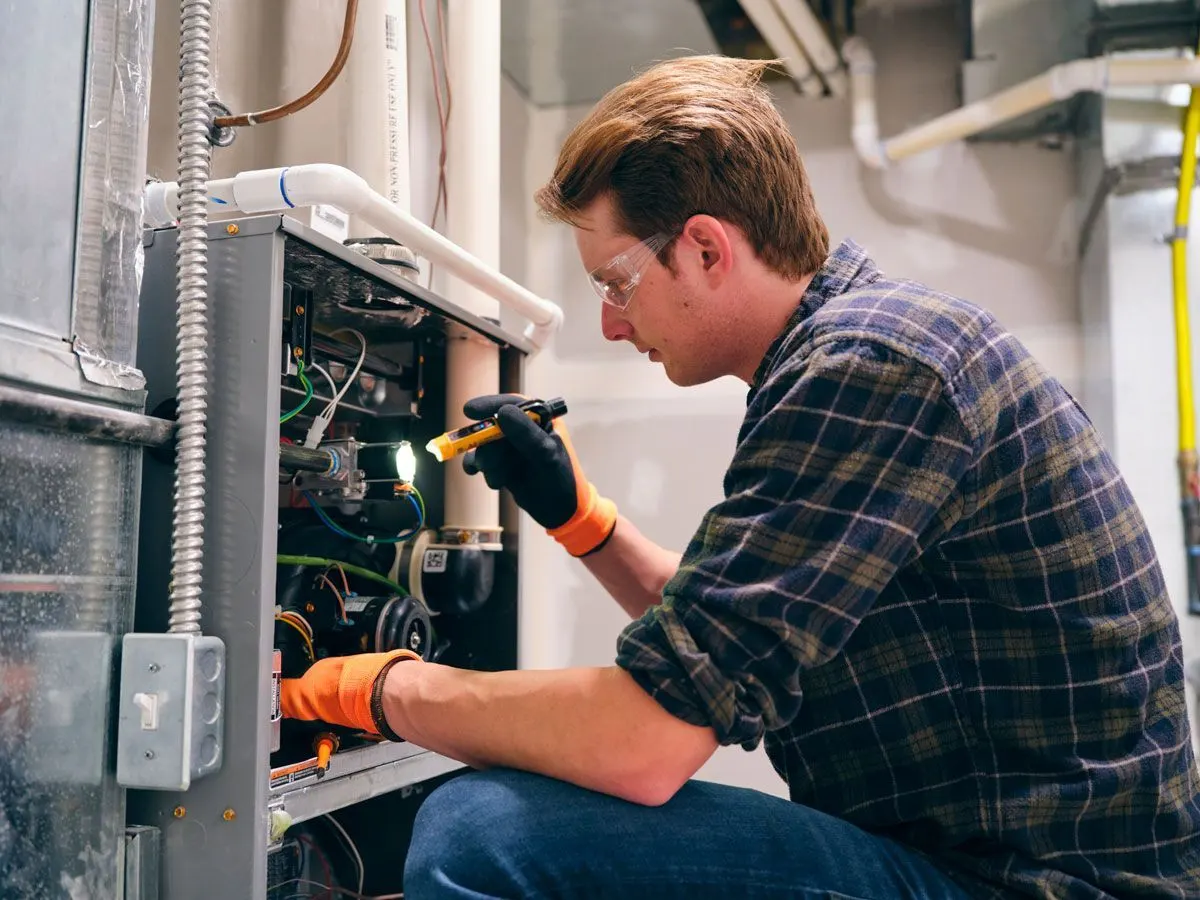
- Heat Exchanger Integrity: We inspect for tiny cracks that could leak carbon monoxide.
- Auxiliary Heat Verification: For heat pump users, we ensure the “heat strips” (auxiliary heat) only kick in when absolutely necessary. If they stay on too long due to a sensor issue, your electric bill will double overnight.
- Balance Points: We calibrate your system to understand exactly when it should switch from the heat pump to the backup heat source based on Mid-Atlantic “balance points” (usually around 35°F).
Navigating the unique benefits of regular hvac maintenance in mid atlantic four season
Our region is classified as IECC Climate Zone 4A, which is a “mixed-humid” climate. This is the “Goldilocks” of HVAC challenges — it’s not just one thing; it’s everything. We deal with heavy pollen in the spring, tropical humidity in the summer, damp “bone-chilling” cold in the fall, and dry, bitter freezes in the winter.
Regular maintenance helps manage these shifts. For example, high humidity doesn’t just make you sweat; it causes corrosion on the internal components of your HVAC unit and can lead to ice buildup on the coils if the airflow is restricted.
| Task Category | Spring Cooling Prep (March/April) | Fall Heating Prep (September/October) |
|---|---|---|
| Coils | Clean condenser coils of winter debris | Inspect evaporator coils for mold/dust |
| Drainage | Flush condensate lines to prevent algae | Check humidifier pads and drains |
| Electrical | Tighten connections for high-draw AC | Inspect ignition system and burners |
| Safety | Check refrigerant levels and leaks | Test carbon monoxide detectors |
| Airflow | Clean blower fan and check belts | Inspect heat exchanger for cracks |
Protecting your investment against Mid-Atlantic humidity and salt air
If you live in the eastern parts of our service area, like Frederick or down toward the bay, salt air and high humidity are constant enemies. Salt air is incredibly corrosive to the aluminum fins on your outdoor condenser. Without regular cleaning, these fins can “white rust” and disintegrate, which destroys the unit’s ability to release heat.
Additionally, the Mid-Atlantic humidity produces a lot of “condensate” (water). If your condensate drains are clogged with dust or biological growth, that water has nowhere to go but back into your home. This leads to paint peeling, wood rot, and even structural damage. We ensure you have a minimum 18-24 inch clearance around your outdoor unit to allow for proper breathing, which is essential for preventing the unit from suffocating in its own heat. For more on protecting your system, see how we prevent breakdowns benefits of regular hvac service.
Managing indoor air quality during high-pollen shoulder seasons
Spring in Martinsburg or Shepherdstown is beautiful, but for allergy sufferers, it’s a nightmare. Your HVAC system is your home’s primary air filtration plant. During the shoulder seasons, your system is often pulling in air that is thick with oak, maple, and grass pollen.
We recommend using at least a MERV 8 filter, which complies with ASHRAE 52.2 standards for residential air quality. These filters catch the majority of pollen and mold spores before they can circulate. However, high-efficiency filters can also restrict airflow if they aren’t changed frequently. In Baltimore and other urban-adjacent areas, particulate levels can be 30-40% higher than in rural areas, meaning filters may need to be changed every 30 days during peak seasons.
Ensuring Home Safety and System Longevity
Safety is the non-negotiable part of what we do. While saving money is great, ensuring your family wakes up safe is our priority. Gas furnaces and boilers involve combustion. If the burners are dirty or the heat exchanger is cracked, they can release carbon monoxide (CO), an odorless, colorless, and potentially lethal gas.
The Consumer Product Safety Commission (CPSC) notes that cracked heat exchangers are a primary source of residential CO incidents. During our maintenance visits, we follow NFPA 54 (National Fuel Gas Code) standards to ensure your system is venting properly.
Furthermore, we look at electrical safety. Loose connections are a leading cause of HVAC-related fire hazards. Because an AC unit pulls a lot of “amps” when it starts up, any loose wire can create an arc, which generates heat and can melt components or start a fire.
Regular maintenance also secures your long-term investment. The average HVAC system costs between $5,000 and $12,000+. By maintaining it, you extend its lifespan to that 15-25 year window rather than facing a premature replacement at year 10. Plus, almost all manufacturers require proof of annual professional maintenance to honor their warranties. If your compressor fails in year five but you can’t prove the system was serviced, you might be stuck paying for the whole thing out of pocket.
Strategic Timing for Seasonal Tune-Ups
Timing is everything in the Mid-Atlantic. We call the periods between extreme weather “shoulder seasons.” This is when you should be calling us.
If you wait until the first 90-degree day in June to see if your AC works, you’ll be joining a very long line. In fact, June is one of the busiest months for emergency calls. Similarly, September is a “danger month” for repairs. The average HVAC repair invoice in September is $435 — which is 21% higher than the average repair cost throughout the rest of the year. Why? Because systems that were struggling all summer finally give up the ghost when the weather starts to turn.
Why bi-annual hvac maintenance in mid atlantic four season prevents emergency repairs
Preventative maintenance routines reduce the risk of costly maintenance issues by 95%. It’s much easier (and cheaper) for us to find a capacitor that is “bulging” and replace it for a small fee in April than it is to replace a blown fan motor in the middle of a July heatwave.
During these bi-annual visits, we check:
- Refrigerant Levels: Too little refrigerant strains the compressor; too much can destroy it.
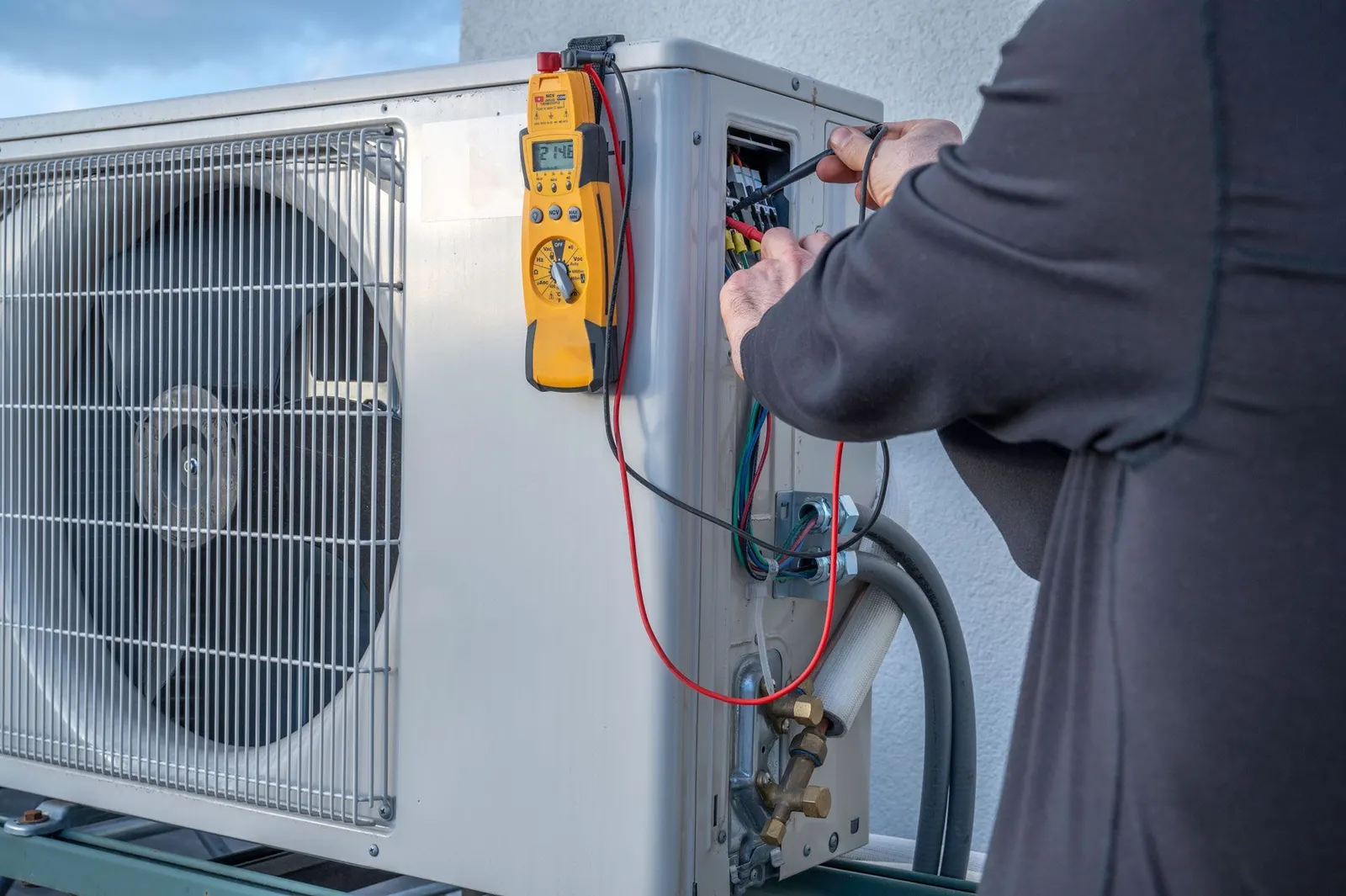
- Electrical Connections: We tighten every terminal to prevent “pitting” and overheating.
- Static Pressure: We measure the “blood pressure” of your system to ensure the ductwork isn’t causing internal damage to the blower.
Preparing for extreme weather in Frederick and Hagerstown
For our neighbors in Western Maryland, the winters are often harsher than those in the city. We regularly see minimum temperatures of 24°F or lower. This is the “danger zone” for heat pumps.
If you have a heat pump, the defrost cycle is critical. In our damp winters, ice will naturally form on the outdoor coils. The system has to “reverse” itself to melt that ice. If the defrost sensor is faulty, the unit will turn into a solid block of ice, which can bend the fan blades or kill the motor. We also remind homeowners to keep at least a 2-foot clearance from snow and vegetation. If your heat pump is buried in a snowdrift, it can’t pull heat from the air, and it will fail.
Frequently Asked Questions about Mid-Atlantic HVAC Care
How often should I change my filters in Maryland or West Virginia?
In the Mid-Atlantic, the standard “every three months” advice is often wrong. If you have pets, live near a dusty construction site in Frederick, or have family members with allergies, you should check your filter every 30 days. During the peak of winter (January) and summer (July), the system runs so much that the filter captures three months’ worth of dust in just four weeks.
Will regular maintenance keep my manufacturer warranty valid?
Yes. Almost every major brand (Carrier, Trane, Lennox, etc.) includes a clause in their warranty stating that the equipment must be maintained by a licensed professional. We provide you with the documentation you need to prove the system has been cared for, protecting your investment.
What are the signs my system is struggling with regional humidity?
If you notice musty odors (often called “Dirty Sock Syndrome”), condensation on the inside of your windows, or if the air feels “clammy” even when the AC is running, your system isn’t managing humidity correctly. We aim for 35-45% relative humidity in the heating season and under 50% in the summer. Short cycling — where the system turns on and off every few minutes — is another major red flag.
Conclusion: Secure Your Home Comfort Today
At Comfort Central HVAC & Plumbing, we’ve been family-owned and operated since 2006. We live in these same communities — from the historic streets of Harpers Ferry to the growing neighborhoods of Chambersburg and Martinsburg. We understand the specific strain that the Mid-Atlantic four-season climate puts on your home.
The benefits of regular hvac maintenance in mid atlantic four season climates are clear: you save money, you breathe cleaner air, and you gain the peace of mind that your system won’t quit when you need it most. Our licensed and insured technicians are experts in the unique “Zone 4A” challenges of our region. We offer fair pricing, financing options, and a commitment to your family’s comfort that only a local, family-run business can provide.
Don’t wait for the next extreme weather event to test your system. Whether you’re in Hagerstown, MD, Charles Town, WV, or Shippensburg, PA, we are here to ensure your HVAC system is ready for whatever the Mid-Atlantic throws its way.
Schedule your professional HVAC service today and let us put our 2026 expertise to work for your home.