
Why Heat Pump Benefits for Mid-Atlantic Homeowners Are Hard to Ignore
heat pump benefits for mid atlantic homeowners are significant — and if you’re weighing your options for year-round comfort in Maryland, West Virginia, or Pennsylvania, here’s what matters most:
- Lower energy bills — Switching from oil or electric baseboard heat can save $1,200–$7,000 per year
- One system does it all — Heating in winter, cooling in summer, humidity control in between
- Works in Mid-Atlantic winters — Modern cold-climate models operate efficiently well below freezing
- Reduces carbon emissions — Up to 40–70% fewer heating-related emissions compared to gas furnaces
- Strong incentives available — Federal tax credits, Maryland rebates, and utility programs can offset upfront costs significantly
- Fits most homes — Over half of Mid-Atlantic homes already have ductwork that works with ducted heat pumps
The Mid-Atlantic region — covering Maryland, Virginia, West Virginia, Pennsylvania, Delaware, DC, and New Jersey — has a climate that’s genuinely well-suited to heat pump technology. Winters are cold but rarely brutal for extended stretches. Summers are hot and humid. That combination of moderate heating demand and real cooling need is almost exactly what heat pumps are designed for.
Yet many homeowners in this region are still running aging gas furnaces, oil boilers, or electric baseboard heaters — systems that cost more to operate and produce more emissions than a properly sized heat pump would. The good news: switching is more practical and affordable than most people expect, especially with today’s cold-climate models and the incentives now available across the region.
I’m Merle Vaughn, a Master HVAC license holder in Maryland and West Virginia with 20 years of hands-on experience helping homeowners navigate exactly these kinds of decisions — and I’ve seen how understanding the real heat pump benefits for mid-Atlantic homeowners can transform both comfort and monthly energy costs. In this guide, I’ll walk you through everything you need to know to make a confident, informed choice for your home.
Understanding the Technology: How Heat Pumps Master the Mid-Atlantic Climate
To understand why we recommend these systems so often at Comfort Central, you first have to understand that a heat pump doesn’t actually create heat. Instead, it moves it. Think of it like a refrigerator working in reverse. In the summer, it pulls heat out of your home and dumps it outside. In the winter, it finds heat energy in the outdoor air (yes, even when it’s cold!) and pumps it into your living room.
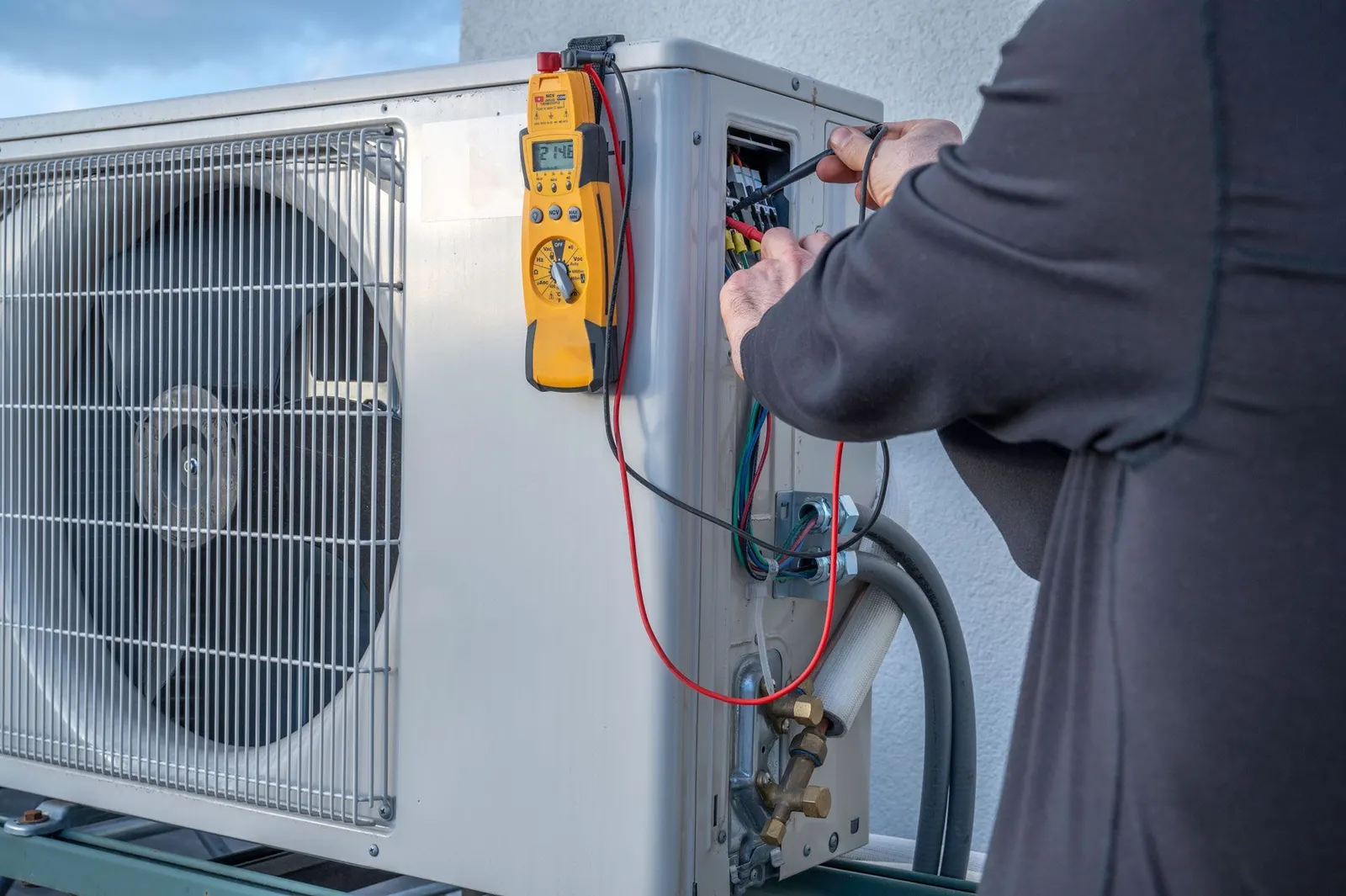
This process relies on a sophisticated refrigerant cycle. The system uses evaporator coils to absorb heat and a compressor to move that heat between the indoor and outdoor units. Because moving heat takes far less energy than burning fuel to create it, these systems are incredibly efficient. In fact, many modern units are 300% to 400% efficient, meaning they provide three to four units of heat for every one unit of electricity they consume.
Beyond temperature, heat pumps are masters of humidity control. During our “sticky” Maryland and Pennsylvania summers, a heat pump runs for longer, steadier cycles than a traditional AC. This allows it to pull more moisture out of the air, making your home feel comfortable even at higher thermostat settings. If you’ve been struggling with a clammy basement or an upstairs that feels like a sauna, our heating services can help you transition to a system that handles both temperature and moisture with ease.
Maximizing heat pump benefits for Mid-Atlantic homeowners in variable weather
The Mid-Atlantic is famous for its “four seasons in one week” weather. One day you’re wearing a light jacket in Frederick, MD, and the next you’re turning on the AC in Martinsburg, WV. This is where variable-speed compressor technology shines.
Unlike older “single-stage” systems that are either 100% on or 100% off, variable-speed heat pumps can modulate their output. They might run at 25% capacity on a mild spring day, providing just enough air movement to keep things fresh without wasting energy. This leads to higher SEER2 (cooling efficiency) and HSPF2 (heating efficiency) ratings, ensuring you aren’t paying for power you don’t need during the shoulder seasons.
The Financial Case: Heat Pump Benefits for Mid-Atlantic Homeowners
We know that the “bottom line” is often the biggest factor for families in Hagerstown or Chambersburg. While the upfront cost of a heat pump can be higher than a simple gas furnace replacement, the long-term math tells a different story.
| System Type | Avg. Install Cost (Retrofit) | Annual Operating Savings | Carbon Reduction |
|---|---|---|---|
| Air-Source Heat Pump | $12,000 – $23,000 | $50 – $7,000* | 40% – 70% |
| Gas Furnace + AC | $10,000 – $13,000 | Baseline | 0% |
| Oil Boiler / Furnace | $8,000 – $12,000 | -$948 (Loss vs. HP) | High Emissions |
*Savings depend heavily on the fuel you are replacing. Switching from electric resistance or oil yields the highest savings.
If you are currently heating with methane gas, you can expect to save between $50 and $400 per year in states like MD, VA, and PA. However, if you are among the 14% of Mid-Atlantic residents using electric resistance baseboard heat, your savings could jump to a staggering $1,200 to $7,000 annually.
Beyond the bills, you’re also reducing your home’s heating-related carbon footprint by up to 70%. If you’re currently dealing with common HVAC problems like a furnace not heating, it might be the perfect time to stop pouring money into old tech and start investing in a high-efficiency heat pump.
Navigating rebates and heat pump benefits for Mid-Atlantic homeowners in 2026
As of April 2026, the incentives for electrification have never been stronger. At Comfort Central, we help our neighbors in places like Shepherdstown and Shippensburg navigate these complex programs:
- Federal 25C Tax Credit: You can claim 30% of the project cost, up to $2,000 annually, for an Energy Star-certified heat pump.
- EmPOWER Maryland: Utilities like Potomac Edison and BGE offer substantial rebates — sometimes up to $15,000 for low-to-moderate income households switching from fossil fuels.
- Pennsylvania Energy Incentives: Programs through PPL or FirstEnergy provide rebates for high-efficiency ASHP (Air Source Heat Pump) installations.
- West Virginia / Virginia Utility Rebates: Companies like Dominion Energy and Appalachian Power offer tiered rebates based on the SEER2 and HSPF2 ratings of your new system.
- HEEHRA Grants: Under the Inflation Reduction Act, point-of-sale rebates are available for eligible families, potentially covering 50% to 100% of the installation cost.
Choosing the Right System: Ducted vs. Ductless Solutions in MD, PA, and WV
One of the most common questions we get in Williamsport and Berkeley Springs is: “Do I have to tear up my walls to install this?” The answer is almost always no.
If your home already has a furnace and central AC, you likely have a ducted system. We can often use your existing ductwork to install a central heat pump. This is a practical retrofit that saves about $4,500 compared to installing new ducts.
For older homes in historic Frederick or Harpers Ferry that rely on radiators or baseboard heat, ductless mini-splits are the hero of the story. These systems use small indoor air handlers mounted on the wall or ceiling, connected to an outdoor unit by a small refrigerant line. They offer “zoned comfort,” meaning you can keep your bedroom cool without wasting energy on an empty living room. You can explore our full range of HVAC services to see which configuration fits your floor plan.
Sizing and selecting the best heat pump benefits for Mid-Atlantic homeowners
Sizing is everything. An oversized heat pump will “short cycle,” turning on and off too quickly, which ruins efficiency and leaves your home humid. An undersized unit will struggle when the temperature drops in January.
We always perform a Manual J load calculation. This isn’t just a guess based on square footage; it takes into account your insulation, window types, and local climate data. For our region, we often recommend:
- Cold-Climate Models: These are designed to maintain high heat output even when it’s -15°F outside.
- Backup Heat Options: While modern units are powerful, some homeowners prefer “electric heat strips” or a dual-fuel system (a heat pump paired with a gas furnace) for those rare, extreme polar vortex events.
- Airflow Clearance: We ensure the outdoor unit has 2–3 feet of clearance on the sides and 5 feet on top to prevent snow recirculation and ensure optimal performance.
Overcoming Installation Challenges in Older Mid-Atlantic Homes
Our service area is full of beautiful, older homes, but they do present unique challenges. The most common hurdle is electrical capacity. A heat pump requires a dedicated circuit, and many older homes with 100-amp service may need an upgrade to 200 amps to handle the new load safely.
We also focus heavily on weatherization. A heat pump is only as good as the “envelope” it’s heating. If your attic has zero insulation or your ducts are leaking 30% of your air into the crawlspace, you won’t see those $7,000 savings. Part of our HVAC service benefits involves inspecting your entire system to ensure your home is “heat pump ready.” This includes duct sealing and checking air filters to improve indoor air quality, which is often a major concern for families with allergies.
Frequently Asked Questions about Mid-Atlantic Heat Pumps
Do heat pumps work in freezing Maryland or Pennsylvania winters?
Absolutely. While older heat pumps earned a bad reputation for “blowing cool air” in the winter, modern cold-climate heat pumps are a different breed. These units can extract heat from the air down to -15°F. During very cold snaps, the system may enter a “defrost cycle” to melt ice off the outdoor coils, but this is a normal part of operation. For added peace of mind, supplemental electric heat can kick in if the outdoor temperature drops below the system’s “balance point.”
How much can I save by switching from electric baseboard heat?
This is where the biggest heat pump benefits for mid atlantic homeowners are found. Electric baseboard heaters (electric resistance) are 100% efficient, but heat pumps are 300% to 400% efficient. By making the switch, you can reduce your electricity use for heating by up to 75%. Depending on utility rates in Martinsburg or Hagerstown, this typically results in annual savings between $1,200 and $7,000.
What maintenance do heat pumps require to stay efficient?
Because a heat pump works year-round (unlike a furnace that sits idle in summer), it needs consistent care. We recommend professional service twice a year — once before the heating season and once before the cooling season. Key maintenance tasks include:
- Checking refrigerant levels (leaks can kill efficiency).
- Cleaning outdoor coils of dirt, leaves, and “cottonwood” fuzz.
- Replacing air filters every 1-3 months.
- Clearing the condensate drain to prevent water damage.
Regular check-ups are the best way to prevent breakdowns and ensure your system hits its 15-year life expectancy.
Conclusion
At Comfort Central Inc, we’ve been a family-owned staple in the Mid-Atlantic since 2006. We understand that choosing a new HVAC system is a big decision for your family’s comfort and your wallet. Whether you’re in Hagerstown, MD, Chambersburg, PA, or Martinsburg, WV, our team is here to ensure you get the most out of the heat pump benefits for mid atlantic homeowners.
From performing precise load calculations to helping you secure thousands in rebates, we prioritize your family’s comfort above all else. Don’t wait for your old furnace to fail in the middle of a January freeze. Check out our homeowner’s guide to heating maintenance or contact us today to see how a heat pump can transform your home.
Ready to upgrade your home comfort? Explore our professional heating services today!