
Evaluating System Health Before Peak Summer Demand
Your AC is running nonstop, but instead of quiet comfort, you are met with a chorus of squeals, bangs, and rattles. Leveraging local service expertise and area tips is the best way to determine the optimal time for preventative maintenance before these auditory red flags turn into complete system breakdowns. As June approaches and cooling demands climb, the decision you face right now is whether to invest in proactive system checks or wait for a noticeable drop in performance on the hottest day of the year. During these seasonal transition periods, your system awakens from months of limited use, and the sudden mechanical strain often reveals underlying wear and tear.
Not all noises mean catastrophic failure, but they are early indicators of mechanical stress that demand attention. For comprehensive diagnostics, exploring air conditioning services or scheduling professional AC repair can save your system from secondary damage.
The Mechanics Behind Squealing and Screeching
The problem: A high-pitched squeal echoing through your vents every time the cooling cycle starts. The cause: This sound almost always points to severe friction within the air handler, specifically involving the blower motor or its associated drive mechanisms. The solution: Identifying the source of the friction and replacing degraded rubber or restoring lubrication before the moving parts seize entirely.
Blower Motor Stress and Friction
The blower motor is the heart of your indoor air distribution, responsible for pulling warm air from your home and pushing it over the chilled evaporator coils. Hagerstown MD's hot, humid summer climate forces air conditioners to run significantly longer cycles to manage both temperature and indoor moisture. This relentless operation accelerates the wear on the blower motor. When the factory lubrication inside the motor begins to dry out, the metal components rub against one another. This lack of lubrication increases friction exponentially, producing a persistent, high-pitched squealing noise that continues as long as the fan is running.
Fan Belt Wear and Tear
If you have an older, belt-driven air handler, the squealing sound may have a different mechanical origin. In these systems, a rubber fan belt connects the motor to the blower fan. Over years of continuous operation, the rubber degrades, dries out, and loses its tension.
- Slipping on startup: A brief screech when the system kicks on usually means the belt is slipping against the pulley.
- Continuous squealing: A constant noise indicates the belt is severely degraded or the pulley alignment has shifted.
- Burning smells: If the squealing is accompanied by a faint rubber odor, the belt is actively deteriorating due to friction heat.
Replacing a worn belt is a straightforward process, but catching it early is critical. If a degraded belt snaps while the system is running, the blower stops completely, which can lead to rapid coil freezing and subsequent system shutdown.

Why Your AC Sounds Like a Helicopter: Banging and Clanking
When your outdoor condenser unit begins to sound like a helicopter preparing for takeoff, the underlying issue is almost entirely mechanical. Banging and clanking noises indicate that a heavy component is loose and striking the surrounding metal casing. Because the outdoor unit contains the heaviest moving parts in the system, these noises require immediate attention to prevent the unit from tearing itself apart from the inside out.
Loose Internal Components
Air conditioners vibrate naturally during operation. Over thousands of cooling cycles, this constant vibration slowly loosens the hardware holding the unit together. Common culprits include:
- Fan blades: If the nut securing the outdoor fan blade loosens, the blade will wobble and strike the protective metal cage.
- Mounting hardware: The screws and bolts holding the fan motor in place can back out, causing the entire motor assembly to shift and clank.
- Access panels: Sometimes, the noise is simply a loose exterior panel rattling against the frame, which is easily remedied by tightening the screws.
Compressor Imbalance Issues
The compressor is the heavy engine of your cooling system, responsible for pressurizing refrigerant and pumping it through the lines. Inside its hermetically sealed shell, the actual pumping mechanism is suspended on heavy-duty springs to absorb vibration. If one of these internal suspension springs breaks or degrades—often due to age or operating under extreme stress—the internal mechanism becomes unbalanced.
When this happens, the heavy metal block bangs aggressively against the inside of the compressor shell every time it runs. If you hear a loud, rhythmic thumping from the outdoor unit, turn the system off immediately at the thermostat. Allowing an unbalanced compressor to run can cause secondary damage to the delicate condenser coils surrounding it. Addressing these mechanical stresses during seasonal transition periods through routine AC maintenance ensures that all mounting hardware is tightened and components are secure before peak summer operation.
Hissing and Bubbling: Identifying Refrigerant Leaks
The problem: A distinct hissing sound near the indoor unit or a bubbling noise near the outdoor refrigerant lines. The cause: A breach in the closed-loop copper lines, allowing chemical refrigerant to escape or air to enter. The solution: Locating the microscopic leak, sealing the copper, and recharging the system to precise factory specifications.
The Dangers of Refrigerant Loss
Your air conditioner does not consume refrigerant like a car consumes gas. The refrigerant cycles endlessly in a closed loop. If you hear hissing, it means high-pressure gas is actively escaping through a crack or pinhole leak in the copper tubing. If the sound is more of a gurgling or bubbling noise, it typically indicates issues within the liquid line or a mix of air and liquid refrigerant struggling through the system.
| Sound Type | Typical Location | Mechanical Meaning |
|---|---|---|
| High-Pitched Hissing | Near the indoor evaporator coil or expansion valve | High-pressure refrigerant gas is escaping from a small puncture or failed joint. |
| Gurgling / Bubbling | Along the copper lines running outside | Air has entered the liquid refrigerant line, or refrigerant levels are critically low. |
| Brief Hiss on Shutdown | Inside the air handler | Often normal pressure equalization from the expansion valve—only problematic if continuous. |
Leaking refrigerant is both an environmental hazard and a mechanical disaster. Running a system with low refrigerant forces the compressor to work twice as hard to achieve the same cooling output. Furthermore, simply topping off the refrigerant without fixing the underlying leak is highly ineffective and goes against Department of Energy (DOE) guidelines for proper central air conditioning maintenance.
Evaporator Coil Freezing
The most immediate consequence of a hissing refrigerant leak is a drop in the system's internal pressure. When pressure drops, the temperature of the evaporator coil plummets below freezing. As warm, humid Hagerstown MD air passes over this supercooled coil, the moisture instantly freezes into ice.
This creates a dangerous chain reaction. The ice blocks airflow, causing the system to run continuously while delivering zero cold air to your home. If you hear hissing and notice ice forming on the indoor unit or the outside copper pipes, turn the system off completely to let the ice melt, and schedule professional AC inspection and testing to locate and seal the breach.
Electrical Buzzing and Minor Component Fixes
Unlike banging or grinding, a loud buzzing noise usually points to an electrical fault rather than a mechanical failure. Homeowners often panic when they hear a loud electrical hum from the outdoor unit, assuming the entire system has died. However, buzzing is frequently a common indicator of minor electrical issues that can be resolved quickly.
Failing Electrical Contactors
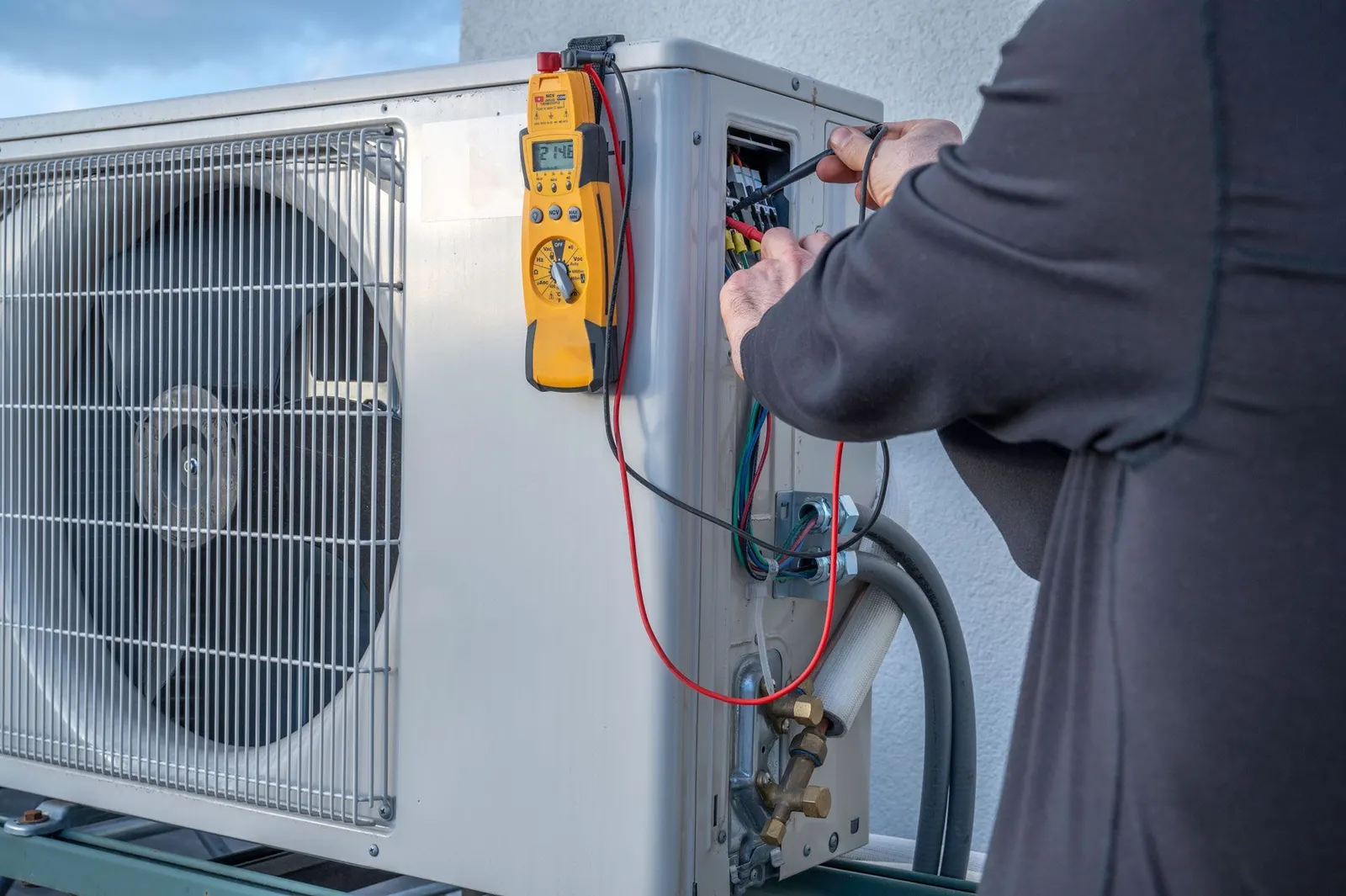
The most common source of a loud buzz from the outdoor condenser is a failing electrical contactor. The contactor is essentially a heavy-duty switch that controls the high-voltage power flowing to the compressor and the outdoor fan. When your thermostat calls for cooling, a low-voltage signal is sent to the contactor, pulling a magnetic coil that snaps the high-voltage contacts together.
Over time, these metal contacts become pitted, burned, or coated in dirt and dead insects. When the contacts can no longer form a clean, flush connection, the electrical current arcs across the tiny gap. This arcing produces a very loud, rapid buzzing or chattering sound. Other sources of electrical buzzing include failing capacitors struggling to hold a charge or loose wiring vibrating against the metal casing.
Why Minor Fixes Matter
Understanding the difference between a minor electrical fault and a major mechanical failure is crucial. A buzzing contactor does not mean your compressor is dead. At Comfort Central, we believe in honest home repairs. We emphasize that replacing a relatively inexpensive electrical component like a contactor or capacitor is a straightforward, minor repair that restores full system function.
Replacing these degraded electrical parts promptly prevents much larger issues. If a pitted contactor eventually welds itself shut, it will send continuous power to the compressor, causing it to run relentlessly until it burns out entirely. Addressing these buzzing sounds during seasonal transition periods ensures your system operates safely and efficiently without unnecessary, costly overhauls.
Grinding Noises and Unlubricated Bearings
The problem: A harsh, metallic grinding noise coming from either the indoor air handler or the outdoor condenser fan. The cause: Complete breakdown of lubrication in the motor bearings, leading to destructive metal-on-metal friction. The solution: Proactive lubrication during routine maintenance or immediate motor replacement if the bearings are already destroyed.
Unlubricated Motor Bearings
Bearings are critical technical components that allow the heavy metal shafts of your fan motors to spin smoothly at high speeds. When the system is manufactured, these bearings are heavily packed with specialized grease. However, after years of enduring Hagerstown MD's demanding summer heat, that factory lubrication eventually dries out, hardens, or leaks away.
Once the lubrication is gone, the steel bearings scrape directly against their metal housings. This metal-on-metal friction produces a loud, unmistakable grinding noise. It sounds exactly like what it is: machinery slowly destroying itself. Ignoring this noise is one of the most expensive mistakes a homeowner can make.
Preventing Complete Mechanical Seizure
The progression from a grinding noise to complete motor failure is rapid. As friction increases, the motor must pull significantly more electrical current (amps) just to keep the fan spinning. This excess current generates massive amounts of heat.
- Initial grinding: The lubrication fails, and friction begins.
- Overheating: The motor pulls excess amps, causing the internal wiring to run dangerously hot.
- Thermal overload: The system may begin tripping circuit breakers to protect itself from electrical fires.
- Motor seizure: The bearings fuse together from the heat, the motor burns out completely, and the system dies.
The key to preventing this progression is routine seasonal maintenance. Understanding what to expect during an HVAC cleaning includes knowing that technicians check the amp draw on all motors and verify that moving parts are operating with minimal friction, extending the lifespan of your heavy equipment.
Common Questions About Air Conditioner Noises
Is it safe to run my AC if it's making a noise?
The short answer is no, it is rarely safe to let a noisy system continue running. While a minor rattle might just be a loose screw, loud banging, grinding, or hissing indicates active mechanical or electrical failure. Continuing to run the system under these conditions forces damaged components to work harder, which frequently causes secondary damage to expensive parts like the compressor. Turn the system off at the thermostat and wait for a professional evaluation.
Why is my AC making a loud humming noise?
A loud hum usually points to an electrical component that is receiving power but failing to activate. The most common culprits are a dead capacitor or a seized motor. The system is trying to start, but the electrical current has nowhere to go, creating a deep vibration or hum. If you hear this, shut the breaker off immediately to prevent the motor windings from overheating and burning out.
Why does my air conditioner sound like a helicopter?
A helicopter-like thumping is caused by heavy, unbalanced mechanical parts striking the unit's casing. This is typically due to a loose outdoor fan blade, a bent fan blade, or a broken internal suspension spring inside the compressor. Because these parts spin or pump at high speeds, the imbalance creates a rhythmic, loud banging that mimics a helicopter rotor. This requires immediate shutdown during seasonal transition periods to prevent the unit from tearing itself apart.
How long do AC motor bearings last before grinding starts?
Motor bearings typically last between 10 to 15 years, depending on the system's workload and maintenance history. However, environments with heavy dust, high humidity, or lack of routine servicing can degrade the factory lubrication much faster. Once the grinding noise begins, the bearings are already sustaining permanent damage, and the motor will usually fail within a matter of weeks if left unaddressed.
Can a dirty filter cause my AC to make strange sounds?
Yes, a severely clogged air filter can cause whistling, howling, or even banging noises. When the filter is completely blocked, the blower motor struggles to pull enough air through the return vents. This immense suction can cause the air to whistle through tiny gaps in the ductwork, or it can cause the metal ductwork itself to pop and bang as the pressure fluctuates. Changing your filter regularly is the easiest way to prevent these airflow-related sounds.
Preventing Costly Failures with Proactive System Checks
The most effective way to handle strange HVAC noises is to prevent them from occurring in the first place. When you understand the mechanical realities behind squealing belts, hissing refrigerant lines, and grinding bearings, it becomes clear that these are late-stage symptoms of degraded components. Proactive system checks focus on the exact parts that cause these issues before they fail.
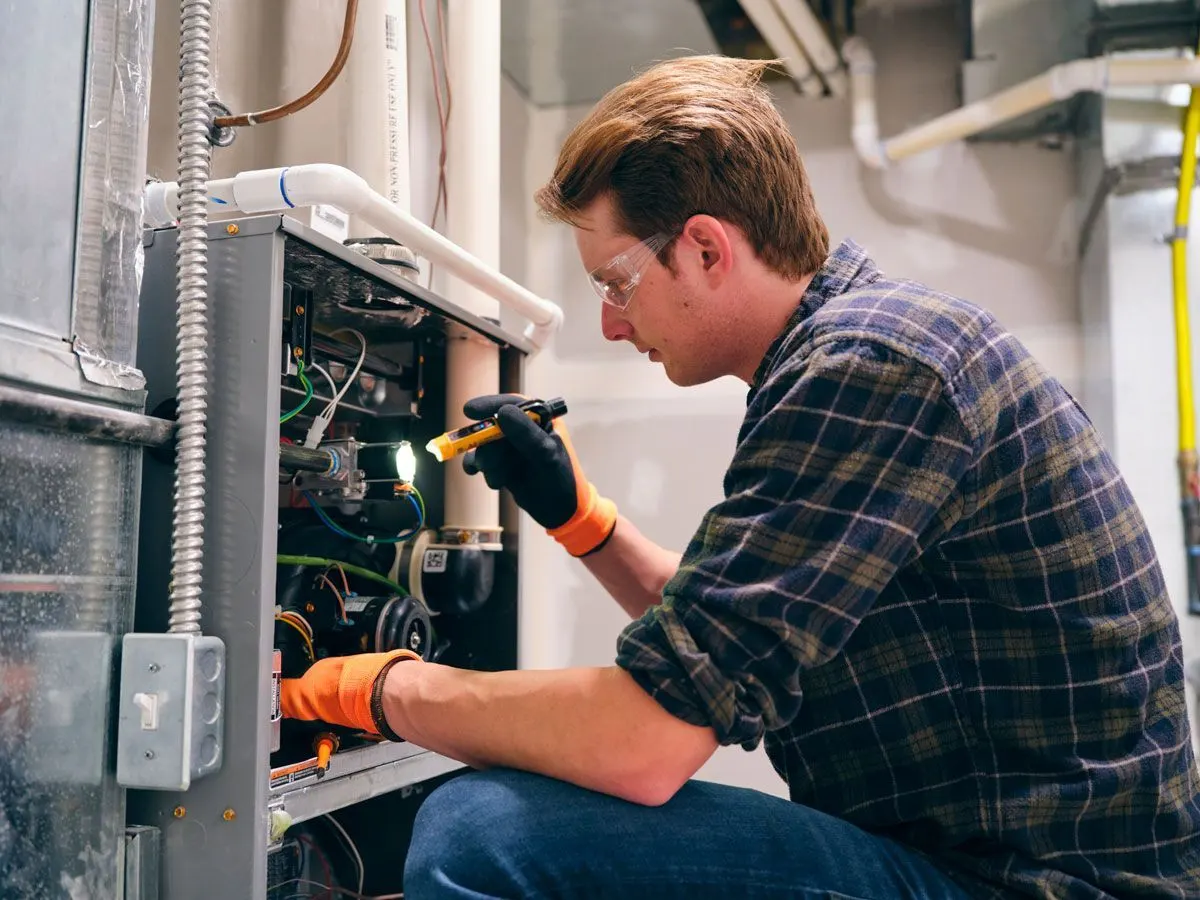
During a comprehensive inspection, technicians evaluate the amp draw on blower motors, test the capacitance of electrical parts, tighten all mounting hardware, and verify precise refrigerant pressures. By addressing these minor adjustments early, you protect the heavy, expensive components from catastrophic damage. If your Hagerstown MD home is currently echoing with unfamiliar mechanical sounds, scheduling an inspection now ensures your equipment operates efficiently, quietly, and reliably through the hottest days of the year.