
Why Is My AC Cooling Then Stopping Before Reaching the Set Temperature?
Are you searching for reliable home maintenance tips and troubleshooting because your air conditioner keeps turning on, blowing cold air for a few minutes, and then abruptly shutting off? You are certainly not alone. One of the most frustrating scenarios a homeowner can face is checking the wall control to find the thermostat set to 72°F, but the indoor temperature remains stubbornly stuck at 76°F because the system shuts off too early. This rapid on-and-off behavior is a mechanical failure loop known in the HVAC industry as short-cycling.
Short-cycling is not just a quirk of hot weather; it is a protective mechanical shutdown. Modern cooling equipment is designed with built-in safety switches that cut the power when internal pressures or temperatures exceed safe operating limits. When your air conditioner stops before the house is actually cool, the equipment is likely trying to save its own compressor from catastrophic failure. Navigating this issue requires a critical decision point: knowing when it is safe to attempt basic homeowner troubleshooting and when you must turn off the struggling unit to prevent permanent damage. If your system is caught in this loop, professional evaluation of your air conditioning systems is often the safest path forward. Securing professional AC repair ensures the underlying mechanical stress is resolved before a minor sensor issue turns into a major compressor replacement.
Understanding the Mechanics: What Exactly Is AC Short-Cycling?
To understand why an air conditioner shuts down prematurely, you first need to understand how a normal cooling cycle operates. Under typical conditions, a properly sized central air conditioner should run for 15 to 20 minutes per cycle. This duration is necessary for two reasons. First, it allows the refrigerant to absorb sensible heat (the actual temperature of the air) and carry it outside. Second, and equally important, a long cycle manages latent heat (the moisture suspended in the air). The system must run long enough for indoor humidity to condense on the cold evaporator coils and drain away.
Short-cycling interrupts this process entirely. The mechanical failure loop usually begins with poor heat transfer. If the system cannot absorb heat inside or release heat outside, the refrigerant pressure spikes or plummets. When the system overheats, high-pressure limit switches automatically trip to cut the power, forcing the system to shut down. Once the internal components cool off after a few minutes, the thermostat demands cooling again, the system restarts, and the destructive loop repeats.
This mechanical loop has severe consequences for indoor comfort, particularly during August and late summer. With summer temperatures and high humidity levels in the Williamsport area, your home is subjected to massive latent heat loads. Because a short-cycling system only runs for five to ten minutes, it completely fails to remove this humidity. The air blowing from your vents might feel cold for a moment, but the house will quickly feel sticky, clammy, and uncomfortably warm. If you are dealing with a system that refuses to run a full cycle, understanding why your AC stopped cooling is the first step toward restoring a comfortable indoor environment.
How Late-Summer Strain Overloads Your Condenser Coils
By the time August and late summer arrive, your outdoor condenser unit has likely been running for hundreds of hours. This continuous summer operation creates a cumulative effect of wear and tear that heavily impacts system efficiency. The outdoor condenser is responsible for releasing the heat collected from inside your home into the outdoor air. To do this effectively, the metal fins on the condenser coils must be completely free of obstructions so the fan can pull a massive volume of air through them.
Throughout the spring and early summer, the outdoor unit acts like a giant vacuum cleaner. It pulls in airborne dust, heavy pollen, cottonwood seeds, grass clippings from the lawnmower, and storm debris. By late summer, this debris often forms a thick, insulating blanket over the condenser coils. This blanket severely restricts airflow across the coils, trapping the heat inside the system instead of releasing it into the yard.
When the heat cannot escape, the temperature and pressure of the refrigerant inside the compressor rise rapidly. The compressor is forced to consume significantly more electrical energy to push the refrigerant through the suffocated coils. This drastic drop in cooling capacity is a massive warning sign of impending failure. The system will eventually reach a thermal overload state, causing the safety limit switches to trip and shut the unit down. Homeowners often mistake this late-season efficiency drop for the system simply struggling against the hot weather, but it is actually a direct result of mechanical suffocation.
Common Reasons Your AC Cools Then Stops
While clogged outdoor coils are a primary culprit in late summer, several other mechanical and electrical issues can trigger a short-cycling loop. If your thermostat is set to 72°F but the indoor temperature is stuck at 76°F, one of the following issues is likely forcing the system to shut down prematurely:
- Restricted Indoor Airflow: A severely dirty indoor air filter suffocates the air handler. Without enough warm room air blowing over the indoor evaporator coil, the refrigerant drops below freezing. The condensation on the coil turns to solid ice, blocking airflow entirely and forcing the system to shut down.
- Thermostat Malfunctions: Poor thermostat placement (such as near a sunny window or a hot oven) can cause the sensor to misread the room temperature. Faulty wiring or a degrading internal sensor can also send erratic on-and-off signals to the control board.
- Refrigerant Leaks: Air conditioners do not consume refrigerant; it circulates in a closed loop. If a tiny hole develops in the copper lines, the refrigerant level drops. Low refrigerant causes severe pressure imbalances, forcing the low-pressure safety switches to trip and kill the power.
- Electrical and Capacitor Failure: The run capacitor stores the electrical energy needed to keep the compressor and fan motors spinning. When a capacitor begins to fail due to heat exposure, the motors draw excessive amperage, overheat, and trigger the system's thermal overload protection.

Safe Troubleshooting vs. When to Call for Professional Diagnostics
When your air conditioner begins short-cycling, the most important action you can take is to turn the thermostat to the "OFF" position. Allowing the system to continuously surge power and shut down will quickly destroy the compressor. Once the system is safely powered down, you can determine whether the issue requires a simple homeowner fix or professional intervention.
The Problem: The system runs for a few minutes, shuts off, and the house remains warm and humid.
The Safe Homeowner Solution: Begin with the simplest airflow checks. Locate your indoor air filter and inspect it. If it is coated in a thick layer of gray dust, replace it immediately with a clean, high-quality pleated filter. Next, walk around your home and ensure all supply and return vents are fully open and unblocked by furniture or rugs. Finally, inspect the outdoor condenser unit. Carefully remove any visible leaves, twigs, or heavy debris resting against the metal fins. Do not use a high-pressure washer on the fins, as the delicate metal will bend and permanently block airflow.
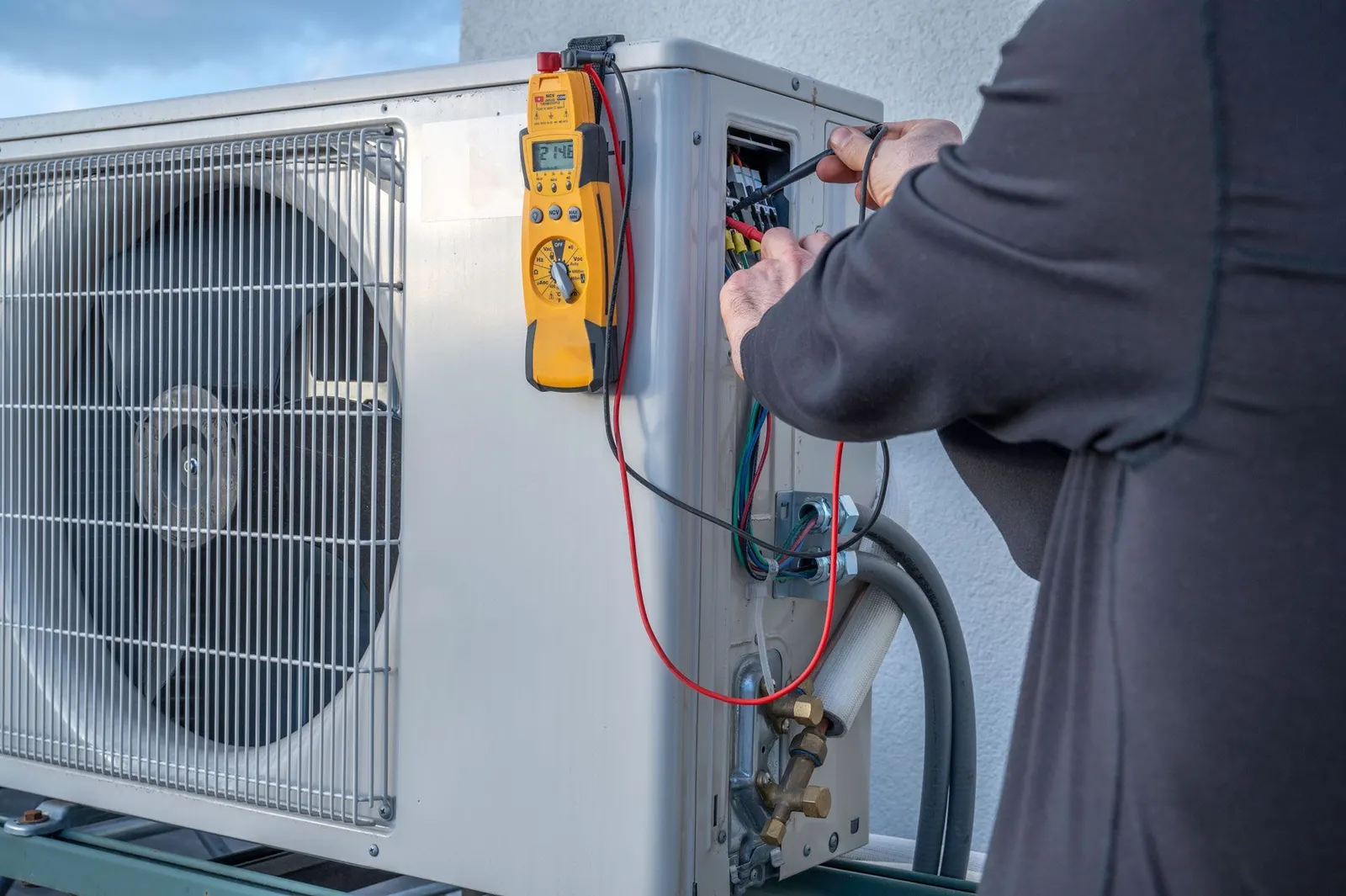
When to Call a Professional: If you have replaced the filter and cleared visible debris, but the system still short-cycles when you turn it back on, you must shut it off and call an expert. Homeowners should never attempt dangerous DIY repairs involving high-voltage electrical components, control board wiring, or handling chemical refrigerants. Professional diagnostics are vital for accurately identifying whether the system needs a simple coil cleaning or a complex mechanical repair.
One homeowner recently needed to understand their HVAC system issue after it repeatedly shut down in the afternoon heat. Technicians spent time explaining the issue and options transparently, ensuring the customer understood the exact mechanical problem and their options for addressing it. This honest diagnostic approach provides a clear explanation of the mechanical "why" behind the failure, without relying on immediate, fear-based pressure to replace the entire system. To prevent these sudden mid-summer failures altogether, scheduling routine AC maintenance is the most effective proactive strategy.
The Hidden Dangers of Ignoring a Short-Cycling Air Conditioner
Ignoring a short-cycling air conditioner is one of the most expensive mistakes a homeowner can make. While it might be tempting to let the system run in its erratic loop just to get a few minutes of cold air, the long-term risks far outweigh the temporary relief, especially during August and late summer when the equipment is already under maximum strain.
The primary danger lies in the massive strain rapid cycling places on the compressor. The compressor is the heart of the refrigeration cycle and is by far the most expensive component in the entire system. Starting a heavy electrical motor requires a massive surge of power—often three to five times the energy required to keep it running. When a system short-cycles, the compressor is subjected to this violent startup surge dozens of times an hour. This continuous electrical and mechanical stress degrades the motor windings, overheats the internal components, and eventually causes the compressor to burn out completely.
Beyond mechanical failure, short-cycling has a severe financial impact on your monthly utility bills. Because the system is constantly drawing massive startup amperage but never actually completing a cooling cycle, energy consumption skyrockets. You end up paying significantly more for electricity while your home remains uncomfortably warm. Shutting the system off entirely at the thermostat is always safer than letting it run in a destructive, expensive loop.
| Component Affected | Impact of Short-Cycling | Long-Term Consequence |
|---|---|---|
| Compressor | Subjected to constant, violent electrical startup surges. | Motor winding burnout; complete system failure requiring expensive replacement. |
| Run Capacitor | Overheats from trying to supply continuous startup voltage. | Bulges, leaks, and fails, cutting power to the outdoor fan and compressor. |
| Evaporator Coil | Fails to manage latent heat; condensation freezes instead of draining. | Solid ice blocks all airflow, leading to water damage when the ice rapidly thaws. |
| Contactor Relay | Electrical contacts slam shut and pull apart dozens of times an hour. | Contacts become pitted and welded shut, causing the system to run uncontrollably. |
Frequently Asked Questions About AC Short-Cycling
Why does my AC run for 10 minutes then shut off?
An air conditioner running for only 10 minutes is experiencing a mechanical fault, as 10 minutes is not enough time to complete a full cooling and dehumidification cycle. Under normal conditions, a system needs 15 to 20 minutes to properly remove heat and moisture from the air. When it shuts down at the 10-minute mark, a safety mechanism has forcefully cut the power.
The immediate suspects for this behavior are usually airflow restrictions or heat-trapping issues. A severely dirty indoor air filter will suffocate the blower motor, causing the internal coils to drop below freezing and triggering a shutdown. Alternatively, a blocked outdoor condenser coil prevents heat from escaping, causing the compressor to overheat. If you notice this exact 10-minute pattern, shut the system off and check your air filter before attempting to run it again.
Why does my AC turn off before reaching temperature?
When your air conditioner turns off before reaching the temperature set on the wall, it is typically shutting down to protect its own internal components from permanent damage. For example, if the thermostat is set to 72°F but the indoor temperature is stuck at 76°F, the system has likely reached a thermal overload state. The internal sensors detect that the compressor is running too hot or the refrigerant pressure is too high.
This discrepancy between the setpoint and the actual room temperature means the system is fighting a losing battle against heat transfer. The high-pressure limit switch cuts the circuit to save the compressor. Once the unit cools down, it will try to start again, creating the rapid on-and-off loop. This symptom requires professional diagnostics to determine whether the issue is a failing fan motor, a refrigerant leak, or a faulty control board.
Is it bad if my AC turns on and off frequently?
Yes, frequent cycling is highly damaging to your air conditioning equipment. Air conditioners are engineered to run in long, steady cycles. The start-up phase is the most stressful and energy-intensive part of the entire cooling process. When a system turns on and off frequently, it multiplies that stress exponentially.
This behavior accelerates wear and tear on critical electrical components. The run capacitors, which store energy for the motors, will overheat and fail prematurely. The contactor relay, which physically clicks shut to send high voltage to the outdoor unit, will become pitted, burned, or even welded shut from the constant electrical arcing. Allowing a system to cycle frequently will drastically shorten its lifespan and lead to major component failures.
How does high humidity affect my AC's cooling cycle?
High humidity drastically increases the latent heat load on your air conditioning system, forcing it to work much harder to achieve indoor comfort. A central air conditioner does not just lower the temperature (sensible heat); it also acts as a massive dehumidifier by pulling moisture out of the air (latent heat). The warm, moist indoor air blows across the freezing cold evaporator coils, causing the suspended water vapor to condense into liquid and drain away.
When high humidity is present, the system must run longer, continuous cycles to extract that heavy moisture. If your system is short-cycling, it completely fails at this task. The brief bursts of cold air lower the room temperature slightly, but leave all the excess moisture suspended in the air. This results in a home that feels cold but incredibly sticky and clammy.
Can a dirty air filter cause my AC to stop cooling?
Yes, a dirty air filter is one of the most common and preventable causes of an air conditioner stopping its cooling cycle prematurely. The entire refrigeration process relies on a specific, calculated volume of warm air flowing over the indoor evaporator coil. The air filter is the gateway for that airflow.
When the filter becomes clogged with dust, pet hair, and debris, it acts like a solid wall. The blower motor struggles to pull air through it, and the evaporator coil is starved of the warm air it needs to keep the refrigerant from freezing. The condensation on the coil turns to solid ice, which acts as an insulator, stopping all heat transfer. The system will eventually detect this failure and shut down the compressor to prevent liquid refrigerant from flowing backward and destroying the internal valves.
Protect Your Comfort with Expert AC Repair
Addressing late-summer cooling failures promptly is vital to protecting your equipment from permanent, irreversible damage. When your system is trapped in a short-cycling loop during August and late summer, every rapid start and stop pushes the compressor closer to total failure. Shutting the system down and seeking an expert evaluation is the safest way to preserve your investment.
One Williamsport homeowner found themselves in a tough spot when their unit failed, leaving them completely without air conditioning over a hot Memorial Day weekend. A technician quickly identified the underlying issue, provided temporary cooling solutions, and installed the necessary new parts to put their mind at ease. If your system is struggling to reach the set temperature, do not wait for a complete breakdown. Talk to an expert who can provide a clear technical explanation of the end-of-season strain and offer safe, non-technical criteria for moving forward. Schedule your AC repair in Williamsport today to restore reliable, consistent comfort to your home.