
Facing a Sudden AC Failure: Evaluating Your Next Steps
When your system suddenly stops blowing cold air in the middle of a heat wave, searching for home maintenance tips and troubleshooting is usually your first instinct. In our experience serving the local area, our team knows firsthand that a sudden loss of cooling is incredibly stressful, especially when indoor temperatures begin rising rapidly and you are unsure if you are dealing with a minor glitch or a catastrophic equipment failure. Homeowners often struggle to determine the severity of the issue, which can lead to rushed decisions. Establishing an objective framework helps you make informed choices without feeling pressured into a major purchase before you are ready. Before you decide to schedule an AC installation consultation with our business, it helps to understand the full range of your HVAC and home comfort services options.
General educational queries for local service troubleshooting reveal that most homeowners benefit from a methodical approach. The right path forward begins with gathering accurate information about your system's current behavior. Taking a moment to document exactly what is happening—whether the unit is making grinding noises, blowing warm air, or failing to turn on entirely—gives you a solid baseline. This information is critical because it dictates whether your next step is a simple, safe homeowner check or a call to our licensed professionals.
Understanding the difference between a quick fix and a total system failure empowers you to handle the situation calmly. The goal is to move from a state of panic to a state of control. By systematically evaluating the symptoms, you can confidently navigate the decision point between attempting a minor reset, scheduling a professional repair with our team, or investing in a full system replacement.
Basic AC Troubleshooting: Safe Checks for Homeowners
Before calling our technicians out to your home, there are several safe, basic checks you can perform. These steps target common, easily resolvable issues that we frequently see masquerading as major system failures. However, it is vital to recognize the strict boundaries between safe homeowner maintenance and dangerous DIY interference.
- Check the thermostat settings: Start with the most obvious culprit. Ensure the thermostat is explicitly set to "cool" rather than "fan" or "heat." Verify that the temperature setpoint is actually lower than the current room temperature. If the display is blank or unresponsive, replace the batteries with fresh ones. A surprising number of our service calls are resolved by simply updating the thermostat batteries or correcting an accidental setting change.
- Inspect the air filter: A severely clogged air filter is one of the most common causes of AC malfunctions our team encounters. When airflow is restricted, the system has to work significantly harder to pull air through the return vents. This lack of warm air moving over the evaporator coil can cause the condensation on the coil to freeze solid, encasing the unit in ice and halting the cooling process entirely. Check your filter and replace it if it is visibly coated in dust and debris.
- Verify the circuit breaker: Air conditioners draw a substantial amount of electrical current, especially during startup. Occasionally, a power surge or a temporary overload will trip the dedicated circuit breaker. Locate your electrical panel and check for any switches that have flipped to the "off" or middle position. You can reset a tripped breaker by pushing it firmly to the "off" position and then back to "on." The critical rule: Only reset the breaker once. If it trips again immediately, you have a serious electrical short, and resetting it repeatedly creates a severe fire hazard.
- Document the symptoms: Write down exactly what you observe. Are there unusual smells, like burning plastic or mustiness? Are there strange noises, such as squealing, banging, or persistent clicking? Is the airflow weak in certain rooms but strong in others? Having a detailed list of symptoms provides accurate information to our technicians, accelerating the diagnostic process.
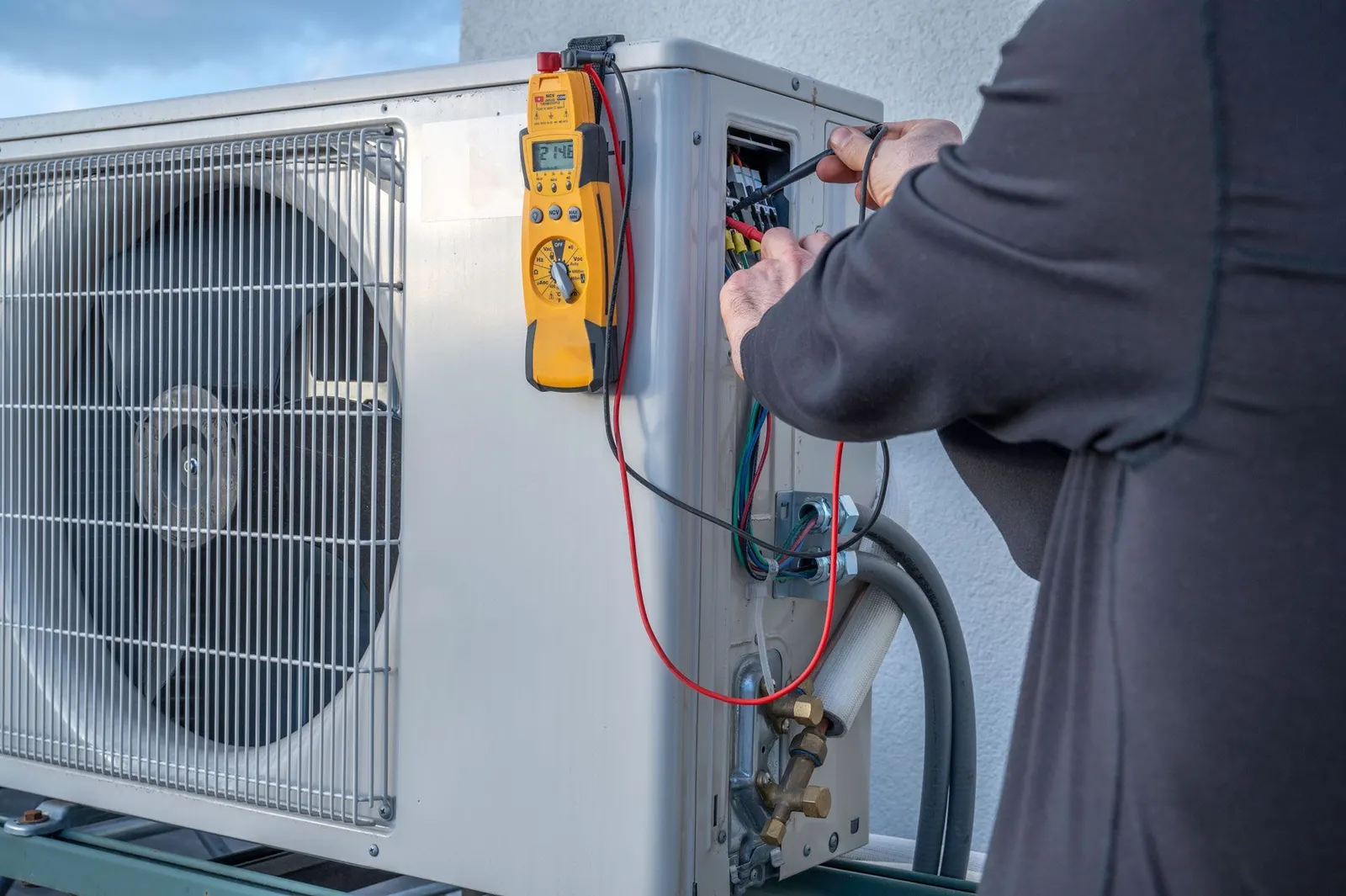
CRITICAL WARNING: While the steps above are safe for homeowners, you must never open the internal equipment cabinet, attempt to handle refrigerant, or test high-voltage electrical components. These actions legally and safely require a licensed professional. Refrigerant is highly regulated and requires specific certification to handle, and the capacitors inside your condensing unit hold enough electrical charge to cause severe injury even when the power is disconnected.
When to Repair vs. Replace: Industry-Standard Guidelines
The Problem: As an air conditioning system ages, it inevitably experiences wear and tear. Homeowners frequently face the dilemma of whether to keep pouring funds into repairing an older unit or to finally invest in a new installation. Without an objective framework, this decision can feel like a gamble.
The Cause: Mechanical degradation over time leads to decreased efficiency and an increased likelihood of major component failure. Compressors wear out, coils develop microscopic leaks, and electrical contacts become pitted. When these failures occur, the cost to repair the specific component must be weighed against the remaining lifespan of the entire system.
The Solution: Relying on industry-standard guidelines provides an objective, pressure-free framework for making this choice. The Department of Energy recommends considering replacement if the heating and cooling system is 10 to 15 years old and major components fail. At this age, the technology is often outdated, and the unit has likely lost a significant portion of its original efficiency.
A widely accepted metric our team uses is the "50% rule." If the cost of a necessary repair approaches half the value of a comparable new system, replacement is generally the wiser long-term investment. Sinking substantial funds into an old unit that may suffer another catastrophic failure next season is rarely cost-effective.
You must also evaluate the system's recent history. Frequent, consecutive breakdowns are a strong indicator of a declining lifespan. Furthermore, modern units offer significant energy efficiency gains. Upgrading to a system with a higher SEER2 (Seasonal Energy Efficiency Ratio) rating provides better performance while using less electricity, which offsets the initial installation investment over time.
At our business, a trustworthy technician will always spend time explaining these options thoroughly so you understand the long-term value. Recently, our team helped a local homeowner dealing with a recurring system issue during the summer. Our technician spent time explaining the specific mechanical failure and the available options, making the entire diagnostic process transparent. Because the customer understood the system's mechanics and their options objectively, they avoided random charges and made a confident, informed choice about their equipment.
| Indicator | Lean Toward Repair | Lean Toward Replacement |
|---|---|---|
| System Age | Under 10 years old | Over 10-15 years old |
| Repair Cost | Less than 50% of new system value | More than 50% of new system value |
| Breakdown Frequency | Rare, isolated incidents | Multiple service calls in past 2 years |
| Component Failed | Capacitor, contactor, fan motor | Compressor, severely leaking coil |
| Energy Efficiency | Acceptable monthly utility usage | Steadily increasing utility bills |

Why Precise AC Sizing Matters for Indoor Comfort
Air conditioners serve two primary functions that are equally critical to your comfort: lowering the ambient air temperature and removing excess indoor moisture. Many homeowners focus solely on the temperature, but dehumidification is what actually makes a home feel comfortable. In our experience working in the local area, hot, humid summers make proper system sizing absolutely essential for removing moisture from the indoor air effectively.
An oversized AC unit is a common, yet severe, installation error our team frequently corrects. If a system's capacity is too large for the square footage of the home, it will cool the air far too quickly. This phenomenon, known as short cycling, means the compressor shuts off before it has had enough time to extract humidity from the air. The result is a cold but clammy environment. When indoor humidity exceeds the ideal 30% to 50% range, the home feels uncomfortable, and the excess moisture creates an environment susceptible to mold growth and poor indoor air quality.
Proper installation requires a precise load calculation (often referred to as a Manual J calculation). This mathematical process matches the equipment to the home's exact square footage, layout, window placement, insulation levels, and regional climate data. Guessing the size based on the old unit's specifications is a recipe for long-term comfort issues.
Quick, professional installations during peak heat waves must still adhere to these strict sizing protocols for lasting comfort. When another homeowner in the area needed a new HVAC system installed during the peak of summer, our installation team provided excellent service and expertise by performing a rigorous load calculation rather than rushing the sizing process. Because the new unit was matched perfectly to the home's thermal dynamics, the customer was extremely happy with both the new HVAC system's dehumidification capabilities and the overall professional experience.
What to Expect During the AC Installation Process
Understanding the step-by-step process of a professional AC installation sets clear expectations and significantly reduces homeowner anxiety. A proper installation is a complex mechanical project, not a simple appliance swap. During a particularly hot and humid stretch of summer weather, a local customer needed a new AC unit installed quickly. Our team handled the installation efficiently, answered all operational questions, and helped set up the new thermostat before leaving, ensuring the homeowner felt completely comfortable with the new technology. Here is what a standard professional installation by our business entails:
- Initial assessment and load calculation: Before any physical work begins, our technicians verify the correct system specifications based on the home's unique thermal profile. This ensures the new equipment will provide optimal cooling and dehumidification without short cycling.
- Safe removal and disposal: The old system must be decommissioned safely. We carefully recover the existing refrigerant using specialized equipment to prevent environmental contamination. The old condenser, evaporator coil, and associated debris are then removed and disposed of according to local and federal environmental regulations.
- Ductwork and structural modifications: In many cases, existing ductwork requires minor modifications to accommodate the dimensions and airflow requirements of the modern, higher-efficiency equipment. Our technicians will seal connections, alter plenums, or adjust unusual structural setups to ensure seamless airflow delivery.
- Equipment installation: The new outdoor condenser is leveled and secured on its pad, while the new indoor evaporator coil is fitted into the air handler or furnace. New copper refrigerant lines are brazed, electrical connections are wired safely, and the condensate drainage system is configured to prevent future water leaks. The system is then integrated with the new or existing thermostat.
- Final testing and homeowner walkthrough: Once assembled, the system is charged with the precise amount of refrigerant and powered on. We measure airflow, check temperature drops, and verify electrical draws to ensure everything operates within manufacturer specifications. Finally, our team provides a comprehensive walkthrough, demonstrating how to operate the new system efficiently and maintain it moving forward.
The Value of Honest Diagnostics and Objective Advice
Navigating home repairs requires a partner you can trust. Not every malfunctioning AC unit requires a full replacement; in fact, many startling issues—like a completely dead condenser—are often the result of simple, inexpensive fixes like a blown dual-run capacitor or a faulty contactor switch. At our business, we focus entirely on objective diagnostics rather than aggressive upselling.
Homeowners should look for technicians who prioritize education. A true professional tells you what you actually need, not what costs the most, explaining the "why" behind every recommendation. Our team will show you the worn component, explain how it impacts the broader system, and present you with choices based on the 50% rule and your system's age.
Building a relationship with a trustworthy, family-values-driven company ensures peace of mind for future maintenance. When a company operates on the principle of honest home repairs, you never have to second-guess whether a recommended service is genuinely necessary. This transparency transforms a stressful breakdown into a manageable, educational experience.
For specific regional considerations and deeper insights into local installation standards, reviewing localized resources can provide additional context. Reading a comprehensive guide to AC installation in Hagerstown offers valuable perspective on what to expect from a high-quality, local installation process.
Common Questions About AC Installation and Troubleshooting
What should I check before calling for AC repair?
Before calling our team for a professional repair, always check your thermostat settings to ensure it is set to "cool" and that the batteries are functioning. Next, inspect your air filter; a dirty, clogged filter restricts airflow and can cause the system to freeze up entirely. Finally, ensure the dedicated circuit breaker in your electrical panel is in the "on" position. If these basic, safe homeowner checks do not resolve the issue, it is time to call a licensed technician.
How do I know if my AC needs to be replaced?
A primary indicator for replacement is the age of the equipment; the Department of Energy suggests replacing units over 10 to 15 years old when major components fail. Our team also recommends applying the 50% rule: if the repair estimate exceeds half the cost of a new unit, replacement is usually the better financial choice. Additionally, if the system runs constantly but suffers from an inability to maintain comfortable indoor humidity levels, the equipment is likely failing or improperly sized.
How long does an AC installation take?
A standard residential air conditioning installation typically takes one full day, averaging between 8 to 10 hours from start to finish. However, complex installations, unusual structural setups, or significant ductwork modifications may extend the timeline into a second day. Our professional installation team will communicate the schedule clearly upfront and work methodically to minimize disruption to your home and daily routine.
Is it worth fixing an AC unit that is 10 years old?
Whether a 10-year-old unit is worth fixing depends entirely on the cost of the repair and the overall condition of the system. Minor fixes, such as replacing a capacitor, clearing a drain line, or swapping a contactor, are almost always worth the investment to keep the system running. Conversely, major mechanical failures, like a seized compressor or a severely leaking evaporator coil, on an older unit usually justify a full replacement.
Can a new AC unit lower my energy bills?
Yes, upgrading to a modern air conditioning unit can significantly lower your monthly energy bills. New systems feature much higher SEER2 (Seasonal Energy Efficiency Ratio) ratings, meaning they require far less electricity to produce the same amount of cooling as older models. Furthermore, proper sizing and meticulous installation maximize these efficiency gains, ensuring the system does not waste energy through short cycling or duct leakage.
Making an Informed Decision for Your Home's Comfort
Understanding the mechanics of your AC system and the objective criteria for evaluating its performance empowers you to make the best choice for your home and budget. General educational queries for local service troubleshooting consistently show that an informed homeowner is a confident homeowner. Whether you ultimately need a minor electrical repair or a complete system overhaul, industry-standard guidelines like the 50% rule and proper load calculations should guide your path forward.
A clear, well-structured technical explanation ensures you know exactly what to expect from a service provider, protecting you from unnecessary upsells. When you are armed with this knowledge, you can confidently reach out to our team of trusted local experts to evaluate your system without the pressure of a hard sell. If you are ready to explore your options, schedule an AC installation consultation today to receive honest, objective advice from our business, tailored to your home's unique needs.