
The Tipping Point of AC Failures
Your standard residential HVAC split system is running nonstop, but the house still feels uncomfortably warm, leaving you searching for objective options comparisons for homeowners. When a major cooling component fails during the peak of summer, the immediate stress often clouds logical decision-making. You are suddenly forced to choose between authorizing a short-term repair to restore airflow immediately or investing in a long-term replacement that will serve your home for the next decade. Making the right choice requires stripping away the panic and relying on a purely technical, objective framework.
The core dilemma of HVAC management is recognizing when a piece of machinery has crossed the threshold from a reliable asset into a persistent liability. Every mechanical system has a finite operational lifespan, and continuously sinking resources into a failing unit eventually yields diminishing returns. By understanding the mechanical reality of your equipment, you can approach this crossroad without relying on guesswork. For those navigating these decisions, reviewing comprehensive air conditioning services alongside your options for AC installation and replacement provides the baseline knowledge needed to move forward confidently.
The 'Age Multiplied by Repair Severity' Formula
Without relying on specific dollar amounts, homeowners can utilize a conceptual, math-based framework to evaluate whether a system is worth saving. The most effective method is calculating the "Age Multiplied by Repair Severity" formula. This objective approach prevents the sunk-cost fallacy—the psychological trap of continuing to repair a failing system simply because you have already spent money on it in the past.
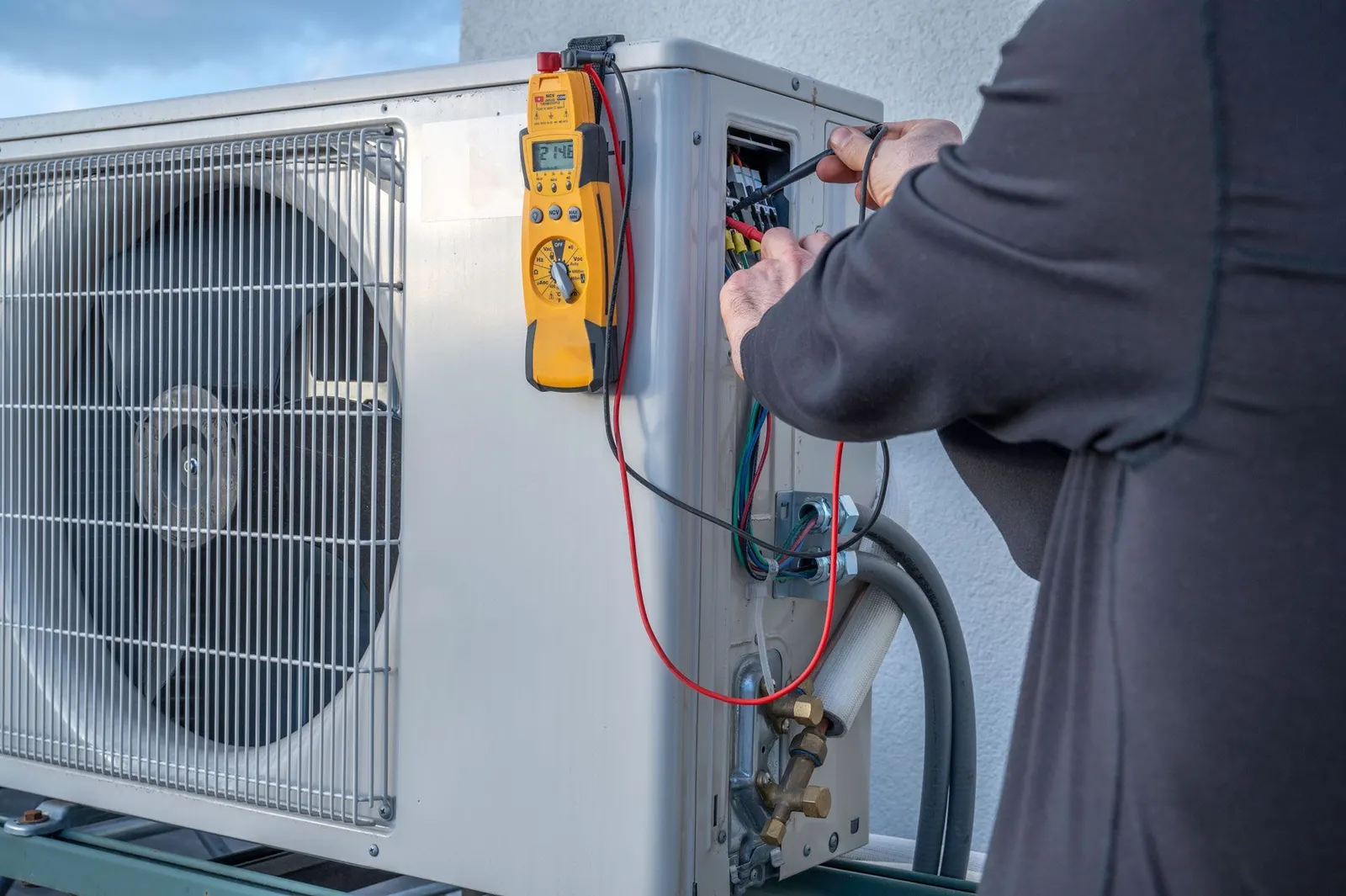
- Determine the exact age of the equipment: Locate the data plate on the side of your outdoor condenser unit. The manufacture date establishes the baseline multiplier for your calculation. A unit that is 12 years old carries significantly more baseline risk than a unit that is only five years old.
- Assign a severity score to the required repair: Rate the proposed repair on a scale of 1 to 10. A minor electrical issue, such as a blown dual-run capacitor or a faulty contactor, might score a 2. A catastrophic failure, such as a seized compressor or a severely leaking evaporator coil, scores a 9 or 10.
- Calculate the conceptual threshold: Multiply the age of the unit by the severity score. If the resulting number is exceptionally high, the mechanical reality strongly suggests that the system is entering a phase of cascading failures.
- Weigh the result against expected lifespan: A standard residential HVAC split system typically lasts 10 to 15 years. If your unit is already in the final third of its expected lifespan, even a moderate severity score often tips the scale toward replacement.
Understanding the Mathematical Threshold
This mathematical threshold is designed to protect homeowners from throwing good resources after bad. When an air conditioner reaches 12 to 15 years of age, the internal components have endured thousands of hours of thermal stress, vibration, and friction. Replacing a highly severe component, like a compressor, in an aging system is mechanically similar to putting a brand-new engine into a vehicle with a rusting frame and failing transmission. The new part will function perfectly, but the surrounding aging components—like the blower motor, the reversing valve, or the condenser fan—are still highly likely to fail shortly after. Avoiding this trap requires looking at the system as a holistic unit rather than a collection of isolated parts.

Efficiency Standards and Refrigerant Realities
Industry regulations and technological advancements play a massive role in the long-term viability of repairing older units. In 2023, the Department of Energy implemented the SEER2 (Seasonal Energy Efficiency Ratio 2) standards, which significantly increased the baseline efficiency testing protocols for all new residential HVAC equipment. This means that a baseline unit manufactured today operates under much stricter, real-world testing conditions than a premium unit manufactured fifteen years ago. Older systems simply cannot compete with the energy consumption profiles of modern variable-speed technology.
Furthermore, standard residential HVAC split systems typically lose 5-10% of their original efficiency over their lifespan if improperly maintained. As dirt accumulates on coils, blower wheels fall out of balance, and ductwork develops micro-leaks, the system has to run longer and work harder to achieve the same cooling output. When you choose to repair a 14-year-old system, you are paying to restore a unit that is already operating at a fraction of its original, outdated efficiency rating.
The Impact of the R-22 Phase-Out
The most critical regulatory factor impacting older systems is the Environmental Protection Agency's complete ban on the production and importation of R-22 refrigerant. For decades, R-22 was the industry standard, but its ozone-depleting properties led to a mandatory phase-out. If your aging system uses R-22 and develops a refrigerant leak, repairing it is often mechanically and financially impractical.
Because new R-22 is no longer manufactured, the industry relies entirely on reclaimed and recycled supplies, making it exceptionally scarce. Furthermore, you cannot simply drop modern, environmentally friendly refrigerants (like R-410A or the newer A2L classifications) into an R-22 system. The operating pressures and required compressor oils are entirely incompatible. Attempting a retrofit often leads to catastrophic compressor failure. Therefore, a significant leak in an R-22 system is almost universally recognized as the definitive tipping point for full system replacement.
Sensible vs. Latent Cooling: Meeting Regional Climate Demands
In the Mid-Atlantic and Tri-State regions, summer doesn't just bring high temperatures; it brings oppressive, heavy humidity. This specific climate context puts immense strain on aging air conditioning equipment. To understand why older systems struggle here, it is essential to define the two distinct types of cooling your HVAC system performs: sensible cooling and latent cooling.
Sensible cooling is the process of lowering the actual temperature of the air—the number you see on your thermostat. Latent cooling is the process of removing moisture from the air. In a hot, humid climate, optimal indoor comfort relies heavily on latent cooling. When the air is thick with humidity, your body cannot sweat efficiently, making a 75-degree room feel clammy and miserable.
As compressors age and lose their mechanical efficiency, they often run in shorter, less effective cycles. They might achieve the sensible cooling goal (hitting the target temperature) and shut off before they have had enough time to perform the latent cooling (dehumidification). Modern variable-speed systems are engineered to run continuously at lower capacities, providing exceptional humidity control. For homeowners looking to understand how modern equipment handles these specific regional demands, reviewing everything you need to know about AC installation in Hagerstown offers valuable insights into climate-matched technology.
| Cooling Function | Primary Goal | How Aging Systems Perform | How Modern Systems Perform |
|---|---|---|---|
| Sensible Cooling | Lowering the ambient air temperature. | Often cools too quickly (short cycling), leaving the home cold but uncomfortable. | Provides steady, even temperature drops without drastic fluctuations. |
| Latent Cooling | Removing humidity and moisture from the indoor air. | Fails to run long enough to extract moisture, resulting in a "clammy" environment. | Runs longer cycles at lower speeds to continuously extract heavy humidity. |
| Energy Consumption | Managing the electrical draw during operation. | Draws massive amperage during frequent hard starts, driving up utility usage. | Ramps up slowly and maintains low-power operation to conserve energy. |
| Airflow Consistency | Distributing conditioned air evenly through ducts. | Single-speed blowers blast air at 100% capacity, creating hot and cold spots. | Variable-speed blowers gently mix the air, eliminating stagnant zones. |
Evaluating Your Current System's Lifespan and Warranty
Before finalizing any major mechanical decision, you must establish the exact baseline condition of your current equipment. A standard residential HVAC split system is subjected to extreme conditions year-round. The outdoor condenser battles rain, snow, debris, and UV degradation, while the indoor evaporator coil manages constant condensation and airflow. Understanding where your specific unit sits on its timeline requires a systematic evaluation.
- Verify the manufacture date: Check the data plate on the outdoor cabinet. If the unit is over 10 years old, it is officially in the latter stages of its lifecycle.
- Check the current warranty status: Most modern HVAC systems come with a 5-year standard parts warranty, which is often extended to 10 years if the equipment was registered by the original installer. If your system is out of warranty, you are responsible for the full cost of major replacement parts like the compressor or coil.
- Review your breakdown history: A system that requires professional intervention multiple times a year is exhibiting a pattern of decline. Frequent breakdowns indicate that the internal tolerances are failing.
- Assess maintenance records: Consistent, professional upkeep dramatically extends the viable lifespan of equipment. Systems that have received regular AC maintenance and tune-ups will generally outlast neglected units by several years.
Signs of Imminent Mechanical Failure
Beyond age and warranty, your system will often broadcast physical symptoms before a total breakdown. Strange, grinding noises from the outdoor unit typically indicate failing motor bearings. Short cycling—where the unit turns on and off rapidly every few minutes—stresses the electrical components and prevents proper cooling. Inconsistent temperatures from room to room often point to failing blower components or severe duct pressure issues. When you notice these symptoms stacking up on an older unit, it is time to call a professional for an objective assessment.
Making the Decision: A Math-Based Framework
The Problem: The anxiety of unexpected HVAC breakdowns stems from a lack of objective data. Homeowners are often caught off guard, forced to make a major technical decision while their house is rapidly heating up, leading to stressful, reactive choices rather than strategic investments.
The Cause: This stress is compounded when the decision is based on emotion or high-pressure sales tactics rather than mechanical reality. Without a clear understanding of efficiency loss, refrigerant phase-outs, and repair severity multipliers, it is impossible to weigh the true long-term value of a repair against a replacement.
The Solution: Synthesize the technical and environmental data into a factual framework. Partnering with a local professional who operates on an ethos of honest home repairs means you receive an unbiased mechanical reality check. A trustworthy technician will prioritize family values over quick sales, providing you with the exact age, warranty status, and severity scale of your current unit. By demanding an objective analysis, you can confidently determine if a repair is a wise extension of the unit's life or a waste of resources. For homeowners ready to explore modern efficiency, consulting experts for AC installation in Frederick, MD ensures the new system is perfectly sized for regional humidity demands.
Answers to Common AC Replacement Questions
Is it worth repairing a 15-year-old AC?
In most scenarios, repairing a 15-year-old air conditioner is not a viable long-term investment. At this age, a standard residential HVAC split system has surpassed its expected operational lifespan and is likely utilizing outdated, phased-out refrigerants. Furthermore, the efficiency loss over 15 years means the unit costs significantly more to operate than a modern replacement. Sinking resources into a unit this old often leads to a cycle of continuous, cascading part failures.
How do I know if my AC needs to be replaced?
You know your AC needs replacement when the cost of repairs multiplied by the age of the unit reaches an unsustainable threshold. Key indicators include a system that is out of warranty, requires frequent service calls, struggles to remove indoor humidity, or relies on banned R-22 refrigerant. If a major component like the compressor or evaporator coil fails on a unit older than 10 years, replacement is generally the most mechanically sound choice.
What is the rule of thumb for replacing an air conditioner?
A common rule of thumb is the "Age Multiplied by Repair Severity" formula, which helps gauge the tipping point of equipment failure. If the required repair is highly severe (like a compressor replacement) and the unit is over a decade old, the math strongly favors replacement. Additionally, if the repair cost approaches half the price of a new, high-efficiency system, investing in new technology provides better long-term value.
Does a new AC cool better than an old one?
Yes, a new air conditioner cools significantly better than an aging unit due to advancements in variable-speed technology and stricter SEER2 efficiency standards. Modern systems don't just lower the temperature; they provide superior latent cooling, effectively stripping heavy humidity from the air. This results in a much more consistent, comfortable indoor environment without the hot and cold spots common to older, single-stage equipment.
How does high humidity affect an aging AC compressor?
High humidity forces an aging AC compressor to work exponentially harder to achieve the desired indoor comfort level. Because older compressors lose their mechanical efficiency over time, they struggle to run the long, consistent cycles required to extract heavy airborne moisture. This forces the system to run longer overall, increasing wear and tear on the electrical components and accelerating the eventual failure of the equipment.
Next Steps for a Confident Choice
Understanding the math and mechanical reality behind HVAC longevity empowers you to take control of your home's comfort. The right choice always balances the immediate viability of a repair with the long-term benefits of modern energy efficiency and reliable humidity control. You do not have to navigate this complex decision alone. Reach out to a qualified local expert to evaluate your specific system objectively, ensuring you have the clear, logical comparison framework needed to make a confident choice for your home.