
Is Your AC Struggling in the Heat? The Repair vs. Replace Dilemma
Is your air conditioning system actually broken, or is it simply struggling to keep up with the extreme weather? Making accurate options comparisons for homeowners can feel incredibly stressful when a system fails during peak-heat July. You are suddenly faced with an uncomfortable home, rising indoor temperatures, and the pressure of making a significant financial decision quickly. However, rushing into a major HVAC purchase without a clear diagnostic framework often leads to buyer's remorse.
To navigate this situation effectively, you need an objective way to evaluate your current equipment. This means looking beyond the immediate breakdown and assessing the system's age, its recent repair frequency, and its overall cooling capacity under heavy strain. At Comfort Central Inc., when we provide comprehensive air conditioning services, establishing this baseline understanding is our first critical step. By stepping back and analyzing the data, you can make an informed choice that prioritizes your long-term comfort and energy efficiency rather than just applying a quick fix to a dying unit.
The 50% Rule: A Percentage-Based Diagnostic Framework
When evaluating a failing air conditioner, industry professionals often rely on a clear, objective guideline known as the 50% rule. This percentage-based diagnostic framework helps you weigh the cost of a repair against the remaining lifespan of the unit without getting lost in complex calculations. The rule is straightforward: if a repair costs half the price of a brand-new system and your current unit is over 10 to 15 years old, investing in a replacement is typically the better long-term decision.
Understanding the hidden costs of aging systems:
- Cumulative breakdown fatigue: A single repair might seem manageable, but multiple component failures over a single season add up rapidly.
- Warranty expiration: Once the manufacturer's parts warranty expires (usually after 10 years), you bear the full brunt of every replacement part and labor charge.
- Efficiency degradation: Older units lose their original efficiency rating, meaning you pay more in monthly utility costs for a system that delivers less cooling power.
Consider the inconvenience of ongoing service calls. For example, our team at Comfort Central Inc. recently helped a local homeowner who experienced persistent, ongoing problems with their AC unit during a mid-summer heatwave. Our technician Corey had to repeatedly return to service the equipment to address cascading issues before the unit was finally stabilized. While our team will always work diligently to resolve complex problems, repeatedly servicing an aging unit in the Williamsport MD area can sometimes act as a temporary band-aid. Assessing the overall age-to-repair-cost ratio ensures you are investing in reliable comfort rather than continuously patching a failing machine.
How Mid-Atlantic Humidity Impacts Aging AC Units
The Problem: Many homeowners assume that an air conditioner's only job is to lower the air temperature. In reality, managing indoor comfort requires handling two distinct types of heat: sensible heat (the temperature you read on a thermometer) and latent heat (the thermal energy trapped in airborne moisture). In our years of serving the Williamsport MD area, we have found that our humid Mid-Atlantic summers mean a massive portion of your AC's workload is dedicated solely to removing latent heat. When an aging system begins to fail, its ability to dehumidify is usually the first casualty.
The Cause: Older, inefficient compressors often suffer from shortened cooling cycles. As components wear down and airflow becomes restricted, the system may blast cold air quickly and then shut off—a process known as short-cycling. Because the unit does not run long enough to draw indoor air over the cold evaporator coils for an extended period, it fails to extract moisture. The air temperature might drop to your thermostat's set point, but the house will feel clammy, heavy, and uncomfortable.
The Solution: Evaluating your system's performance under heavy summer loads requires looking at indoor air quality and humidity control, not just raw cooling output. If your current unit constantly leaves your home feeling muggy despite running constantly, the compressor is likely undersized or failing. Upgrading to a modern system designed specifically to handle high latent heat loads restores true comfort, ensuring your home feels crisp and dry even during the most oppressive mid-summer heatwaves.
Comparing System Types: Single-Stage vs. Variable-Speed Compressors
If you determine that your current unit has reached the end of its serviceable life, the next step is choosing the right replacement technology. The most significant advancement in modern cooling is the shift in compressor design. Understanding the mechanical differences is vital for evaluating your options under peak-heat July conditions.
Single-Stage Cooling Limitations
Traditional air conditioners utilize single-stage compressors. These units operate on a binary system: they are either running at 100% full capacity or they are completely turned off. While this technology has been the industry standard for decades, it presents several distinct limitations during extreme weather.
- Frequent on/off cycling: Single-stage units constantly blast cold air and then shut down, leading to noticeable temperature swings throughout the house.
- Higher energy consumption: The most energy-intensive part of an air conditioner's operation is the startup phase. Turning on and off repeatedly draws massive amounts of electricity.
- Poor humidity management: Because they run in short, aggressive bursts, single-stage units often shut off before they have adequately removed latent heat from the indoor air.
The Variable-Speed Advantage
Variable-speed compressors use advanced inverter technology to adjust their cooling output in precise, minute increments. Instead of blasting at full power, these systems can ramp down to operate at 30% or 40% capacity, running continuously at a low, quiet speed.
- Continuous, low-speed operation: By running longer cycles at lower speeds, variable-speed units maintain an exact indoor temperature without the constant start-and-stop noise.
- Superior latent heat removal: Extended run times allow the evaporator coil to constantly pull moisture out of the air, drastically improving indoor air quality and comfort.
- Enhanced efficiency: Avoiding the massive power draw of constant startups significantly reduces energy consumption under heavy summer loads.
When considering AC installation and replacement, comparing these two technologies side-by-side reveals why variable-speed systems are increasingly favored by homeowners prioritizing long-term comfort.
| Performance Factor | Single-Stage Compressor | Variable-Speed Compressor |
|---|---|---|
| Operational Cycle | 100% ON or completely OFF | Adjusts output from ~30% to 100% |
| Humidity Control | Basic (often short-cycles) | Excellent (continuous moisture removal) |
| Temperature Consistency | Noticeable 2–4 degree swings | Precise (stays within 0.5 degrees) |
| Energy Efficiency | Standard (high startup draw) | High (low, steady power usage) |
| Peak Load Performance | Struggles with extreme humidity | Adapts seamlessly to rising heat |

Efficiency Upgrades and Refrigerant Realities
Another major factor in the repair versus replace decision is the evolution of industry standards and refrigerant regulations. Older air conditioners were manufactured to use R-22 refrigerant. Due to environmental regulations, the production and import of R-22 have been completely phased out. If your aging system develops a refrigerant leak, sourcing reclaimed R-22 is increasingly difficult and highly impractical. Repairing a major leak on an R-22 system is rarely a wise investment, as the unit is already running on obsolete technology.
Modern systems utilize updated, environmentally friendly refrigerants and are measured by SEER2 (Seasonal Energy Efficiency Ratio) ratings. Upgrading from an older 10-SEER unit to a modern high-efficiency system dramatically lowers the operating strain on the equipment and reduces your monthly energy consumption. Furthermore, generic federal tax credits and local utility rebates may apply to qualifying high-efficiency installations, making the transition to modern technology more accessible. We always recommend checking with your utility provider or tax professional to see what current incentive programs you might qualify for.
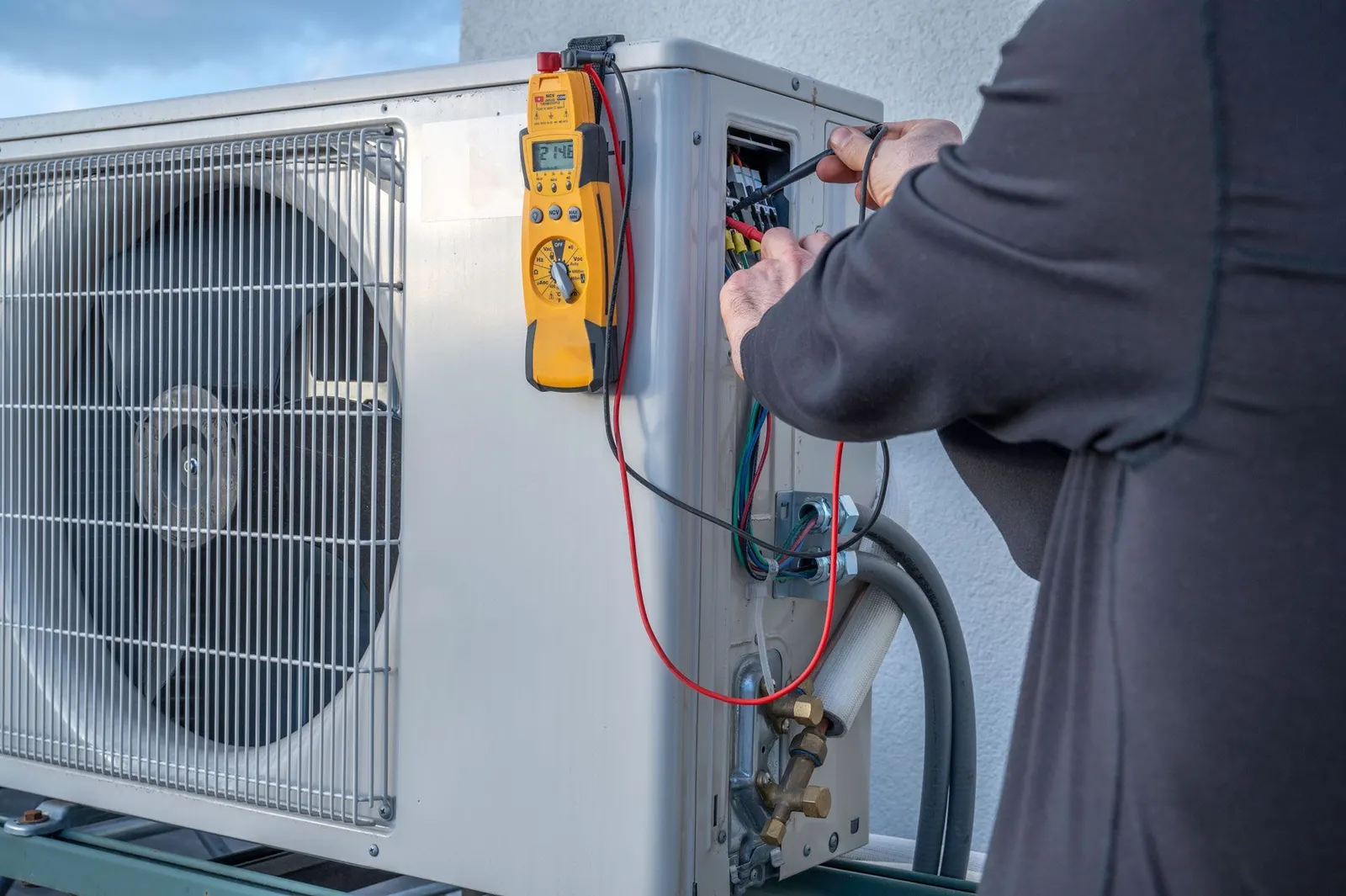
It is worth noting that modern, high-efficiency equipment is designed for longevity, and when minor issues do occur, they are usually straightforward to resolve. For example, one of our local customers with a newer, 3-year-old AC system experienced a sudden failure during a sweltering July afternoon. Our technician Chris quickly diagnosed that a pressure switch wire was touching the suction line. The issue was promptly and competently repaired. Because the system was modern and highly efficient, a simple repair was the obvious choice—vastly different from facing a major component failure on an obsolete R-22 system in the Williamsport MD area.
When to Choose Repair Over Replacement
Despite the benefits of modern technology, replacement is not always the correct answer. There are many scenarios where repairing your existing unit is the most logical and cost-effective choice. If your system is relatively young, has a strong history of regular maintenance, and is generally keeping you comfortable, a repair is usually the right path forward.
Signs that a repair is your best option:
- The system is under 10 years old: Units in this age bracket typically have plenty of life left and may still be under the manufacturer's parts warranty.
- The failure is an isolated electrical component: Issues like a blown dual run capacitor, a failing contactor, or a tripped breaker are routine fixes that do not indicate a failing compressor.
- The 50% rule is not met: If the repair cost is minor relative to the overall health and age of the system, fixing it makes financial sense.
- Cooling performance remains strong: If the system easily maintains your desired temperature and effectively manages humidity during peak-heat July when it is running, the core components are likely healthy.
Getting a professional, honest evaluation is critical. For instance, a long-time Comfort Central Inc. customer woke up on a stifling summer morning to find their system had suddenly stopped working. One of our service technicians arrived promptly, accurately diagnosed a minor issue, and resolved the problem quickly and affordably. Working with a team that prioritizes honest diagnostics means you get transparent evaluations; you will never be pressured into a replacement when a straightforward repair can restore full functionality. Whether you are fixing a standard unit or comparing central air vs mini split systems for a future upgrade, objective advice is your best tool.
Frequently Asked Questions About AC Upgrades and Repairs
At what age should you replace an AC unit?
Most industry experts recommend considering replacement when an air conditioner reaches 15 to 20 years of age. In the Williamsport MD area, the heavy workload of managing summer humidity can cause systems to wear out closer to the 15-year mark. If an older unit requires frequent repairs or struggles to maintain comfort, upgrading to a modern system is usually a better long-term investment.
Is it worth repairing a 10-year-old air conditioner?
Yes, repairing a 10-year-old air conditioner is often worth it if the breakdown is a minor electrical issue and the system has been well-maintained. However, if the repair involves a major component like the compressor or an evaporator coil leak, you should apply the 50% rule. If the repair approaches half the cost of a new unit, replacement is likely the wiser choice.
What is the difference between single-stage and variable-speed AC?
The primary difference lies in how the compressor operates. A single-stage AC runs at 100% capacity until the thermostat is satisfied, then shuts completely off. A variable-speed AC adjusts its cooling output in small increments, running continuously at lower speeds to provide exact temperature control and superior energy efficiency.
Does a variable-speed AC control humidity better?
Yes, variable-speed systems are significantly better at controlling indoor humidity. Because they run longer, continuous cycles at lower speeds, indoor air is constantly pulled across the cold evaporator coils. This extended exposure extracts far more moisture from the air than a single-stage unit that frequently turns on and off.
How do I know if my AC needs to be replaced or just repaired?
You should evaluate the system's age, repair history, and overall performance. If your AC is over 15 years old, uses obsolete R-22 refrigerant, or faces a repair that violates the 50% rule, replacement is recommended. If it is a newer unit with a minor electrical fault, a simple professional repair is all that is needed.
How does the R-22 refrigerant phase-out affect my repair options?
The total phase-out of R-22 refrigerant makes repairing older systems that develop leaks highly impractical. Because R-22 is no longer manufactured or imported, reclaimed supplies are scarce. If an R-22 system requires a major refrigerant charge, the most sensible option is upgrading to a modern unit that uses current, environmentally friendly refrigerants.
Schedule an Honest AC Evaluation Today
Deciding between repairing your current air conditioner and investing in a new system requires careful thought, especially when extreme weather puts your equipment to the test. By evaluating the age of your unit, understanding the 50% rule, and recognizing how modern variable-speed technology handles latent heat, you can make the right choice for your home. Making accurate options comparisons for homeowners ensures you invest in lasting comfort rather than temporary fixes.
If your system is struggling through peak-heat July, do not wait for a complete breakdown. Get a transparent, professional assessment from technicians who prioritize honest diagnostics. Reach out to Comfort Central Inc. today to schedule a professional AC repair evaluation, and let us help you restore reliable comfort to your home.