
Is Your AC Struggling, or Is It Failing?
Is your air conditioner running non-stop, yet your house still feels warm and uncomfortably sticky? When late-summer August heat pushes your system to its limits, finding accurate home maintenance tips and troubleshooting advice becomes a priority for many frustrated homeowners. At Comfort Central Inc., our technicians hear this concern daily as the back-to-school season approaches. You might be wondering if your system is just tired from months of continuous operation, or if it is experiencing a catastrophic mechanical breakdown. Distinguishing between cumulative end-of-season wear and actual equipment failure requires an objective, honest diagnostic framework rather than a high-pressure sales pitch. Before you assume the worst about your system's health, it helps to understand exactly what your cooling equipment is fighting against as the season winds down.
For foundational support and comprehensive solutions, explore our Air Conditioning Services.
The Mechanics of Mid-Atlantic Summer Stress
To understand why your air conditioner feels like it is failing in late-summer August, you have to look at the physics of how a cooling system actually operates. An air conditioner does not just pump cold air into your home; it removes heat and moisture from the indoor air. This process is divided into two distinct categories: sensible cooling and latent cooling.
Latent vs. Sensible Cooling
Sensible cooling refers to the actual drop in temperature that you can read on a thermometer. Latent cooling refers to the removal of moisture from the air, which is the process of dehumidification. In our years of serving Williamsport MD, we have seen firsthand how the high relative humidity of Mid-Atlantic summers forces your air conditioning system to expend a massive amount of energy on latent cooling. Before the system can effectively lower the temperature of your living space, it must first condense and drain away gallons of water from the indoor air.
When the humidity is exceptionally high, the system runs continuously just to fight the moisture. The air coming out of your vents might feel cool, but the overall temperature of the house barely drops because the system's capacity is entirely consumed by the dehumidification process. This is often perceived as a cooling failure, but it is actually the system doing exactly what it was designed to do under extreme environmental stress.
The Toll of Continuous Operation
By the time late summer arrives, your air conditioning system has likely been running daily for months. This continuous operation degrades overall cooling capacity. Moving parts experience friction, electrical components endure thousands of cycles, and airflow pathways accumulate dust and debris. When a system is forced to run non-stop to remove moisture from the air, this cumulative wear accelerates. If your system is aging, this constant strain can make it seem like the unit is on the verge of total collapse, when in reality, it is just losing its battle against the high indoor humidity.
If you suspect your system is no longer capable of keeping up with the seasonal demand, you can learn more about your options for AC installation and replacement.
Identifying Cumulative Wear vs. Mechanical Failure
When your home is uncomfortably warm, the symptoms of cumulative summer wear and actual mechanical failure can look identical to the untrained eye. However, the root causes are very different. Cumulative wear involves issues like restricted airflow, dirty condenser coils, and clogged filters that slowly suffocate the system over time. Mechanical failure involves broken components, such as failing compressors, refrigerant leaks, or electrical burnout.
Over the course of a long cooling season, outdoor condenser coils accumulate a thick layer of dust, pollen, and grass clippings. This dirt acts as an insulating blanket, preventing the system from releasing heat into the outdoor air. As a result, the system's efficiency and cooling capacity plummet. Inside the home, a clogged air filter restricts the volume of air passing over the cold evaporator coil, which can cause the coil to freeze solid, completely halting the cooling process.
Observational Criteria for Homeowners
Before calling a professional, homeowners can perform a few safe, non-DIY observational checks. Verify that your thermostat is set to "cool" and that the fan is set to "auto." Check your indoor air filter; if it is completely caked in dust, replace it. Walk outside and look at your condenser unit to ensure it is not choked by overgrown vegetation or visible debris. However, you should never open electrical panels or attempt to check refrigerant lines yourself. If these basic observational checks do not reveal the problem, you may need to investigate why your AC cools then stops cooling.
| Symptom or Sign | Cumulative Summer Wear | Mechanical Failure |
|---|---|---|
| Airflow at Vents | Weak but slightly cool air (often a clogged filter) | Warm air or no air blowing at all |
| System Run Time | Runs constantly but struggles to reach the set temperature | Short-cycles (turns on and off rapidly) or won't turn on |
| Outdoor Unit Condition | Coils covered in visible dirt, grass, or pollen | Making loud grinding, screeching, or buzzing noises |
| Indoor Coil Status | Frozen solid due to restricted airflow from a dirty filter | Frozen solid due to a chemical refrigerant leak |
| Electrical Behavior | Normal operation, just running longer than usual | Tripping the circuit breaker repeatedly |

When a Simple Fix Restores Cooling Capacity
A sudden stop in cooling does not automatically dictate a system replacement. Extreme heat often causes smaller electrical components to fail long before the core compressor dies. In many cases, common late-summer breakdowns are highly repairable.
Capacitors and Contactors: The most frequent victims of intense summer heat are capacitors and contactors. A capacitor acts like a heavy-duty battery that provides a jolt of energy to start the compressor and fan motors. A contactor is a mechanical switch that controls the flow of high-voltage electricity to the outdoor unit. When these components endure months of continuous cycling in high temperatures, they can burn out or become pitted. When a capacitor fails, the fan might run, but the compressor will not start, resulting in warm air blowing through your vents. Replacing these components is a straightforward process that instantly restores cooling capacity.
Even relatively new equipment can experience minor faults that mimic major failures. For instance, our Comfort Central Inc. technicians recently responded to a local customer's 3-year-old heat pump that stopped cooling during a late-summer heatwave; we quickly diagnosed the issue as a simple pressure switch wire, restoring operation promptly. This illustrates the importance of having replacement parts in stock for rapid, same-day restoration of comfort. A professional repair can often extend the life of a system safely and effectively. If you are experiencing a sudden breakdown, reaching out for professional AC repair is the best first step.
The Objective Framework for AC Replacement
There comes a point when repairing an aging system is no longer a sound investment. Knowing when replacement is the most logical step requires neutral, data-backed criteria rather than guesswork.
- Evaluate the System's Age: According to the U.S. Department of Energy, central air conditioners typically last 15 to 20 years with proper maintenance. However, as a system approaches this age range, its efficiency degrades significantly. An older unit will consume far more electricity to produce the same amount of cooling as a newer model.
- Apply the "5,000 Rule" Conceptually: This is a standard industry guideline our team uses to help homeowners evaluate the viability of a repair. You multiply the age of your equipment by the estimated value of the repair quote. If the resulting number exceeds 5,000, replacing the system is generally considered the more financially responsible long-term decision. If the number is well under 5,000, a repair might still make sense.
- Consider the R-22 Phase-Out: If your air conditioner is older, it likely uses R-22 refrigerant (commonly known as Freon). Due to environmental regulations, the production and importation of R-22 have been completely phased out. This makes servicing older systems with refrigerant leaks increasingly difficult and impractical. Upgrading to a modern system ensures compatibility with current, environmentally friendly refrigerants.
- Factor in Incentives and Tax Credits: Modern high-efficiency systems often qualify for various financial incentives. Generic federal tax credits and utility incentive programs may apply to qualifying high-efficiency heat pump and AC installations, helping to offset the initial investment of a replacement.
Sometimes a severe-sounding breakdown is highly repairable, but context matters. During one recent hot summer afternoon service call, our team found that a local customer's indoor blower capacitor had burned up; our technician arrived quickly with the part and repaired the system within 30 minutes. While that specific repair was minor, if an aging system begins requiring multiple rapid-fire repairs of that nature, the objective framework suggests it is time to consider a replacement.
Why Honest Diagnostics Matter More Than Sales Pitches
During peak heat waves, frustrated homeowners are incredibly vulnerable to veiled sales pitches disguised as service calls. When your house is sweltering in late-summer August heat, it is easy to be pressured into a hasty replacement decision by a technician who claims your system is beyond saving. This is why working with a local team like Comfort Central Inc. that prioritizes family values and honest diagnostics is critical. You deserve objective advice rather than a pressured sales pitch for a new system.
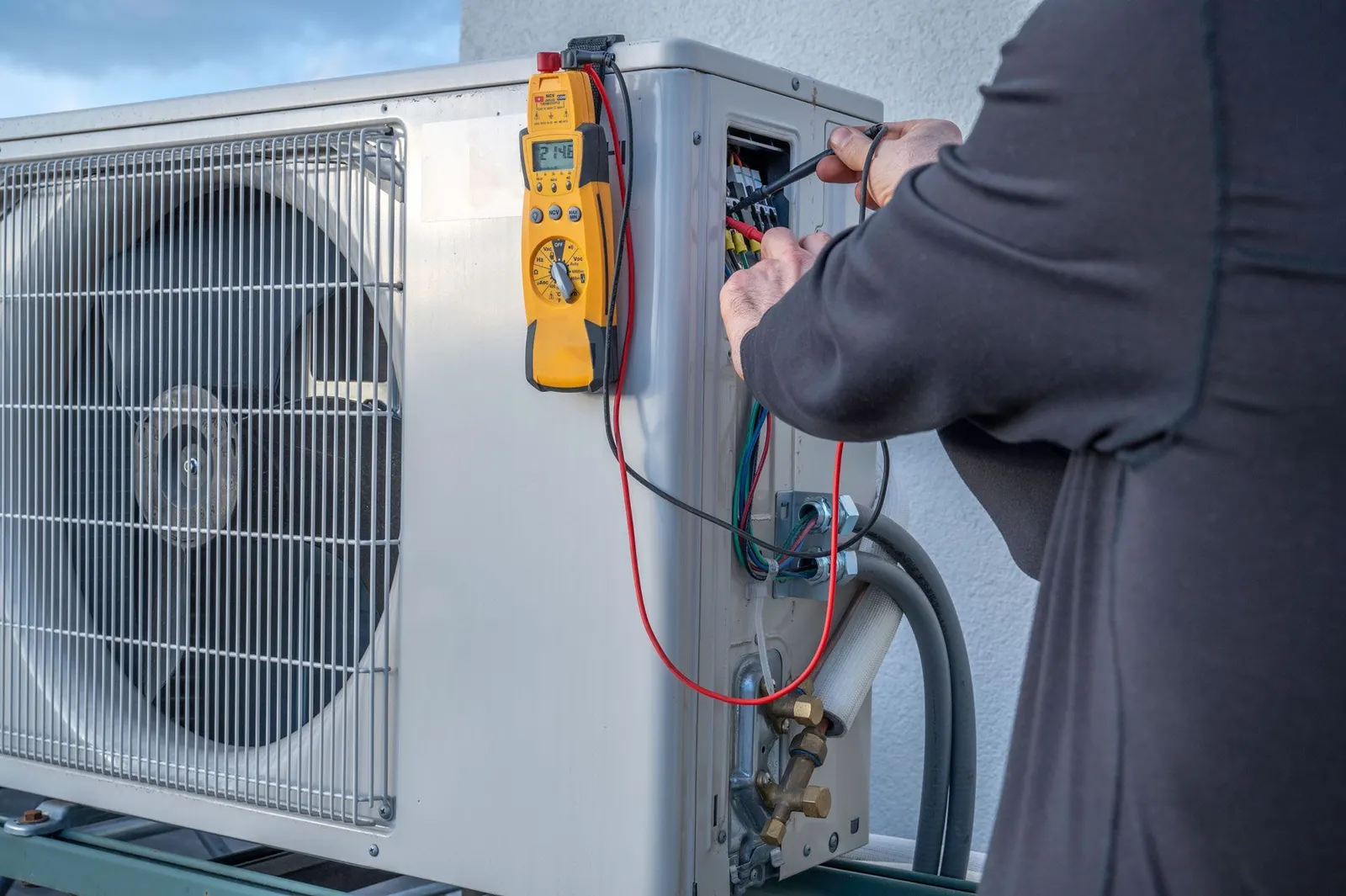
A thorough, objective inspection of an aging AC system should include far more than just a quick glance at the outdoor unit. A true professional will measure the electrical amp draws of your compressor and fan motors to see if they are overworking. They will check the static pressure of your ductwork to ensure proper airflow. They will measure the subcooling and superheat levels of your refrigerant to verify the exact chemical charge.
The goal of these meticulous measurements is to empower the homeowner with verifiable facts about their system's health. When you have concrete data about how your equipment is performing, you can make a confident, informed decision. The peace of mind that comes from transparent service is invaluable. If you want a true assessment of your equipment, scheduling an AC inspection and testing is the safest route.
Frequently Asked Questions About Aging AC Systems
Why is my AC running but not cooling the house?
When an air conditioner runs constantly without lowering the temperature, it is often struggling against restricted airflow or high indoor humidity. Dirty condenser coils act as an insulator, preventing the system from releasing heat outdoors. Additionally, in humid environments, the system spends most of its energy removing moisture from the air (latent cooling) before it can actually drop the room temperature.
How do I know if my AC needs replacing or just a tune-up?
A tune-up addresses cumulative summer wear, such as clogged filters, dirty coils, and minor electrical adjustments that restore lost airflow. Replacement becomes necessary when major mechanical failures occur, such as a dead compressor or severe refrigerant leaks in an older system. A professional diagnostic evaluation is the only way to definitively tell the difference between heavy wear and fatal mechanical failure.
When should I replace my air conditioner instead of repairing it?
Industry standards, which our team follows closely, suggest considering replacement when your system is between 15 and 20 years old and facing a major breakdown. You can also apply the conceptual 5,000 rule by multiplying the unit's age by the repair estimate; if the result is over 5,000, replacement is usually the wiser choice. We also highly recommend upgrading if your current system relies on obsolete R-22 refrigerant.
Is it worth fixing a 10-year-old AC?
Because 10 years is often the midpoint of a modern air conditioner's lifespan, repairs are frequently still worth the investment. The decision should be based on the severity of the repair, the system's overall maintenance history, and how efficiently it has been running. If the fix is a simple electrical component like a capacitor, repairing a 10-year-old unit is standard practice.
Can extreme August heat permanently damage an aging AC?
Yes, continuous operation during extreme heat accelerates wear on parts that are already compromised by age. When a system runs non-stop, electrical components are subjected to sustained high temperatures, increasing the risk of burnout. The prolonged strain can eventually push a weakening compressor to the point of permanent mechanical failure.
Make the Right Call for Your Home Comfort
Deciding between a simple repair and a full system replacement requires objective data, not high-pressure tactics. As the late-summer heat continues to test the limits of your equipment in Williamsport MD, you do not have to suffer through the rest of the season with subpar cooling and high humidity. By relying on an honest diagnostic framework, you can determine exactly what your aging system needs. Talk to the experts at Comfort Central Inc. today for a thorough evaluation, and take the right step toward restoring reliable, efficient comfort to your home.