
Is Your AC Struggling or Failing? Making the Right Late-Summer Decision
Is your cooling system running non-stop, yet the house still feels warm and sticky? At Comfort Central Inc., our team knows that finding the right home maintenance tips and troubleshooting steps can save you from a major headache when the weather is at its worst. It is late August, the kids are heading back to school, and the intense late-summer humidity is putting an incredible strain on your household equipment. You are likely wondering if your system is just temporarily overwhelmed or if something is mechanically broken.
Dealing with an overworked system at the end of the season is incredibly frustrating. The good news is that, in our experience serving Williamsport, not every struggling air conditioner is destined for the scrap heap. Often, the core decision point comes down to determining whether the issue is a simple airflow restriction that can be quickly resolved, or a major mechanical failure requiring a larger intervention.
By establishing an objective framework, you can properly evaluate your air conditioning services and decide if AC installation and replacement is truly necessary, or if a targeted repair will keep your home comfortable for years to come.
Understanding Late-Summer AC Fatigue vs. True Mechanical Breakdown
A system that performed perfectly in June might suddenly struggle in late August. This is rarely a coincidence; it is the result of cumulative wear and environmental physics. Understanding how weather impacts your system is the first step in diagnosing the problem.
The Burden of Latent Heat
Air conditioners do two things: they lower the air temperature (sensible cooling) and they remove moisture from the air (latent cooling). Williamsport MD experiences high summer dew points, which our technicians see dramatically increasing the latent cooling load on residential HVAC systems. When the air is saturated with moisture, your air conditioner must act primarily as a dehumidifier before it can effectively lower the temperature displayed on your thermostat.
If your system is running constantly during a humid stretch, it might not be broken at all. It is simply working overtime to wring out the late-summer humidity. Once the indoor humidity drops to a manageable level, the system can finally focus on cooling the air.
Cumulative Seasonal Wear
By the time late summer arrives, your system has likely been running for hundreds of hours. Minor issues that were unnoticeable in the spring—such as a slightly dirty evaporator coil or a partially clogged filter—compound over time. This cumulative wear restricts airflow and forces the compressor to work harder, leading to longer cycle times.
There is a distinct difference between a system that is merely overwhelmed by the weather and one that is exhibiting signs of internal component failure. An overwhelmed system will eventually cool the house down at night or during less humid days. A failing system will struggle regardless of the outside conditions. If you want a deeper dive into cycle times and system behavior, reading more about why your AC is running constantly can provide valuable context.
Safe, Non-Invasive Troubleshooting Checks for Homeowners
Before assuming the worst about your system, our team recommends a few safe, non-invasive checks you can perform yourself. These simple steps often resolve the most common airflow issues without requiring a service call.
- Inspect and replace dirty air filters: A clogged filter is the single most common cause of restricted airflow. When air cannot flow freely over the indoor coil, the system runs longer, struggles to remove late-summer humidity, and can even cause the evaporator coil to freeze solid. Check your filter monthly and replace it if you cannot clearly see light passing through the material.
- Verify unobstructed airflow at the vents: Walk through every room in your house and check the supply and return registers. Ensure they are fully open and not blocked by furniture, rugs, or heavy curtains. Closing vents in unused rooms actually increases pressure inside the ductwork, forcing the blower motor to work harder and reducing overall system efficiency.
- Confirm thermostat calibration and settings: Check that your thermostat is actively set to "cool" and that the fan switch is set to "auto" rather than "on." If the fan is set to "on," the blower will run continuously even when the compressor is off, which can blow humid air right back into your living space.
- Clear the outdoor unit: Ensure the outdoor condenser has at least two feet of clearance on all sides. Remove overgrown vegetation, fallen leaves, and debris that might be restricting the exhaust airflow.
The Hard Line: What You Should Never Touch
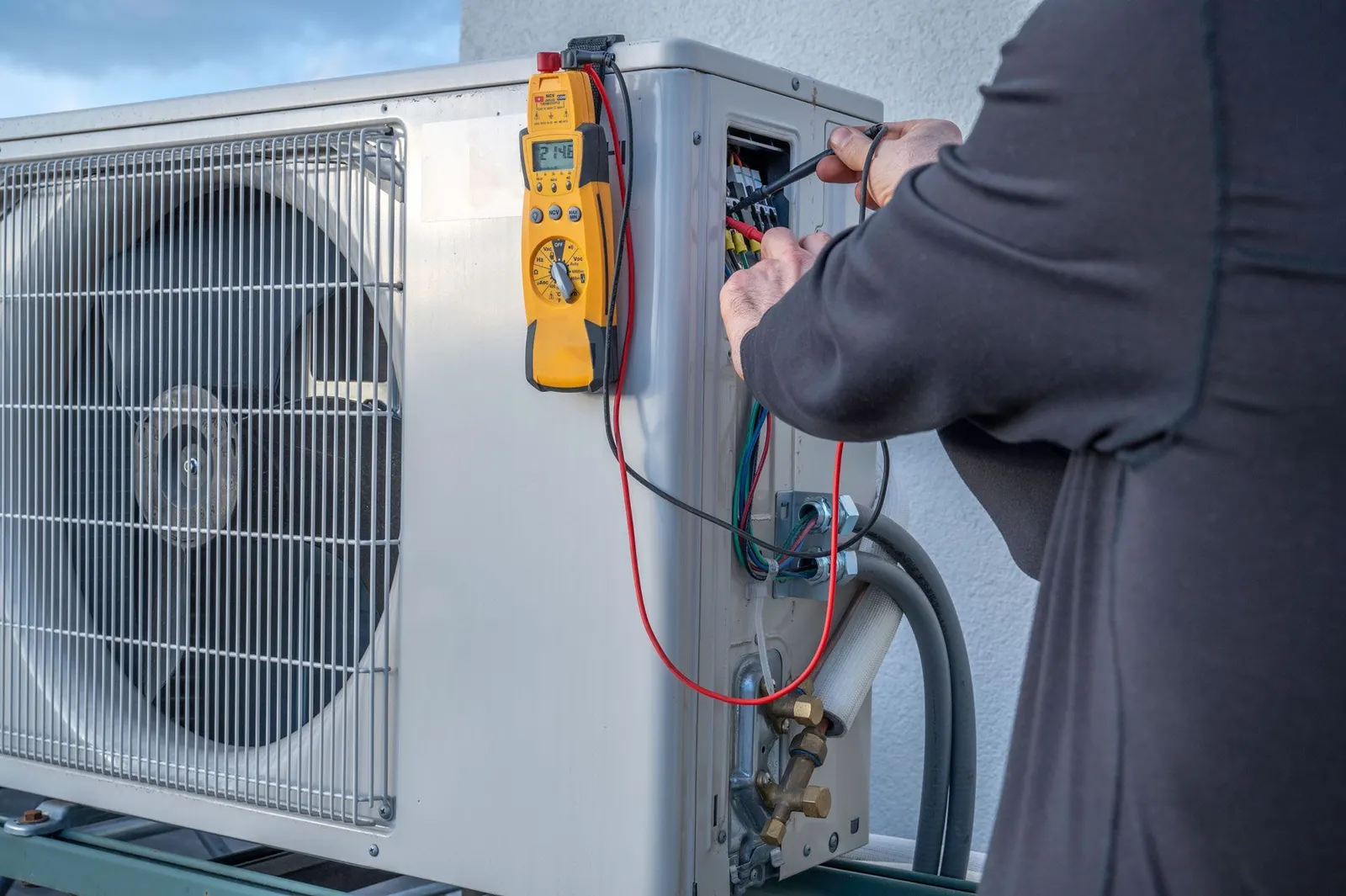
While basic airflow maintenance is safe, you must draw a hard line when it comes to internal components. Never open the AC cabinet, attempt to check electrical components with a multimeter, or handle refrigerant lines. Air conditioning systems utilize high-voltage electricity and pressurized chemicals that require specialized training and EPA certification to handle safely. If the simple steps above do not resolve your cooling issue, it is time to call a licensed professional from Comfort Central Inc.
When Professional AC Repair is the Smartest Choice
Not every breakdown means you need a new system. In many cases, repairing the unit is the most logical and cost-effective route to restore your home's comfort.
The 10-Year Benchmark
As a general rule we follow, systems that are under 10 years old and have a solid history of annual maintenance are prime candidates for repair. These units typically still have plenty of life left in their core components, and repairing them is almost always a smarter investment than premature replacement.
Common Fixes That Restore Performance
Many common AC failures sound catastrophic but are actually straightforward, affordable fixes for a trained technician. Burned-out capacitors, failed contactors, and clogged condensate drain lines are frequent culprits we see behind a system that suddenly stops working. Replacing a blower motor or sealing a minor duct leak can also dramatically improve performance without requiring a massive investment.
Prompt professional intervention can make all the difference. We recently helped a local homeowner who experienced this firsthand on a 90-degree summer day when their outside unit stopped working completely. Our office staff scheduled a same-day service call, and our technician Cory quickly diagnosed the issue, repaired the unit, and got the system running efficiently again. This kind of reliable AC repair in Williamsport can often extend the life of a well-maintained unit by several years, proving that immediate replacement isn't always necessary.
Clear Signs It Is Time to Replace Your Aging System
While repairs are often the right choice for newer systems, there comes a point where pouring resources into an aging unit no longer makes sense. We use objective criteria to help our customers determine when a system is beyond economical repair.
Applying the 5,000 Rule
Industry professionals often use the "5,000 Rule" as a baseline metric for decision-making. To use this formula, multiply the age of your equipment by the estimated cost of the quoted repair. If the resulting number exceeds 5,000, replacement is generally the smarter long-term financial decision. For example, a minor repair on a 12-year-old system might make sense, but a major overhaul on that same system crosses the threshold where investing in new equipment is wiser.
The R-22 Refrigerant Reality
If your system was installed before 2010, it likely uses R-22 refrigerant. Due to EPA environmental guidelines, R-22 has been officially phased out of production. This makes older system repairs significantly more complex, and sourcing the necessary refrigerant for a leak repair has become increasingly difficult. If an older R-22 system develops a severe leak, replacement is almost always the only practical option.
Catastrophic Component Failure
Certain failures are definitive signs that a system has reached the end of its lifespan. A dead compressor or a severely deteriorated heat exchanger in a system over 12 to 15 years old usually warrants a full replacement.
Upgrading an outdated unit that requires frequent, repeated service calls brings significant peace of mind. Another homeowner we serve recently reached this point and needed to replace their central AC unit to combat the late-summer humidity. After receiving a comprehensive quote, our professional crew installed a new system efficiently, immediately restoring reliable comfort to the home without the looming anxiety of the next breakdown.
The Objective Repair vs. Replace Evaluation Framework
Making the right call for your Williamsport MD home requires weighing multiple factors at once. Synthesizing these elements into a direct, easy-to-read framework can help you evaluate your options objectively before a Comfort Central Inc. technician even arrives.
| Evaluation Factor | Lean Toward Repair | Lean Toward Replace |
|---|---|---|
| Age of Equipment | Under 10 years old | Over 10 to 15 years old |
| Frequency of Breakdowns | Rare or first-time issue | Multiple service calls per season |
| Energy Bills | Consistent year-over-year | Steadily increasing despite maintenance |
| Refrigerant Type | Modern R-410A | Phased-out R-22 |
| The 5,000 Rule | Age × Repair Quote < 5,000 | Age × Repair Quote > 5,000 |

Factoring in Efficiency and Long-Term Value
When replacement becomes the necessary path, it is important to look beyond the immediate fix and consider the long-term financial and comfort benefits of upgrading your home's HVAC infrastructure.
The SEER2 Advantage
Modern air conditioners offer significantly higher SEER2 (Seasonal Energy Efficiency Ratio) ratings than units manufactured just a decade ago. A higher SEER2 rating means the system naturally reduces energy consumption while delivering the same amount of cooling. Over the lifespan of the equipment, this increased efficiency can offset a substantial portion of the initial installation cost through lower monthly utility bills.
Furthermore, improved technology in modern systems handles latent heat and late-summer humidity much more effectively. Features like variable-speed blowers and two-stage compressors allow the system to run at lower capacities for longer periods, wringing more moisture out of the air and eliminating the sticky, clammy feeling that older single-stage units often leave behind.
Leveraging Incentives and Tax Credits
Upgrading to a high-efficiency system often opens the door to financial incentives that are not available for repairs. We always encourage homeowners to explore generally applicable energy rebates, utility incentive programs, or federal tax credits that may apply to qualifying high-efficiency installations. Because these programs change frequently and vary by municipality, we advise readers to consult directly with their local utility provider or a qualified tax professional to verify current incentive programs and eligibility requirements before making a final decision.
Frequently Asked Questions
Why is my AC running constantly but not cooling the house?
In our experience, this usually indicates an airflow restriction or a heavy latent heat load. When humidity is exceptionally high, the system acts as a dehumidifier first, running longer to remove moisture before the temperature can drop. A dirty air filter, blocked vents, or low refrigerant levels can also cause continuous running without effective cooling.
How do I know if my AC needs to be replaced entirely?
Age, breakdown frequency, and repair costs are your best indicators. If your unit is over 12 years old, requires frequent repairs, uses phased-out R-22 refrigerant, or has suffered a catastrophic failure like a dead compressor, replacement is generally the smartest long-term choice.
What are the most common signs of a failing AC compressor?
A failing compressor often gives warning signs before it dies completely. You might notice the outdoor unit making loud grinding or clicking noises, the system frequently tripping your electrical breaker, or a distinct lack of cold air coming from your indoor vents despite the fan running.
Should I repair or replace a 15-year-old air conditioning unit?
In almost all cases, a 15-year-old unit should be replaced rather than repaired. Equipment of this age typically uses obsolete R-22 refrigerant, operates at much lower efficiency levels than modern standards, and is highly likely to experience cascading component failures if you attempt to patch it.
Does high humidity make my AC work harder?
Yes, high humidity forces your system to work significantly harder. The air conditioner must extract the excess moisture from the indoor air (latent cooling) before it can effectively lower the sensible temperature, resulting in much longer run cycles during muggy weather.
Can a dirty air filter cause my AC system to freeze up?
Absolutely. A dirty filter blocks the warm indoor air from flowing over the cold evaporator coil. Without that warm air transfer, the coil drops below freezing, causing the ambient condensation to freeze solid into a block of ice, which stops the cooling process entirely.
Making the choice between repairing and replacing your cooling system doesn't have to be a guessing game. By applying these home maintenance tips and troubleshooting steps, you can confidently navigate your end-of-season cooling issues. Whether you need a quick airflow fix or are ready to upgrade your equipment, rely on Comfort Central Inc. for honest diagnostics to ensure you get a clear understanding of your system's health and the most cost-effective path forward.