
Facing a Late-Summer Breakdown: The Ultimate AC Dilemma
Your air conditioner is running nonstop, but the house still feels warm, and a strange rattling noise is echoing through the vents. At Comfort Central Inc., we know that finding objective options comparisons for homeowners can feel impossible when you are staring down an immediate cooling emergency. When an aging air conditioner begins to fail during the sweltering late-summer August heat, the frustration is immediate and overwhelming. You are suddenly forced to make a significant choice: do you invest in a patch repair just to limp through the remaining warm weeks of the back-to-school season, or is it time to upgrade the entire system?
Making this choice requires a clear, strategic framework rather than guesswork. An aging system rarely fails at a convenient time, and making a rushed decision out of desperation often leads to buyer's remorse. To help you navigate this critical moment, our team has outlined the key factors we use every day to help customers determine whether a repair or a replacement is the smartest investment for your property. For comprehensive support, explore our air conditioning services or learn more about AC installation and replacement.
Why Peak August Heat Pushes Aging Systems to the Brink
The late-summer months place an incredible burden on residential cooling equipment. After running continuously throughout June and July, the mechanical components inside your air conditioner have endured significant wear and tear. Motors run hot, electrical contacts become pitted, and moving parts lose their lubrication. By the time August arrives, systems that are nearing the end of their operational lifespan simply lack the resilience to keep up with the demand.
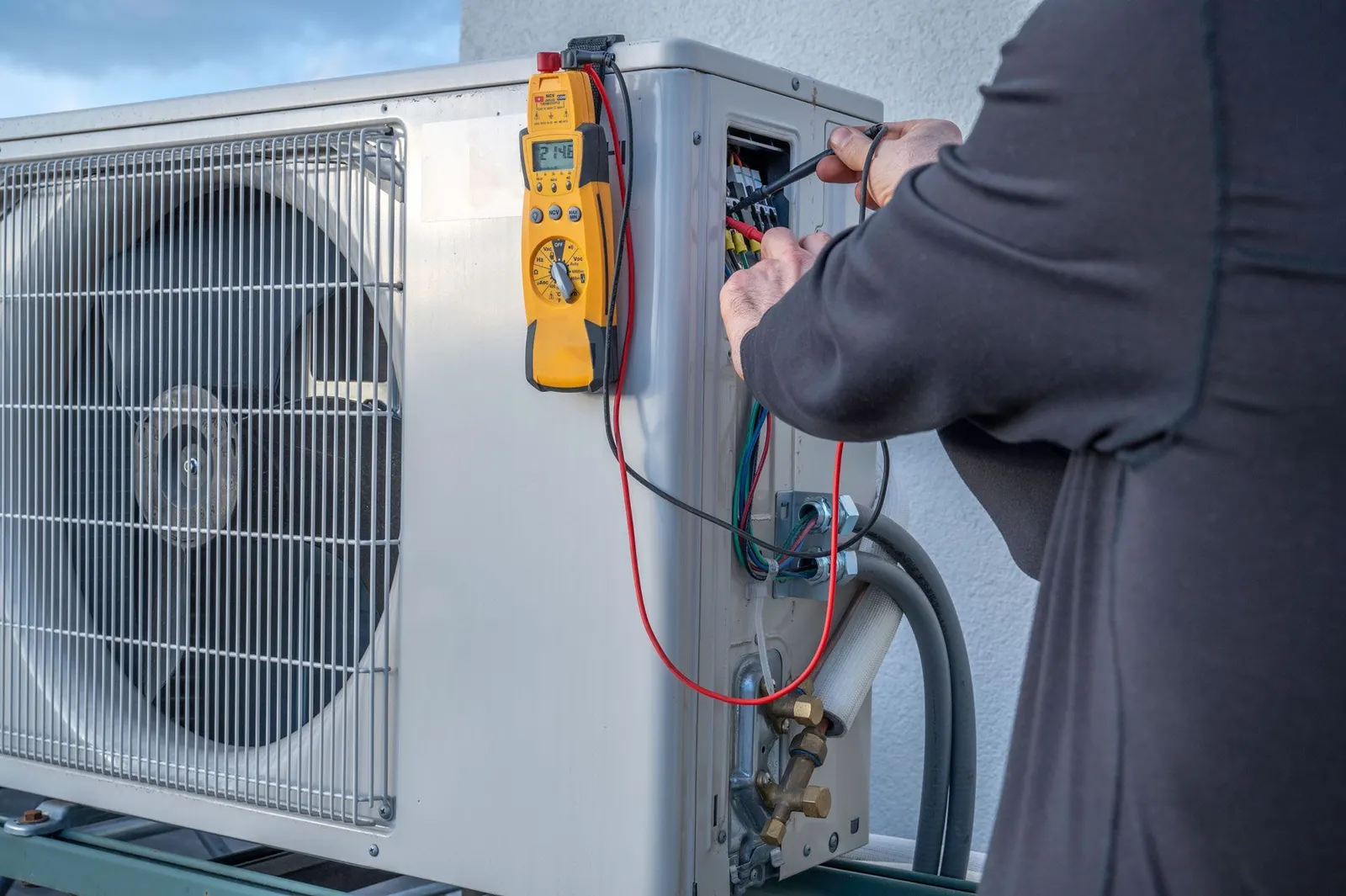
Our technicians recently helped one local homeowner who experienced this sudden failure firsthand when the outside temperature hit a stifling 90°F. Their aging outside unit completely stopped working during the peak heat. Fortunately, a same-day service call allowed our team to explain the underlying issue and fix the unit, restoring the cooling capacity when it was needed most. Understanding why your AC stopped cooling is the first step in diagnosing the severity of the breakdown.
The Toll of High Humidity on Evaporator Coils
In our years of serving the hot, humid subtropical summer climate of Williamsport MD, we have seen that an air conditioner does much more than just lower the temperature. It actively pulls moisture out of your indoor air. Warm air from your home blows across the frigid evaporator coils, causing humidity to condense into water droplets that drain away.
Signs of declining performance: As systems age, they often lose this critical dehumidification capacity long before they completely stop blowing cold air. If your home feels clammy, sticky, or smells musty despite the thermostat reading 70°F, your evaporator coils and compressor are likely struggling to manage the heavy moisture load of a Williamsport summer.
Objective Frameworks: Evaluating System Age and Condition
When facing a late-summer August breakdown, separating emotion from the equation is essential. The Department of Energy notes that central air conditioners typically last 10 to 15 years with proper maintenance, a timeline we consistently observe in the field. If your system falls within or beyond this window, every repair must be weighed against the inevitable need for a future replacement.
| Evaluation Criteria | Leans Toward Repair | Leans Toward Replacement |
|---|---|---|
| System Age | Under 10 years old | Over 10 to 15 years old |
| Breakdown Frequency | First major issue in years | Multiple service calls this season |
| Warranty Status | Parts under active warranty | Warranty fully expired |
| Refrigerant Type | Uses modern R-410A | Relies on phased-out R-22 |
Understanding the '5,000 Rule' Concept
A widely recognized guideline in the HVAC industry—and one we often share with our customers—is the '5,000 Rule.' This mathematical concept helps homeowners weigh the risk of future breakdowns against immediate repair investments. The formula involves multiplying the age of your equipment by the estimated cost ratio of the proposed repair. If the calculated figure exceeds an established industry threshold, it generally indicates that sinking further funds into the old unit is a mathematically poor decision. This rule prevents you from throwing good money after bad on a system that is fundamentally failing.
Warranty Coverage and Refrigerant Considerations
An expired manufacturer warranty drastically shifts the financial burden of a repair onto your shoulders. Furthermore, if your older system relies on R-22 refrigerant, you face an additional hurdle. R-22 has been phased out due to environmental regulations, meaning it is no longer manufactured. In our experience, servicing these older units is increasingly difficult and impractical, making a full system upgrade the much smarter long-term play.

When an End-of-Season Repair is the Smarter Move
Not every late-summer breakdown requires a complete system overhaul. Sometimes, the issue is isolated to a single, easily replaceable component. While some homes require completely new configurations—like one Northgate customer our team recently worked with whose existing AC system was entirely unsuitable for their unusual setup, prompting the installation of a highly efficient new system that finally resolved their comfort issues—many late-summer breakdowns are much simpler to resolve.
If your system is relatively young and has been well-maintained, a strategic patch repair can restore your comfort quickly. This approach allows you to survive the rest of the cooling season while giving you ample time to plan for any future upgrades. Relying on professional AC repair ensures that the diagnosis is accurate and the fix is reliable.
Addressing Minor Component Failures
Differentiating between a catastrophic mechanical failure and a routine part replacement is vital. Here is how our professional technicians approach the repair process:
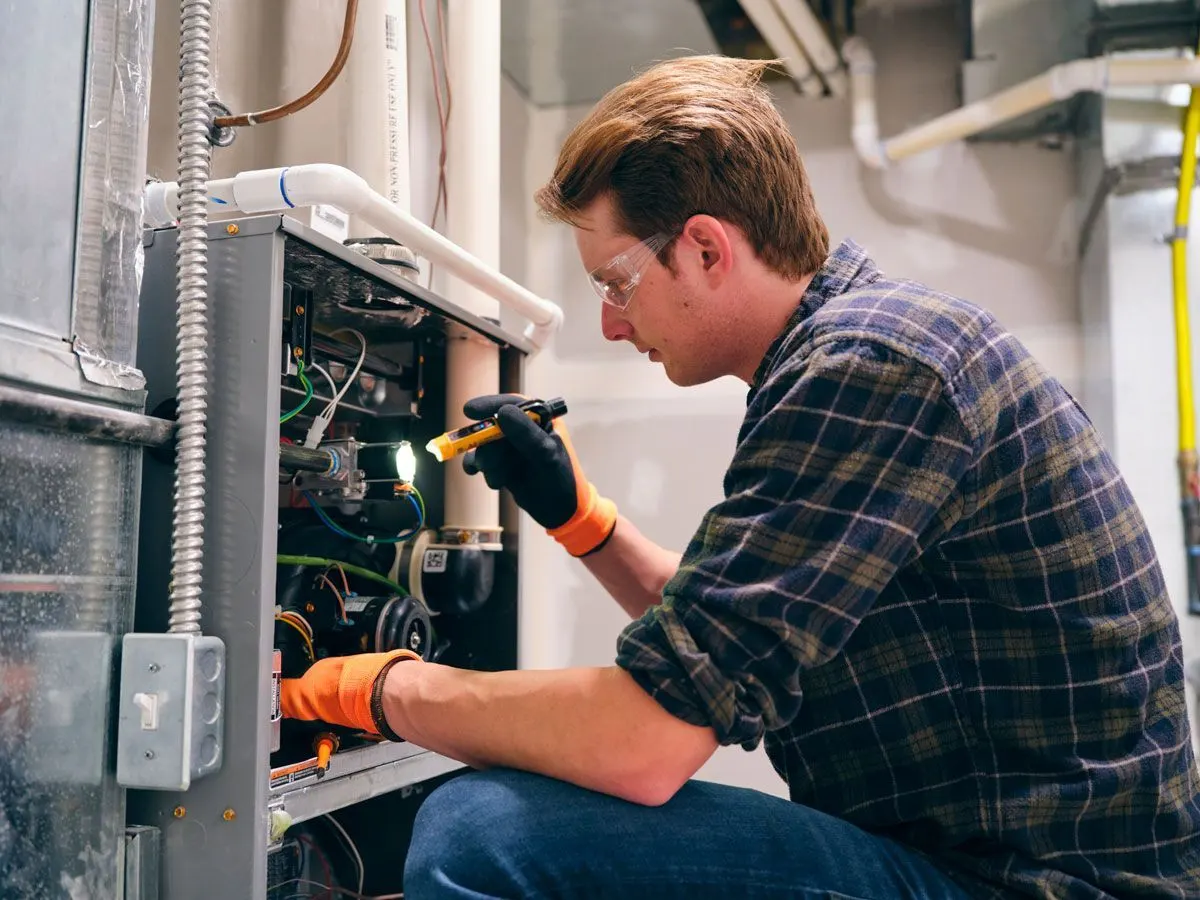
- Diagnosing the specific failure: We check common wear-and-tear parts like capacitors, contactors, and blower motor fuses before declaring the system dead.
- Verifying warranty coverage: If the unit is under 10 years old, the replacement part is often fully covered by the manufacturer, making the repair highly cost-effective.
- Executing a targeted fix: Replacing a burnt-out capacitor or a faulty pressure switch is a fast, efficient process that gets your home cooling again in a matter of hours, rather than days.
Signs It Is Time to Replace Your AC Instead of Repairing It at the End of Summer
Recognizing when a system has reached the point of no return protects you from endless service calls. If you are experiencing multiple symptoms from the list below during the late-summer August heat, our Comfort Central Inc. experts agree that replacement is the most logical path forward.
- The system is over 10 to 15 years old: Equipment in this age bracket has surpassed its expected operational lifespan and uses outdated, phased-out R-22 refrigerant.
- You experience frequent, recurring breakdowns: Requiring multiple service calls in a single season indicates cascading mechanical failures.
- The unit suffers a catastrophic failure: A burnt-out compressor or a severely leaking indoor evaporator coil rarely justifies the massive investment required to fix it.
- The system runs constantly but fails to cool: If the unit operates 24/7 but cannot effectively lower the temperature or dehumidify the home, the compressor has likely lost its pumping capacity.
- Energy bills are steadily increasing: Climbing utility costs despite regular maintenance efforts prove that the system is losing its underlying efficiency.
Strategic Timing: Factoring the Fall Transition Into Your Decision
When an air conditioner fails in late August, you are not just solving a cooling problem—you are standing on the edge of a seasonal transition. The shift from the hot, humid summers of Williamsport MD to the impending Mid-Atlantic fall and winter requires forward-looking strategy. Late summer is the ideal time to evaluate dual-season solutions rather than just patching an emergency cooling issue.
The Dual-Season Benefit of Heat Pumps
Instead of replacing an old AC with another standard air conditioner, many homeowners are upgrading to heat pumps. A heat pump operates exactly like an air conditioner during the summer, pulling heat and humidity out of your home. However, it features a specialized reversing valve. When the weather turns cold, the system reverses its cycle to extract ambient heat from the outside air and pump it indoors.
Efficiency gains: Modern heat pumps boast significantly higher SEER2 ratings than equipment manufactured a decade ago. This translates to a massive reduction in overall energy usage, providing reliable end-of-summer cooling and highly efficient winter heating from a single piece of equipment.
Navigating Energy Efficiency Incentives
Upgrading to high-efficiency equipment often unlocks valuable financial incentives. Federal tax credits and various energy rebates may apply to qualifying high-efficiency heat pump installations. These programs are designed to offset the initial investment and encourage the adoption of greener technology. Because these incentives change frequently, we always advise homeowners to verify current programs with their utility provider or a qualified tax professional. Staying ahead of routine AC maintenance on a new, high-efficiency system ensures you maximize these long-term energy savings.
The Value of Honest Diagnostics in Making the Right Choice
A failing AC assessment should be an educational experience, not a high-pressure sales pitch. When you are dealing with a late-summer August breakdown, you need a technician who will objectively weigh the pros and cons of repairing versus replacing based on your home's unique needs.
Honest diagnostics mean looking at the complete picture: the age of the unit, the condition of the ductwork, your current energy bills, and your long-term plans for the property. Working with our team at Comfort Central Inc., where we prioritize transparency and family values, ensures that the ultimate goal remains focused on your long-term home comfort and reliability. You gain peace of mind knowing the recommendation we provide is the exact same advice our technicians would give their own families.
Frequently Asked Questions About AC Repair and Replacement
When is it not worth repairing an AC?
Our team generally advises that it is not worth repairing an AC when the system is over 10 to 15 years old and requires a major component replacement, such as a compressor or evaporator coil. If the unit relies on phased-out R-22 refrigerant, investing in repairs becomes highly impractical due to component scarcity. Additionally, if you are calling for repairs multiple times in a single season, it is time to replace the unit.
What is the rule of thumb for replacing an air conditioner?
The standard rule of thumb we use is the '5,000 Rule,' which involves multiplying the system's age by the estimated repair cost ratio. If that mathematical figure exceeds a specific industry threshold, replacement is the wiser choice. You should also strongly consider replacement if the unit is older than 10 years and your energy bills have steadily climbed despite regular tune-ups.
How do I know if my AC compressor is bad?
In our experience, a failing compressor often produces loud grinding, clanking, or squealing noises during operation. You may also notice that the system trips your electrical breaker repeatedly or runs constantly without actually blowing cold air into the home. Because the compressor is the heart of the system, a professional diagnostic is required to confirm the failure.
Is it better to repair or replace a 15-year-old AC unit?
It is almost always better to replace a 15-year-old AC unit rather than repair it. Systems of this age have surpassed their expected lifespan in Williamsport MD and operate at a fraction of the efficiency of modern equipment. Sinking funds into a 15-year-old system is a temporary patch that delays an inevitable replacement.
Will a new AC or heat pump installation disrupt my home during the late summer?
At Comfort Central Inc., a professional installation is highly organized and typically completed within a single day, minimizing disruption to your daily routine. Technicians protect your flooring, remove the old equipment safely, and ensure the new system is fully calibrated before leaving. The brief interruption is well worth the immediate restoration of cool, dehumidified air.
Make a Confident Choice for Your Home Comfort
Whether your late-summer August breakdown requires a strategic patch repair or a full system replacement, objective guidance is the key to making the right choice. Do not let the peak heat push you into a rushed decision without evaluating the age, condition, and efficiency of your current equipment. Schedule an honest diagnostic assessment with our team today to evaluate your struggling system. Ensure your home remains perfectly comfortable through the upcoming seasonal transition by exploring your options for AC installation and replacement.