
Is That Burning Smell Normal During the First Fall Heating Cycle?
When the calendar flips to September and the evening air finally turns crisp, switching your thermostat from cooling to heating for the first time should be a cozy experience. But what happens when that first cycle fills your home with an alarming, acrid odor? At Comfort Central Inc., we know that getting common homeowner questions answered right away is the difference between peace of mind and an unnecessary panic. You immediately face a critical decision: is this a harmless seasonal quirk, or is your system actually becoming a fire hazard?
During the early fall (September) transition, heating systems across the region fire up after months of sitting completely dormant. While your outdoor unit was working hard all summer, the specific heating components inside your furnace or air handler were doing nothing but collecting airborne debris. In our years of servicing local homes, we've found that understanding the difference between settled dust safely burning off and failing electrical components is critical for your home's safety.
The heat exchanger is the metal component that gets incredibly hot to warm the air circulating through your home. Because it sits idle from spring until fall, microscopic particles of household dust, pet dander, and general airborne debris settle directly onto its surface. When the flames finally ignite or the heating coils energize for the first time, this debris instantly incinerates.
This incineration process creates a very distinct, often startling smell that pushes through your ductwork and into every room of your house. For many, it triggers an immediate rush to the thermostat to shut everything down. However, knowing exactly what is happening inside your unit—and knowing when to schedule routine air conditioning services or heating maintenance—saves you time, money, and unnecessary stress. The key is knowing exactly how long this odor should last before it becomes a legitimate cause for concern.
The 15-to-30 Minute Rule for Seasonal Dust Burn-Off
The most important diagnostic tool you have during the early fall (September) transition is a clock. Because dust and airborne particulates settle heavily on heat exchangers and burners during extended summer idle periods, that initial burn-off is unavoidable. However, our technicians consistently observe that it follows a very predictable, safe timeline.
If you are turning on your heat for the first time this season, our team recommends following this definitive 15-to-30 minute safety rule to determine if your system is operating normally.
- The Initial Ignition (0 to 5 Minutes): Within seconds of the blower motor kicking on and the heat exchanger warming up, the smell will hit your vents. This is when the odor is at its absolute strongest. It typically smells like toasted dust or a very dry, warm closet. Do not panic; this is the bulk of the summer debris safely incinerating.
- The Peak Odor Phase (5 to 15 Minutes): The smell will circulate through your home as the blower pushes the air. You might want to open a window to help ventilate the space. The system is operating exactly as designed.
- The Dissipation Window (15 to 30 Minutes): By the 15-minute mark, the smell should noticeably begin to fade. The heat exchanger has reached its maximum temperature, and the settled particulates have been completely burned away. By 30 minutes, the air coming from your vents should smell completely neutral again.
- The Hard Stop (30+ Minutes): Normal dust burn-off should completely dissipate within 15 to 30 minutes of the first heating cycle. If the smell clears within this window, the system is operating normally. If the smell persists, grows stronger, or changes character after 30 minutes, you must shut the system down immediately. At that point, you likely need professional AC repair or emergency heating service to address a mechanical failure.
The quick fix: If you are nervous about the smell, turn the system on during the middle of the day when you can actively monitor it for 30 minutes, rather than letting it kick on automatically while you are sleeping.

How Summer Humidity Worsens Fall HVAC Odors
If you live in Williamsport MD, you already know how oppressive the summer humidity can get. But most homeowners do not realize that this heavy summer moisture directly impacts how their heating system smells in the fall. From our experience maintaining local systems, the relationship between indoor humidity and dust accumulation is a primary reason why the first heating cycle can be so pungent.
The Science of Particulate Adhesion
Throughout the summer, your HVAC system pulls warm, moist air from your home, cools it, and removes humidity. However, high humidity levels throughout the summer increase particulate adhesion on idle HVAC components. When the air inside your ductwork and air handler is damp, the microscopic dust particles floating through the system act differently than they do in dry winter air.
This moisture causes dust to literally cake onto the heat exchanger rather than simply resting lightly on the surface. Instead of a loose dusting that burns off in a flash, you end up with a baked-on crust of household debris. When the system finally fires up in late September, this caked-on dust requires more heat and more time to incinerate, producing a much more pronounced initial burn-off odor.
What you can do about it: Routine AC inspection and testing before the heating season officially begins can clear this debris. A Comfort Central Inc. technician can clean the blower compartment, wipe down accessible components, and ensure that the transition from cooling to heating happens smoothly, minimizing that alarming toasted smell.
Lingering Summer Issues: When Your AC Cools Then Stops Cooling
It is a common misconception that your air conditioner and your furnace are two entirely separate machines. While they perform opposite functions, they share several critical components—most notably, the indoor blower motor. This motor works year-round, pushing cold air in July and warm air in October. Because it never gets a break, we frequently see summer strain directly carry over into fall heating failures.
If your system struggled late in the summer—specifically if your AC cools then stops cooling—the blower motor or its electrical capacitor may be failing. This specific symptom is a classic sign of short-cycling, where the system turns on and off rapidly without ever completing a full cycle. Addressing these issues early by understanding short-cycling prevents minor summer cooling problems from becoming major fall heating emergencies.
A failing capacitor or an overheating indoor blower motor produces a harsh electrical burning smell that homeowners often mistake for normal dust burn-off. Our technicians saw this exact problem during an afternoon service call in Williamsport last summer when a customer's indoor blower capacitor burned up completely. The system had been struggling to maintain temperature, running in short bursts before shutting down. Our team arrived quickly, identified the burned capacitor on the shared blower motor, had the part on the van, and completed the repair rapidly.
If that capacitor had held on just long enough to make it to September, the homeowner would have turned on their heat, smelled burning electrical components, and likely assumed it was just seasonal dust. Pay attention to how your system performed at the end of summer; those lingering mechanical struggles do not magically heal themselves when the seasons change.
Electrical Smells vs. Dust: When to Shut the System Down
While a toasted dust smell is normal for 30 minutes, an acrid, melting plastic, or ozone smell indicates an active electrical hazard. You must be able to tell the difference between standard operation and a dangerous component failure to protect your home.
Electrical failures don't just happen in winter. Our Comfort Central Inc. dispatch team recently took a call where a customer faced a complete system failure when their outside air conditioning unit stopped working on a sweltering 90-degree day. We scheduled a same-day response, and our technician quickly diagnosed a severe electrical fault, explaining everything clearly before restoring the system. Whether it happens in July or October, electrical burning is an immediate safety threat that requires rapid intervention.
Visible smoke or a burning odor that persists beyond the 30-minute window requires immediate action. If you detect any of the dangerous smells listed below, shut the system down directly at the thermostat immediately to prevent further damage or potential fire risk.
| Type of Odor | Likely Cause | Required Action |
|---|---|---|
| Warm, Toasted Dust | Settled summer debris burning off the heat exchanger. | Wait 15 to 30 minutes for it to dissipate safely. |
| Melting Plastic | Failing capacitor, melting wire casing, or a foreign object in the ducts. | Shut down immediately. Call for professional help. |
| Sharp Ozone (Lightning) | Overheating blower motor or severe electrical arcing. | Shut down immediately. Do not run the system. |
| Burning Rubber | A slipping or burning fan belt (in older belt-driven systems). | Shut down immediately to prevent motor damage. |
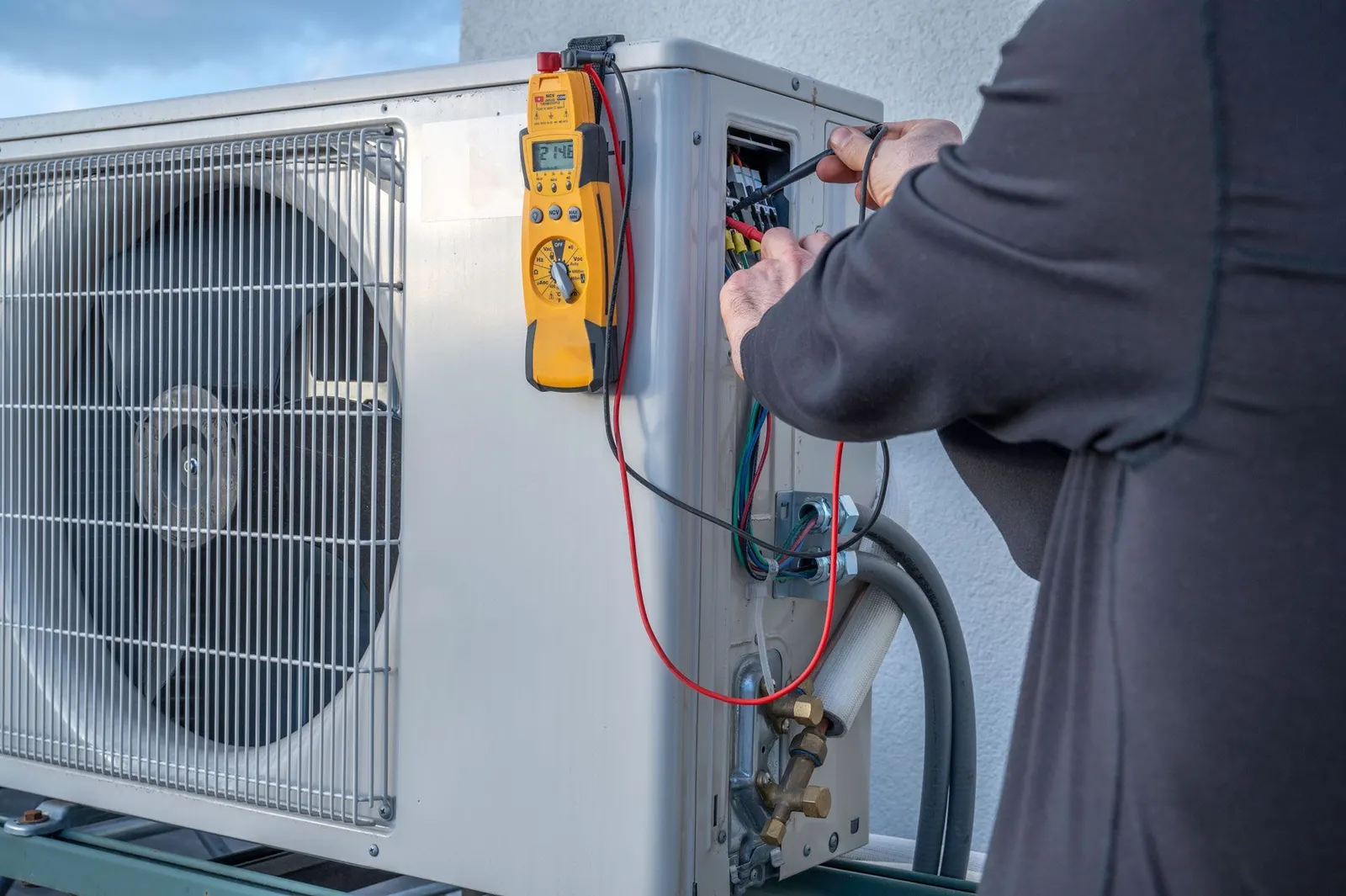
Never attempt DIY electrical inspections. Digging into a live HVAC cabinet exposes you to high-voltage capacitors and dangerous wiring. Compromised wiring, failed blower motors, or tripped pressure switches require emergency AC repair or heating intervention by a licensed professional who has the proper diagnostic tools.
Frequently Asked Questions About Fall HVAC Diagnostics
Is it normal for a heater to smell like burning?
Yes, during the first one to two cycles of the fall season, a burning dust smell is entirely normal. It is simply the safe incineration of microscopic particulates that settled on the heat exchanger over the summer months. As the metal heats up for the first time, it burns this debris away, pushing a toasted smell through your ductwork. Once the heat exchanger is clean, the smell will not return for the rest of the winter.
How long does a burning smell last when the heater is turned on?
Our experts advise that the smell should noticeably fade within 15 minutes and completely disappear by 30 minutes. The first five minutes are always the strongest as the bulk of the settled dust burns away. If you are running the system continuously and the smell lasts longer than 30 minutes, or if it grows stronger instead of weaker, shut the system off immediately to prevent damage.
Can a dirty air filter cause a burning smell?
Yes, a severely clogged filter restricts airflow, causing the blower motor to overwork, overheat, and emit an electrical burning odor. When air cannot move freely through the system, the internal temperature of the equipment spikes rapidly. We always recommend replacing your air filters before initiating the first fall heating cycle to ensure proper airflow and prevent unnecessary strain on the blower motor.
What does an electrical fire in a furnace smell like?
It smells sharply of melting plastic, ozone, or burning rubber. Unlike the warm, "toasted" smell of standard household dust, electrical odors are highly acrid, metallic, and will actively irritate your nose and throat. If you notice a smell resembling a lightning storm or burning wire insulation, you are dealing with a dangerous electrical fault, not seasonal dust.
When should I turn off my heater if it smells?
Turn it off immediately if you see any visible smoke, smell melting plastic, or if the standard dust smell persists beyond 30 minutes. You should also shut the system down at the thermostat if you hear loud grinding or screeching noises accompanying the smell, as this indicates a severe mechanical failure inside the blower compartment.
Get Honest Diagnostics for Your HVAC System This Fall
Transitioning your home from cooling to heating should not be a guessing game. While a brief burning smell is a normal part of the seasonal shift, you should never have to wonder if your home is safe. If your system fails the 30-minute test, or if you detect harsh electrical odors, professional diagnostics are the safest next step.
Avoid guessing whether an issue is a simple dirty filter or a failing blower motor carrying over from summer strain. If you are a homeowner in Williamsport MD, schedule an inspection with our team at Comfort Central Inc., where we value transparent, honest advice. Our family-valued approach means ensuring you get a clear explanation of exactly what is happening inside your system—whether you just need a simple filter change, a minor part replacement, or a larger repair. By relying on our honest diagnostics, you can enjoy a warm, comfortable, and safe home all season long.