
Facing a Sudden Heating Failure as Temperatures Drop
You wake up on a freezing morning, turn up the thermostat, and wait for that familiar rush of warm air—but nothing happens. At Comfort Central Inc., we know firsthand that discovering your gas furnace not working right as winter weather arrives is an incredibly stressful event. The house gets colder by the minute, and you are left wondering if the system is completely broken or just experiencing a minor glitch. This is a highly common scenario for homeowners, and it requires a calm, systematic response rather than panic.
When you are facing a sudden heating failure, your first priority is safety and stabilization. The most important thing you can do is establish a strict boundary between harmless homeowner troubleshooting and hazardous DIY repairs. Many heating issues stem from simple oversights like a bumped switch or a dead battery, which you can fix in minutes. However, other issues involve volatile natural gas and high-voltage electricity.
This guide serves as your definitive safety-first triage checklist. We will walk through the exact steps you should take to safely rule out the most basic issues. By following this sequence, you can potentially restore your heat immediately without risking your safety, damaging your equipment, or voiding your warranty. If these safe checks do not solve the problem, you will know with absolute certainty that it is time to call in a professional.
The Reality of a November Cold Snap on HVAC Systems
The transition into late fall is notoriously hard on residential heating equipment. After sitting completely dormant for months, your heating system is suddenly expected to perform at peak capacity. Our team frequently sees how this abrupt shift exposes underlying ignition issues, worn components, and airflow restrictions that developed during the off-season.
In the Mid-Atlantic region, including Williamsport, MD, our technicians frequently see average low temperatures dropping into the 30s (Fahrenheit) during a harsh November cold snap. When the outdoor temperature plummets that quickly, a sudden heating failure elevates from a minor comfort issue to a critical home safety concern. A house can lose its retained heat very rapidly, putting vulnerable family members at risk and increasing the chance of frozen plumbing pipes.
The U.S. Department of Energy (DOE) heavily emphasizes the importance of pre-winter maintenance for exactly this reason. In our years of servicing local homes, we've found that systems skipping their late fall check-ups are significantly more likely to experience an unexpected breakdown during the first major freeze. To understand why a fast response is so critical, look at how quickly a home's environment degrades when the heating system fails during freezing weather:
| Time Since Heating Failure | Indoor Temperature Impact | Primary Homeowner Concern |
|---|---|---|
| First 2 to 4 Hours | Drops 5 to 10 degrees | Mild discomfort; drafts become noticeable near windows. |
| 4 to 12 Hours | Drops to the mid-50s | Significant chill; need for heavy blankets and extra layers. |
| 12 to 24 Hours | Drops below 50 degrees | High risk for vulnerable individuals; home feels damp and freezing. |
| 24+ Hours (Sub-freezing outside) | Approaches freezing indoors | Severe risk of frozen and bursting water pipes in uninsulated walls. |
Because a November cold snap leaves you with very little time to waste, swift and accurate diagnostics are essential. You need to quickly determine if the system is simply waiting for a basic reset or if it requires emergency mechanical intervention.
Safe Triage Step 1: Verifying Power and Thermostat Connections
Your diagnostic process must always begin at the source of control and power. Before you even look at the heating equipment itself, you need to verify that the system is actually being told to turn on, and that it has the electricity required to do so. These are the safest, easiest checks a homeowner can perform.
- Check the thermostat settings: Ensure the system is explicitly set to "Heat" mode. Sometimes, the switch gets bumped to "Off" or left on "Cool" from the summer. Next, verify that the temperature setpoint is at least three to five degrees higher than the current room reading.
- Inspect the thermostat batteries: If your thermostat screen is blank, fading, or unresponsive to your touch, it likely needs new batteries. Most wall units require AA or AAA batteries. A dead thermostat cannot send the signal to start the heating cycle.
- Verify the furnace power switch: Look on the wall next to your indoor unit or on the side of the cabinet itself. You will usually find a switch that looks exactly like a standard light switch. This is the emergency shut-off. It is incredibly common for this switch to get accidentally bumped to the "Off" position by someone moving boxes or reaching for storage. Flip it back to "On."
- Check the household circuit breaker panel: Locate your home's main electrical panel. Look for the breaker labeled for the HVAC system or indoor air handler. If it is tripped (sitting in the middle position), firmly push it all the way to "Off" and then snap it back to "On." If it trips again immediately, stop and call a professional—you have a short circuit.
Why Power Issues Mimic Ignition Failures
It is a common misconception that gas heating systems do not need electricity. Most homeowners do not realize that even though your system uses natural gas for the actual heat, it requires a constant, stable supply of electricity to operate safely.
Electricity powers the blower motor that circulates the air, the circuit boards that control the safety sequences, the inducer fan that vents exhaust gases, and the electronic igniter that lights the burners. A lack of power—whether from a tripped breaker or a dead thermostat—will completely halt the heating cycle before a single drop of gas is ever introduced. This is why verifying power is always the very first step when you find your gas furnace not working.
Safe Triage Step 2: Checking for Airflow Restrictions
If your system has power and the thermostat is calling for heat, the next safest check involves your home's airflow. In our experience responding to emergency "no-heat" calls throughout Williamsport, a clogged air filter is actually one of the most frequent culprits we find. When you are dealing with a cold house during a November cold snap, checking the filter should be your immediate next move.
When an air filter becomes completely saturated with dust, pet dander, and debris, it acts like a solid wall. This severely restricts the amount of cold air the system can pull in. Because the system cannot push enough air over the heat exchanger, the internal temperature of the equipment skyrockets. A built-in limit switch detects this dangerous overheating and immediately shuts the burners down to prevent a fire.
Here is how to safely check and resolve airflow restrictions:
- Locate the air filter: The filter is usually located in the return air duct, right where the ductwork connects to the main indoor cabinet. Some homes have the filter located behind a large return grille in a hallway or ceiling.
- Perform the light test: Turn off the system power, slide the filter out, and hold it up to a bright light source or a window. If you cannot see any light shining through the material, the filter is completely blocked and must be replaced immediately.
- Install a fresh filter: Slide a new, clean filter into the slot, paying close attention to the airflow arrows printed on the cardboard frame. The arrows must point toward the equipment, not away from it.
- Check your household vents: Walk through every room in your home. Ensure that all air supply registers (where the warm air comes out) and return vents (where air is pulled in) are fully open. Move any furniture, heavy rugs, or drapes that might be blocking them.
A quick note on MERV ratings: When buying a new filter, it is tempting to buy the highest MERV (Minimum Efficiency Reporting Value) rating available, thinking it will clean the air better. However, extremely dense filters can actually restrict airflow just as badly as a dirty filter. For most residential systems, a MERV 7 to MERV 11 filter provides the perfect balance of dust capture and healthy airflow.
Understanding Modern Gas Furnace Safety Lockouts
If you have verified the power, changed the filter, and ensured the thermostat is working, but the system still refuses to start, you are likely dealing with a safety lockout. Modern heating systems are highly intelligent and are designed with multiple fail-safes to protect your home from catastrophic damage.
A "hard lockout" is a protective state where the system intentionally shuts itself down and refuses to attempt another ignition cycle. This happens when the system's control board detects a recurring failure during the startup sequence. For example, if the system tries to light the burners but the flame sensor does not detect a fire, the gas valve shuts off immediately. If this happens three or four times in a row, the computer goes into a hard lockout to prevent raw, unburned natural gas from accumulating inside your home.
The sequence of operations is incredibly precise. First, the inducer motor must prove the exhaust flue is clear. Then, the igniter must glow hot enough to light the gas. Next, the gas valve opens. Finally, the flame sensor must prove the fire is stable. If any single step in this sequence fails, the system aborts the process.
The danger of forced resets: We often see homeowners try to bypass a lockout by repeatedly flipping the power switch on and off to force the system to restart. This is highly ineffective and potentially unsafe. The system locked out for a very specific reason—usually a failing component or a blocked exhaust vent. Repeatedly trying to force the system to run without addressing the root cause can damage the control board or lead to a dangerous gas buildup.
The Danger Zone: When to Stop and Call a Professional
Once you have completed the safe triage steps—checking the thermostat, verifying power, and replacing the air filter—you have reached the limit of safe homeowner troubleshooting. Any issue beyond this point resides in the "danger zone." It is vital to clearly demarcate the boundary between simple maintenance and hazardous mechanical work.
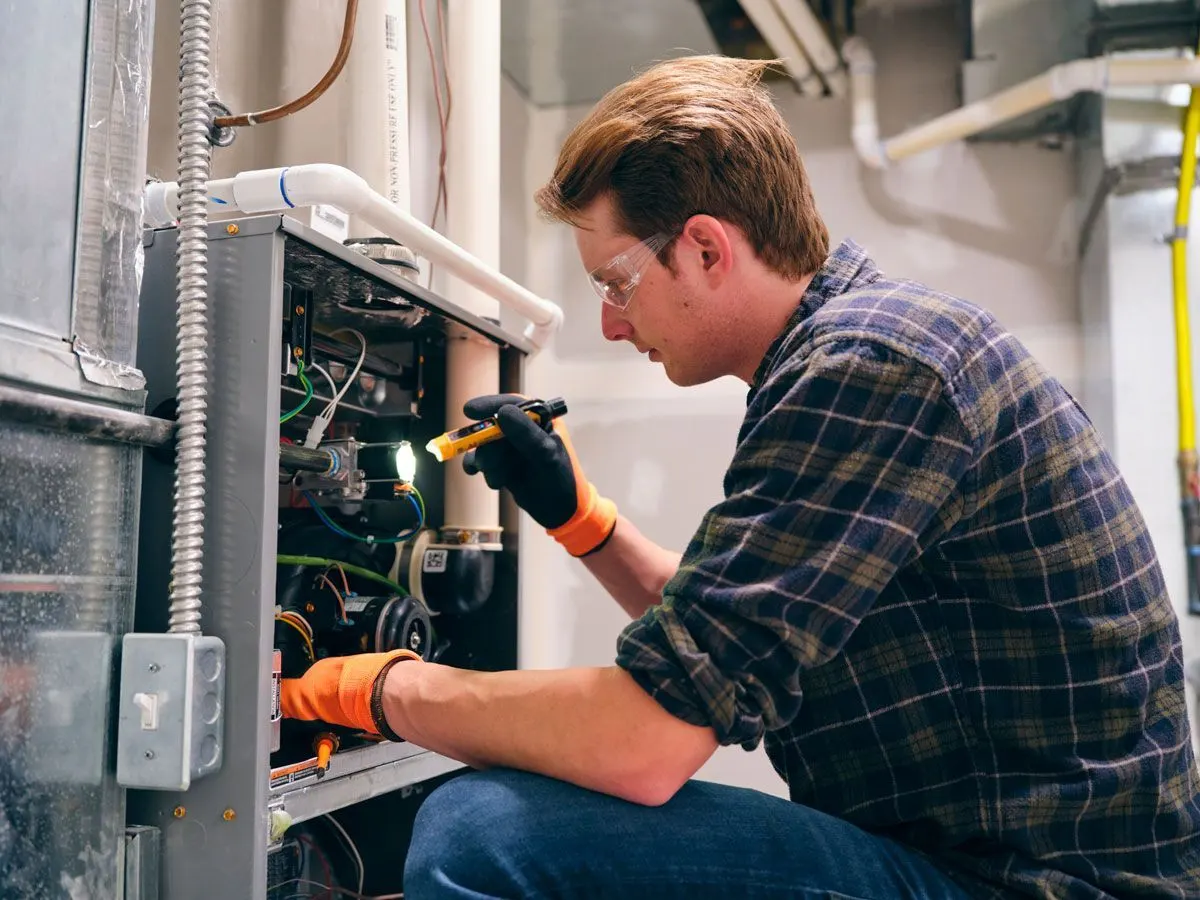
As licensed professionals at Comfort Central Inc., we must emphasize that several internal components are strictly off-limits to anyone without a professional license. You should never attempt to adjust, clean, or repair the following parts:
- The gas valve and manifold: Tampering with gas delivery components risks severe natural gas leaks and explosion hazards.
- The flame sensor and hot surface igniter: These parts are incredibly fragile. Touching them with bare hands can leave oil residue that causes them to shatter when heated.
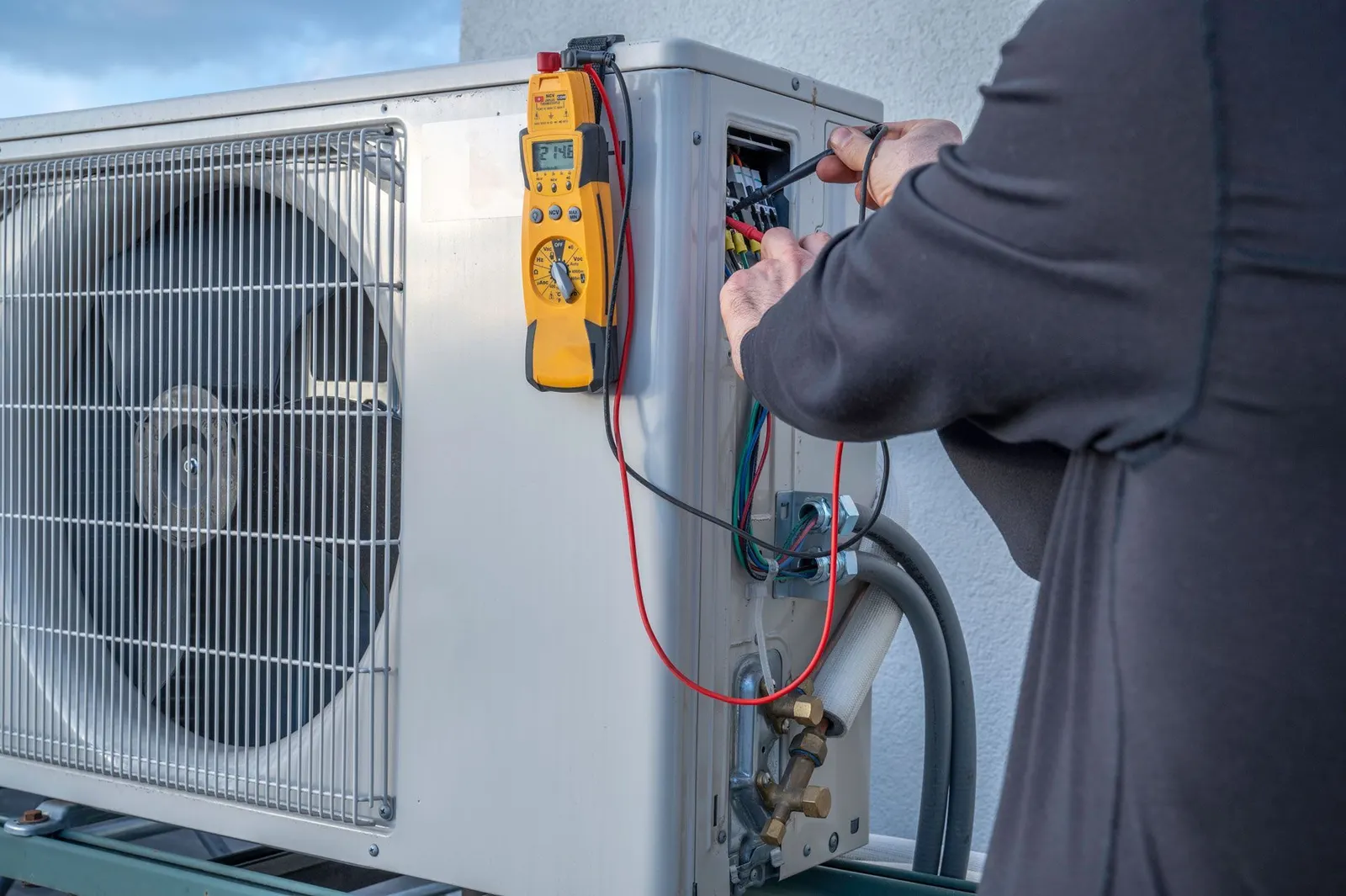
- The main control board: This is the "brain" of the system. Poking around with a multimeter without proper training can cause a massive short circuit, destroying the board instantly.
- The heat exchanger: Inspecting this requires specialized cameras and training. A cracked heat exchanger leaks deadly, odorless carbon monoxide directly into your home's breathing air.
Attempting to fix these components yourself carries severe risks of electrical shock, fire, or carbon monoxide poisoning. Furthermore, unauthorized tampering will almost always void the manufacturer's warranty on your equipment, leaving you entirely responsible for the cost of replacement parts. If you want to understand more about what might be failing inside the cabinet, you can explore the common causes of a furnace not heating strictly for educational purposes, but you should never use that knowledge as a DIY repair guide.

Year-Round Comfort: Transitioning Between Seasonal Systems
While your immediate focus is on restoring your heat, it is helpful to look at the broader picture of your home's total climate control. Your heating equipment does not operate in a vacuum. In most homes, the heating and cooling components are tightly integrated into a single, shared system.
The same blower motor that pushes warm air through your vents in December is the exact same motor that circulates chilled air in July. The ductwork is shared, the air filter is shared, and the indoor coil sits directly above the heat exchanger. This means that neglecting maintenance on one side of the system will inevitably impact your year-round performance.
For example, if you allow a severely clogged air filter to overheat your system during the winter, you are putting massive strain on the blower motor. That weakened motor is much more likely to fail when summer arrives. Ensuring proper airflow and reliable operation during the winter directly protects the longevity of your related air conditioning services for the upcoming cooling season. By treating your HVAC setup as one cohesive, year-round ecosystem, you can prevent cascading failures and extend the lifespan of all your equipment.
Resolving Ignition Failures with Reliable Local Expertise
When the temperature drops and you find your gas furnace not working, your response should always be calculated and safe. We have established that verifying your thermostat settings, checking your electrical breakers, and replacing a clogged air filter are the best, safest ways a homeowner can troubleshoot a sudden shutdown.
However, if those basic checks do not restore your heat, professional intervention is absolutely mandatory. Licensed technicians have the specialized diagnostic tools, the ongoing safety training, and the deep mechanical knowledge required to safely diagnose complex gas and electrical faults. They know exactly how to read a control board's fault codes and test a heat exchanger without putting your home at risk.
You do not have to suffer through the cold or take dangerous risks with DIY repairs. Our team at Comfort Central Inc. offers fast, 24/7 emergency diagnostic capabilities for Williamsport residents facing sudden heating failures, so you can have complete peace of mind even during the worst winter freezes. Prioritize your family's safety, trust the safe triage steps, and rely on expert help to restore your home's warmth and comfort safely.
Frequently Asked Questions
What to check when furnace won't turn on?
The first things you should check are your thermostat settings, the thermostat batteries, and the main power switch on the side of the unit. Additionally, verify that the circuit breaker in your electrical panel hasn't tripped. Finally, check your air filter, as a severely clogged filter can cause the system to shut down completely.
Why is my furnace running but blowing cold air?
If your system is blowing cold air, it usually means the blower motor is running but the burners have failed to ignite. This can be caused by a dirty flame sensor, a faulty igniter, or a tripped limit switch due to an overheated heat exchanger. It can also happen if your thermostat fan setting is switched to "On" instead of "Auto," which makes the fan run even when the heat cycle is off.
How do I reset my furnace safely?
To safely reset your system, first turn the thermostat to the "Off" position. Next, flip the unit's power switch (the one that looks like a light switch) off, wait about 60 seconds, and turn it back on. If the system immediately locks out again after a reset, do not attempt to force it; call a professional, as it is detecting an unsafe operating condition.
Can a dirty air filter stop a gas furnace from igniting?
Yes, a heavily soiled air filter can absolutely stop the ignition process. The dirt blocks airflow, causing the internal temperature of the cabinet to rise rapidly. A safety limit switch detects this dangerous heat and shuts off the gas supply to prevent a fire, effectively stopping the system from heating.
What does it mean when a furnace goes into a hard lockout?
A hard lockout is a built-in safety mechanism where the system's computer shuts down all operations after detecting repeated failures. If the system tries to ignite multiple times and fails (often due to a gas supply issue or a dirty flame sensor), it locks itself out to prevent explosive raw gas from pooling inside your home.
Why does my furnace click at the thermostat but fail to heat?
When you hear a click at the thermostat, it means the thermostat is successfully sending the electrical signal calling for heat. If the system fails to start after that click, the issue lies within the equipment itself—such as a tripped breaker, a dead control board, or a failed inducer motor that is preventing the ignition sequence from beginning.