
Is Your AC Struggling to Keep Up with Late-Summer Heat?
Is your air conditioner running constantly, only to shut down before the house actually feels comfortable? When searching for home maintenance tips and troubleshooting, you will quickly find that an air conditioner that cools briefly and then stops is a major red flag. It is incredibly frustrating to deal with a struggling cooling system, especially when the late-summer heat and humidity are still lingering outside.
As a homeowner in Williamsport MD, you face a critical decision at this point in the year. You might be tempted to ignore the issue because fall is just around the corner, hoping the system will limp across the finish line. However, addressing the problem now is the only way to prevent a total, catastrophic breakdown. Intermittent cooling is a symptom of a system under severe distress.
Our team at Comfort Central Inc. knows that professional air conditioning services can identify the root cause of this behavior quickly and accurately. In our years serving local families, we've seen firsthand how prompt AC repair service prevents costly compressor damage and ensures your home remains a comfortable refuge instead of a humid trap.
Understanding Short-Cycling: Why Your System Shuts Down Early
When an air conditioner turns on, blows cold air for a few minutes, and then abruptly shuts down before completing a full cooling cycle, the system is experiencing a mechanical failure known as "short-cycling." A standard, healthy cooling cycle typically lasts anywhere from 15 to 20 minutes. This duration is necessary to circulate the air throughout your entire home, lower the ambient temperature, and extract excess moisture. When a system short-cycles, it might only run for five minutes before clicking off.
While the air coming out of the vents might temporarily feel cold if you stand right next to a register, the cycle simply isn't long enough to effectively condition the whole house. The system is essentially tricking itself into thinking its job is done, or it is hitting a safety limit that forces it to power down prematurely. This rapid on-and-off behavior puts immense strain on critical components, especially as systems endure late-season wear right around the late-August back-to-school transition.
The Hidden Danger of Incomplete Cooling Cycles
Incomplete cycles do more than just leave certain rooms feeling warm; they completely fail to dehumidify the air. Air conditioners remove humidity by passing warm indoor air over cold evaporator coils, causing moisture to condense and drain away. If the system only runs for a few minutes, that condensation process never fully occurs. The result is a home that feels sticky, damp, and uncomfortable, even if the thermostat claims the temperature has dropped a degree or two.
Furthermore, the compounding mechanical stress on the compressor motor is severe. The most energy-intensive and physically demanding part of an air conditioner's operation is the startup phase. When a system starts up too frequently, the compressor motor endures constant electrical surges and mechanical friction, drastically reducing its overall lifespan and increasing your monthly energy bills.

How Restricted Airflow Triggers System Shutdowns
One of the most common and easily preventable causes of intermittent cooling is restricted airflow. Air conditioners require a very specific, calculated volume of airflow to operate correctly. The blower motor pulls warm air from your home, pushes it across the cold coils, and distributes it back through your ductwork. If anything obstructs that airflow, the delicate balance of the system is thrown off, and internal safety switches may trigger a sudden shutdown to prevent damage.
By the time late summer arrives in Williamsport MD, our technicians typically see systems that have been running continuously for months. This heavy usage pulls massive amounts of dust, pet dander, and airborne debris through your return vents. If the air filter hasn't been changed regularly, it transforms into a solid wall of dirt by the end of the season. The blower motor has to work twice as hard to pull air through that blockage, which can cause the motor to overheat and shut the system down prematurely.
The impact of a dirty filter goes beyond just short-cycling; it directly affects your wallet. According to data from the U.S. Department of Energy, replacing a dirty, clogged filter with a clean one can lower your air conditioner's energy consumption by 5% to 15%. Checking your filter is the very first step any homeowner should take when the AC starts acting up.
- Locate the return vent: Find where your filter is housed (usually in a large wall grille or directly at the indoor air handler).
- Inspect the filter: Pull it out and hold it up to a light source. If you cannot see light shining through the material, it is fully clogged.
- Replace immediately: Insert a fresh filter with the airflow arrows pointing toward the equipment.
While changing the filter is a simple task, routine AC maintenance performed by a professional goes much further, addressing hidden airflow restrictions inside the blower cabinet and ductwork before they cause systemic issues.
Frozen Evaporator Coils and Indoor Humidity Spikes
It sounds completely counterintuitive, but an air conditioner can actually get too cold. Specifically, the indoor evaporator coil can freeze over, turning into a solid block of ice. When this happens, it directly causes the system to cool for a short period and then stop working entirely.
Maryland's high summer humidity levels require continuous, uninterrupted AC cycles for proper dehumidification. When the coil freezes, it completely blocks the transfer of heat. The system can no longer absorb warmth from your indoor air. As a result, the AC might continue to blow air, but it will be warm, sticky air. Eventually, internal sensors detect the freezing temperatures and shut the entire system down to protect the compressor from sucking in liquid refrigerant.
Once the system shuts down, the ice slowly begins to melt. Hours later, the system might kick back on and provide a brief blast of cold air before freezing up all over again. This creates a deeply frustrating cycle of intermittent operation that leaves your home feeling clammy and unbearable, right in the middle of the late-August back-to-school transition. For a deeper dive into why systems halt entirely, you can read more about why your AC stopped cooling.
Why Ice Forms on Your AC in the Summer
Ice forms on the evaporator coil during the summer due to a disruption in the heat absorption process. This typically stems from two main issues: severely restricted airflow (as discussed above) or low refrigerant levels. If there isn't enough warm air blowing over the coils, or if a leak has caused the refrigerant pressure to drop, the temperature of the coil plummets below freezing. The natural condensation that forms on the coil then instantly turns to ice.
Important warning: Never attempt DIY ice removal. Chipping away at the ice with tools or trying to melt it with a heat gun can easily puncture the delicate copper coils, turning a repairable issue into a mandatory system replacement. If you see ice on your indoor unit or on the copper lines running outside, turn the thermostat to "off," turn the fan setting to "on" to help thaw the ice safely, and schedule a professional diagnostic.
Thermal Overload: Why Compressors Shut Down in Extreme Heat
When discussing the mechanical failure side of intermittent cooling, compressor overheating is a primary suspect. The compressor, located in the outdoor unit, is the heart of your air conditioning system. It works tirelessly to pump refrigerant through the lines. When it gets dangerously hot, a built-in safety mechanism called a thermal overload switch cuts the power to prevent the motor from literally melting down.
Once the compressor shuts off on thermal overload, the indoor fan might keep blowing, but no cooling will take place. As the compressor slowly cools down over the next hour or two, the thermal switch resets, and the system turns back on. This leads exactly to the "cools then stops" symptom that leaves homeowners in Williamsport MD so frustrated.
What causes the compressor to overheat in the first place? Often, it is dirty condenser coils. The outdoor unit needs to release the heat it absorbed from inside your home. If the outdoor aluminum fins are caked in mud, grass clippings, or cottonwood seeds, the heat cannot escape. The compressor is forced to work at maximum capacity while trapped in a blanket of debris, rapidly accelerating thermal overload.
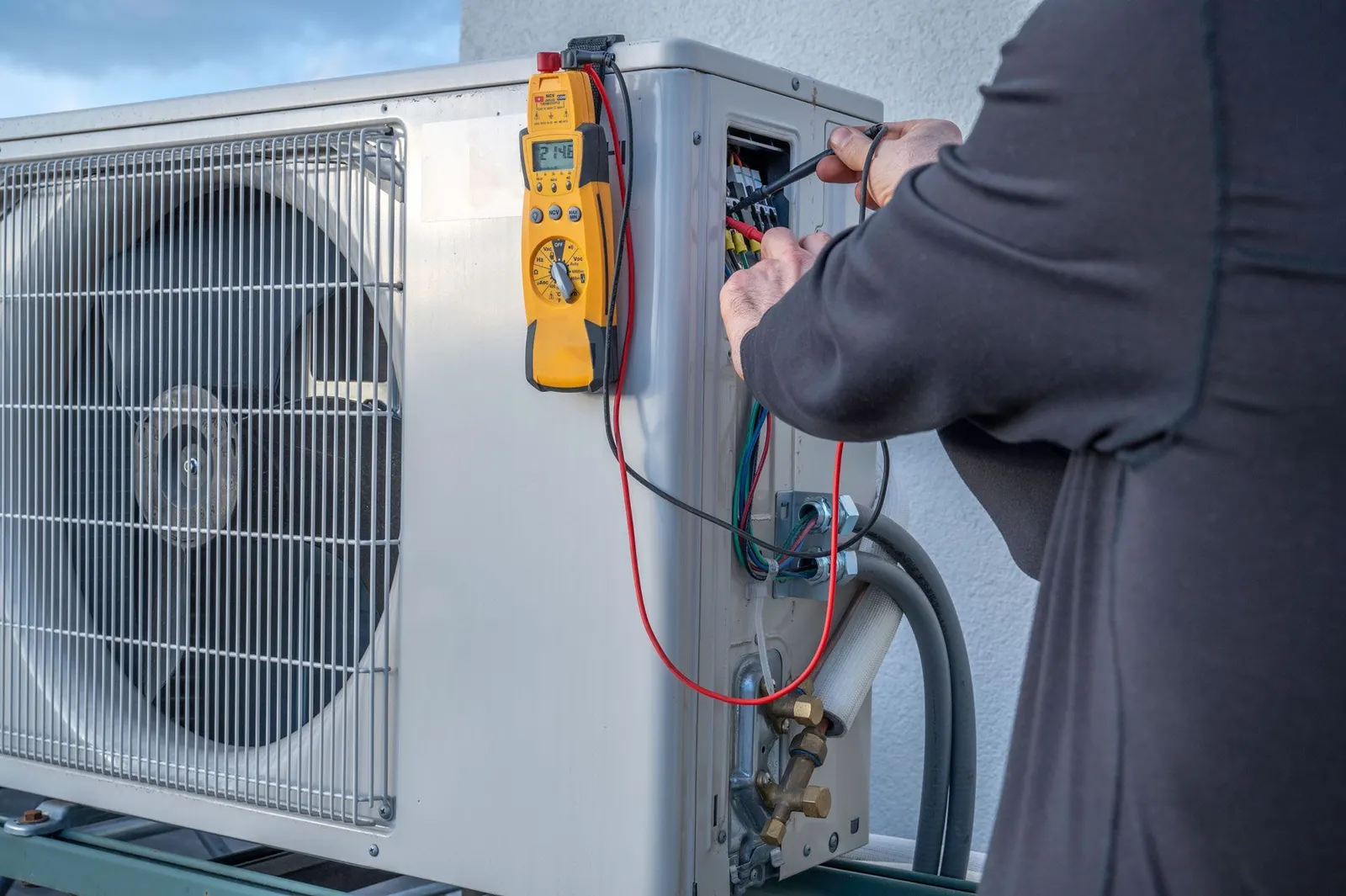
Electrical issues are another common trigger. A failing run capacitor, for example, forces the compressor to struggle during startup, generating excessive heat. Similarly, wiring problems can cause sudden halts. In one local instance, our Comfort Central Inc. technicians responded to a home where a faulty pressure switch wire on a relatively new 3-year-old heat pump caused unexpected system shutdowns. Fortunately, our team was able to quickly diagnose the electrical fault and repair the connection to restore reliable operation.
Normal Extreme-Heat Operation vs. A Failing System
During the peak afternoon heat, especially as the late-August back-to-school transition brings sweltering temperatures, it is completely normal for an air conditioner to run for long periods. Homeowners often worry that a system running for an hour straight is broken, but if the system is actively reducing indoor humidity and maintaining the temperature, it is simply working hard to combat the heat load.
The key is knowing how to differentiate between a system that is working hard and one that is actively failing. Understanding these symptoms empowers you to make informed decisions about your home comfort without panicking.
| Symptom | Normal Operation | Sign of Failure (Short-Cycling) |
|---|---|---|
| Cycle Length | Runs for 15-30+ minutes during peak heat. | Shuts off after 3-5 minutes repeatedly. |
| Indoor Humidity | Air feels crisp and dry. | Air feels clammy, sticky, or heavy. |
| Thermostat Behavior | Reaches the set temperature before turning off. | Clicks off before reaching the set temperature. |
| Outdoor Noise | Steady, consistent humming sound. | Unusually loud grinding, buzzing, or abrupt clicking. |
When you spot the signs of failure, getting a professional evaluation is critical. At Comfort Central Inc., our honest diagnostics focus on finding the exact cause of the problem—whether it is a simple electrical fix, a clogged filter, or a failing capacitor—rather than jumping to conclusions and pushing an immediate, unnecessary replacement. As a local business built on strong family values, we are deeply committed to helping homeowners understand their systems inside and out.
Prompt, transparent service makes all the difference when you are crunched for time. For example, when one of our local customers faced a challenging HVAC issue that required quick answers, our technicians arrived within an hour to diagnose the complex problem, and our owner personally followed up to ensure the system was performing flawlessly. That level of dedicated troubleshooting is what we believe keeps a home safe and comfortable.
Frequently Asked Questions About Intermittent AC Cooling
Why is my AC running but not cooling?
An AC that runs without cooling is often suffering from a frozen evaporator coil, low refrigerant levels, or a severely dirty filter blocking airflow. When the system lacks proper airflow or refrigerant pressure, it cannot absorb heat from your home. The blower motor will continue to circulate room-temperature air, giving the illusion that the system is working even though the air is warm.
What causes an AC to stop blowing cold air after a while?
This is typically the result of a frozen indoor coil that eventually blocks all air passage, or an outdoor compressor shutting down on thermal overload. If the system cools fine for an hour and then stops, ice has likely built up enough to block the vent, or the outdoor unit has overheated and triggered a safety shutoff to protect the motor.
How do I fix an AC that stops cooling?
Start by checking and replacing the indoor air filter, and ensure all room vents are fully open and unblocked. If the problem persists after correcting the airflow, a professional diagnostic is required to check refrigerant levels and test electrical components. Because handling refrigerant and high-voltage wiring requires a license, further DIY repairs are not recommended.
Why does my AC turn off before reaching the set temperature?
This behavior is classic short-cycling, which is often caused by restricted airflow triggering safety switches, thermostat placement issues, or an oversized AC unit. If the thermostat is located near a heat source or a cooling vent, it gets false readings. Alternatively, if the system is too large for the house, it cools the air too rapidly without removing moisture, shutting off prematurely.
Can high humidity make my AC short-cycle?
While high humidity doesn't directly cause short-cycling, a short-cycling AC will completely fail to remove humidity, making the home feel much warmer than the thermostat indicates. The system needs to run for at least 15 minutes to allow condensation to form and drain away; rapid on-and-off cycles prevent this crucial dehumidification process.
Is it safe to keep running an AC that keeps shutting off?
No, it is not safe for the equipment. Continuing to run a short-cycling system can cause severe, permanent damage to the compressor. The constant starting and stopping generates excessive heat and mechanical wear, which can quickly turn a minor electrical or airflow issue into a catastrophic total system failure.
Get Honest Answers Before the Season Changes
Ignoring intermittent cooling during the late-August back-to-school transition is a risky gamble that often leads to a complete lack of climate control just when you need it most. An air conditioner that cools and then stops is crying out for help, and pushing it to its breaking point will only result in more extensive damage to the compressor.
You deserve a transparent, honest evaluation of your system's health. By scheduling a professional inspection with our team now, you can identify exactly why your unit is short-cycling and implement the right fix. Do not wait for a total breakdown; take action today to ensure your home stays comfortable, dry, and cool through the rest of the season.