
Facing Your First November Freeze: Is That Smoke or Steam?
As the late fall weather sets in and temperatures plummet, getting common homeowner questions answered becomes a top priority—especially when your outdoor heat pump suddenly looks like it is on fire during your November first freeze. A sudden drop in temperature brings unexpected sights and sounds from your outdoor HVAC unit, and our team at Comfort Central Inc. knows it is entirely normal to feel a wave of panic when you look out the window and see a thick white cloud rising from the system on a cold, dark night. The immediate instinct for most people is to rush to the thermostat, shut the entire system down, and frantically call for emergency repair services to prevent a house fire.
Understanding the difference between a normal operational cycle and a true mechanical emergency saves you from unnecessary panic, cold nights without heat, and costly late-night service calls. Heat pumps are highly advanced pieces of equipment designed to manage extreme temperature fluctuations, and what looks like a catastrophic failure is often just the system performing its routine self-maintenance. By learning what to look for and what to listen for, you can confidently monitor your system's performance throughout the coldest months of the year.
For expert assistance with your home's heating and cooling systems, learn more about our air conditioning services.
Understanding the Mechanics of the Defrost Cycle
To understand why your heat pump appears to be smoking, you have to look at the basic physics of how the system operates when the weather turns cold. When the outdoor temperature drops to a 32°F outdoor temperature or below, the ambient moisture in the air condenses on the cold outdoor coil of your heat pump. Because the coil is transferring heat, its surface is often colder than the surrounding air, causing that condensation to rapidly freeze into a layer of frost and solid ice. If left unchecked, this ice would act as an insulator, completely blocking airflow and preventing the heat pump from absorbing any thermal energy from the outside air.
To protect itself and maintain efficiency, the system automatically enters a defrost cycle every 30 to 90 minutes, depending on the severity of the weather and the amount of moisture in the air. During this cycle, the system performs a fascinating mechanical trick: it temporarily reverses its operation. You might notice a brief period where it feels like the system has suddenly switched gears, which is a key concept when understanding short-cycling and normal operational shifts.
The Step-by-Step Defrost Process
- The Reversing Valve Shifts: The system detects ice buildup and triggers the reversing valve, switching the flow of refrigerant.
- Temporary Cooling Mode: The heat pump temporarily goes into cooling mode, taking the warm air from inside your house and sending that heat to the outdoor coil.
- Rapid Melting: The hot refrigerant floods the outdoor coil, rapidly melting the accumulated frost and ice in a matter of minutes.
- Auxiliary Heat Activates: To prevent your home from getting too cold during this temporary reversal, the system usually engages electric auxiliary heat strips indoors.
- Return to Normal: Once the outdoor sensor detects that the coil is clear of ice, the reversing valve shifts back, and normal heating resumes.
Normal Sounds and Sights: Whooshing Noises and Steam Plumes
The sensory experience of a defrost cycle can be startling if you have never witnessed it before, especially during a November first freeze when the system has not run in heating mode for months. The cycle typically begins with a loud "whoosh" sound. This is not a sign of a compressor failure or a blown pipe; it is simply the reversing valve shifting gears under high pressure to redirect the flow of refrigerant. Immediately following this sound, you will notice that the outdoor fan completely stops spinning. This is an intentional design feature. If the fan kept blowing freezing air over the coil, the ice would never melt. The fan stops to allow the heat to build up rapidly around the frozen components.
As the hot refrigerant melts the ice, the solid frost instantly turns into water vapor. In our experience serving Williamsport homeowners, the high humidity during late fall freezes means this rapid melting creates significantly more visible steam during a defrost cycle than what occurs in drier climates. Our technicians frequently respond to calls about a large, thick plume of steam rising from the top of a unit, which is almost universally mistaken for electrical smoke by concerned homeowners.
- The visual difference: Steam is bright white, wispy, and dissipates rapidly into the cold air. Electrical smoke is often darker, hangs in the air, and leaves a lingering haze.
- The olfactory difference: Steam has no odor whatsoever. If your unit is actually burning, you will smell a distinct, acrid, melting plastic or metallic burning scent.
- The auditory difference: A loud whoosh at the beginning and end of the cycle is normal. Continuous grinding, metal-on-metal screeching, or violent rattling is not.
Why You Should Never Interrupt a Defrost Cycle
The Problem: When homeowners see steam rising from their heat pump at a 32°F outdoor temperature, their first reaction is to run to the indoor thermostat and turn the system off to prevent perceived damage.
The Cause: This reaction stems from a misunderstanding of the system's automated self-preservation cycle. A normal defrost cycle is entirely automated and is designed to last between 5 and 15 minutes. The system's internal sensors monitor the temperature of the outdoor coil and will only end the cycle when the ice is fully cleared.
The Solution: You must allow the system to complete its cycle and return to normal heating mode on its own. Interrupting the cycle by turning off the thermostat prevents the ice from fully melting. The partially melted water will then immediately refreeze into a hard sheet of solid ice as soon as the ambient temperature drops again. If you repeatedly interrupt the defrost cycle out of fear, these layers of ice will build up rapidly, eventually encasing the entire outdoor unit in a solid block of ice. Once a heat pump is fully encased, it can no longer pull heat from the outside air, the fan blades can become trapped and break off, and the compressor can suffer catastrophic failure due to restricted airflow. If your system has already become encased in ice due to interrupted cycles or a failing defrost board, you will need professional AC repair service to safely thaw and restore the equipment.
Recognizing True Malfunctions vs. Normal Operation
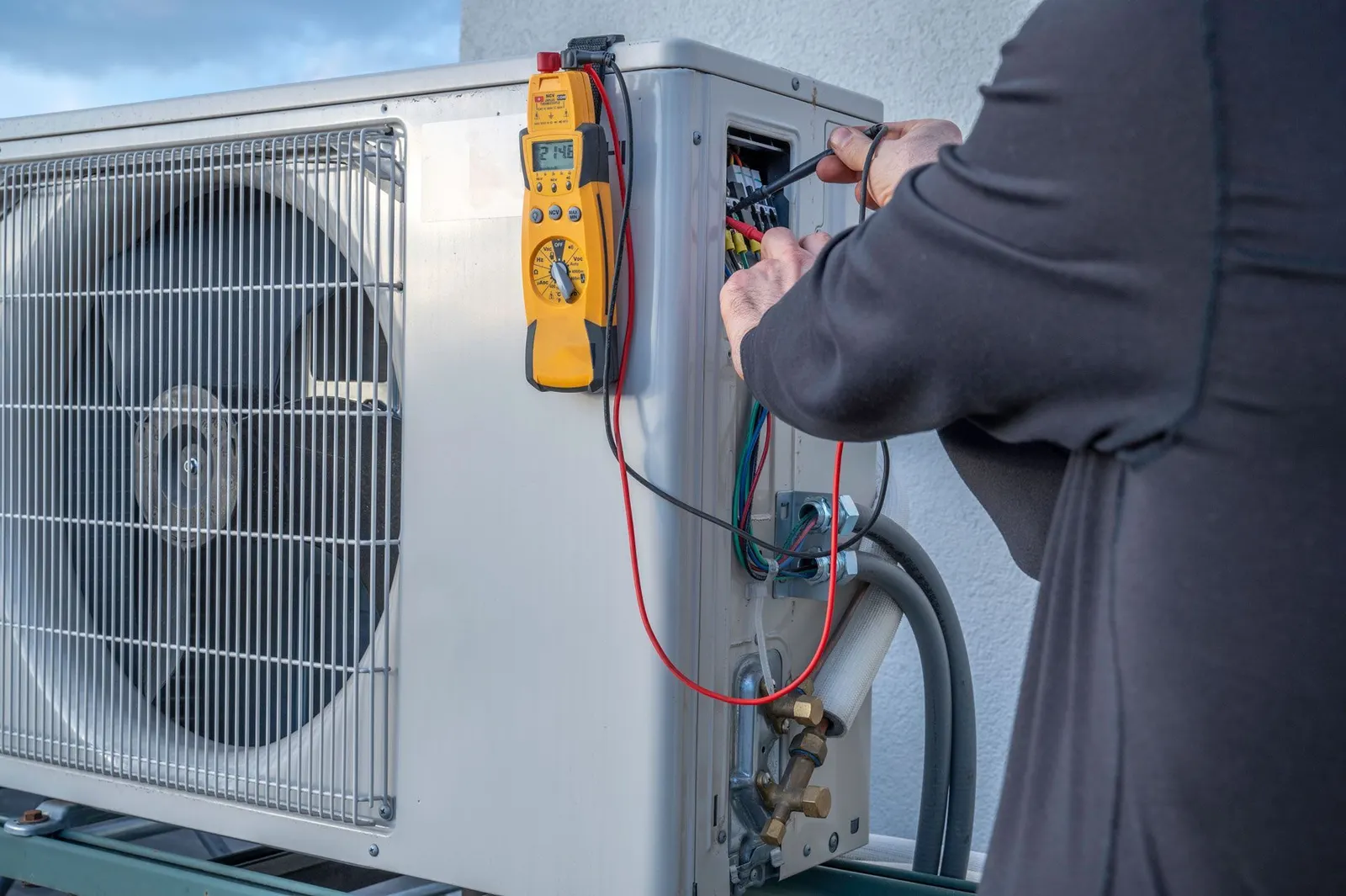
While steam and whooshing noises are completely normal during a November first freeze, heat pumps are complex mechanical systems that do occasionally suffer real breakdowns. Knowing how to contrast the normal signs of a defrost cycle with actual mechanical failures ensures you know exactly when to call for professional intervention. A distinct acrid or electrical burning smell always indicates a serious electrical problem, such as a failing motor or a burnt capacitor. If the outdoor unit becomes encased in a solid block of ice that fails to melt after several hours of operation, the internal defrost board or the temperature sensor may be failing.
Systems that make continuous grinding or screeching noises—rather than a single, pressurized whoosh—need immediate attention, as this often points to failing fan motor bearings or a dying compressor. Furthermore, a system that repeatedly trips the circuit breaker during a freeze requires a professional diagnostic, as this indicates the system is drawing dangerous levels of electrical current.
When a system exhibits genuine signs of mechanical failure rather than a routine defrost, getting timely professional help is critical. For example, our Comfort Central Inc. technicians recently helped a local Williamsport homeowner who faced ongoing system issues that required multiple service visits from others. Our team came out promptly to diagnose the troubled equipment, finally resolving the underlying problem with quick and reliable ongoing support. That is exactly why our 24/7 emergency HVAC specialist availability is so critical for times when symptoms point to an actual system failure. If your system is showing signs of a true breakdown, you can rely on prompt emergency AC repair to restore your home's warmth.
| Symptom | Normal Defrost Cycle | True System Malfunction |
|---|---|---|
| Visual Appearance | Plume of white steam that dissipates quickly in the air | Dark smoke or a solid block of ice encasing the entire unit |
| Odors | No smell, just the scent of cold winter air and water vapor | Acrid, burning plastic, or distinct electrical fire smells |
| Sounds | A single loud whoosh, followed by quiet as the fan stops | Continuous grinding, screeching, or loud metallic banging |
| Electrical Impact | System continues to run smoothly on its dedicated circuit | System repeatedly trips the electrical breaker when starting |

Frequently Asked Questions About Winter Heat Pump Operation
Why is my heat pump smoking in winter?
It is almost certainly steam, not smoke, rising from your outdoor unit. This happens when the system melts frost off the outdoor coils during its automated defrost cycle. As the hot refrigerant floods the frozen coil, the rapid temperature change turns the melting ice into visible water vapor. Because the outside air is so cold, this steam becomes highly visible and thick, mimicking the appearance of smoke.
Is it normal for a heat pump to make a loud whooshing noise?
Yes, this is the sound of the reversing valve shifting gears under pressure. It redirects the flow of refrigerant to temporarily heat the outdoor coil and melt away accumulated ice. The sound should only happen at the very beginning and the very end of the defrost cycle. If you hear continuous hissing or a loud whoosh that never stops, you may have a refrigerant leak that requires professional testing.
How long does a heat pump defrost cycle last?
A standard defrost cycle lasts between 5 and 15 minutes from start to finish. The exact duration depends on the amount of frost buildup on the coils and the current 32°F outdoor temperature. Once the internal sensors detect that the outdoor coil has reached a specific temperature and the ice is gone, the system automatically shifts the reversing valve back and normal heating resumes.
Should I turn off my heat pump if it's smoking?
No, do not turn off the system if it is just producing odorless white steam. Turning it off at the thermostat interrupts the critical melting process and causes severe ice buildup on the outdoor coil. You should only turn the system off at the breaker if you clearly smell burning plastic, notice electrical components sparking, or see dark smoke that lingers in the air.
Why does my heat pump blow cold air during defrost?
To heat the outdoor coil and melt the ice, the system must temporarily pull ambient heat from inside the house. Most modern systems automatically activate auxiliary electric heat strips indoors to counteract this effect, but you may still feel a slightly cooler draft coming from your vents. This is a temporary operational shift and resolves itself completely as soon as the 5 to 15-minute cycle finishes.
Ensure Your System is Ready for Winter Weather
At Comfort Central Inc., we find that understanding your system's normal operational quirks brings immense peace of mind during freezing nights. When that November first freeze finally arrives, you can look out the window at the rising steam and know that your system is working exactly as designed to protect itself and keep your home comfortable. However, if your system exhibits signs of solid ice buildup, produces strange burning odors, or consistently struggles to keep your home warm despite running constantly, it is time to have the equipment evaluated. Professional testing can identify hidden issues with defrost boards, reversing valves, or refrigerant levels before they lead to a complete breakdown in the middle of winter. Stay proactive about your comfort as the cold season settles in by scheduling a comprehensive AC inspection and testing to ensure every component of your HVAC system is prepared for the harsh weather ahead. Should you need to upgrade aging equipment, remember that federal tax credits and local utility incentive programs may apply to qualifying heat pump installations, so be sure to verify current programs with your utility or a tax professional.